
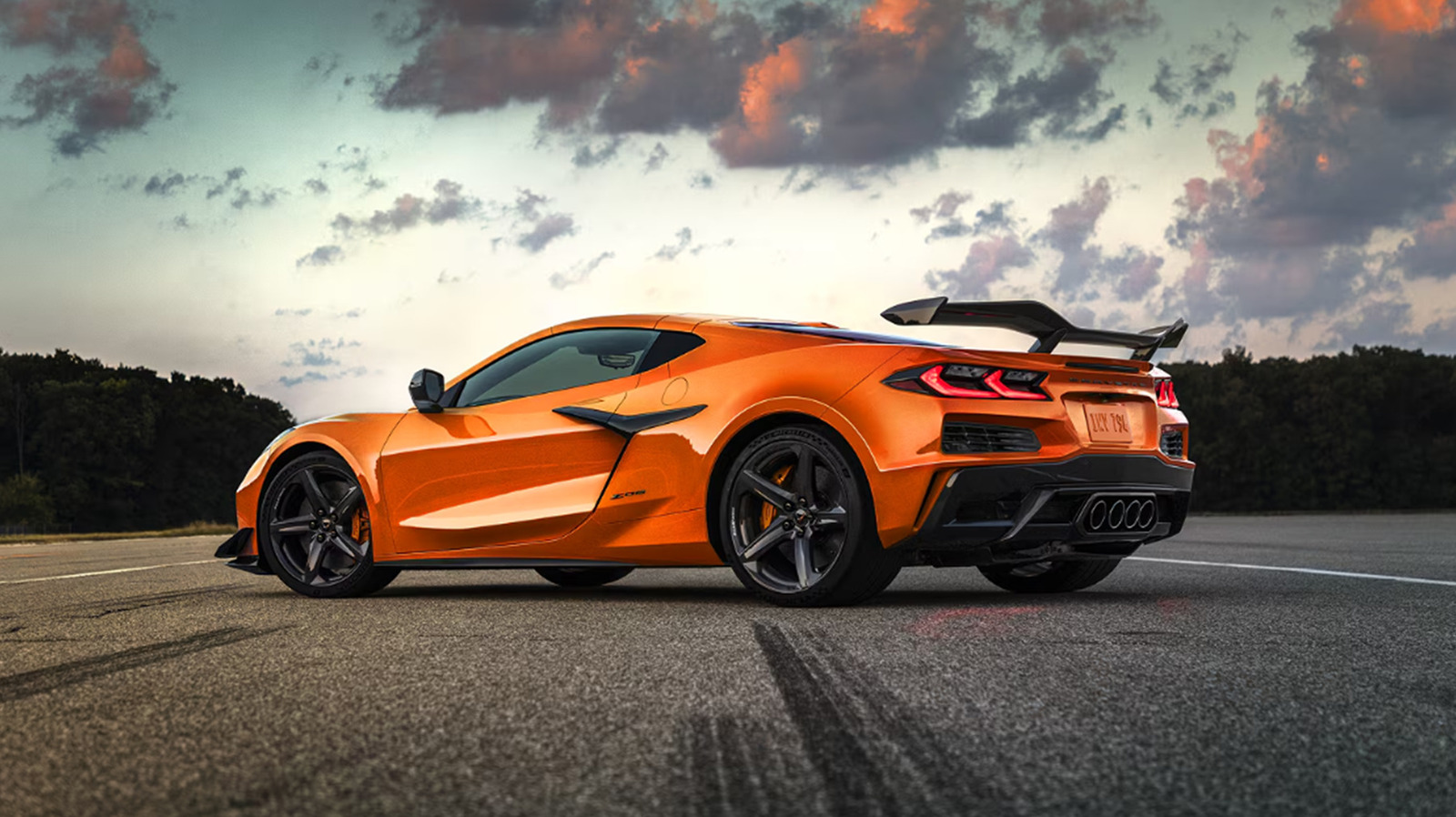
The Corvette and the Hellcat have both earned huge followings by doing one thing extremely well: making straight-line speed feel outrageous. One is a sharp, low-slung sports car built to attack laps and launch hard, while the other is a thunderous muscle car that turned brute force into a calling card.
The 2023 Dodge Challenger SRT Hellcat brought a supercharged 6.2-liter V8 with 717 horsepower and 650 lb-ft of torque, numbers that still sound wild on paper. It could sprint to 60 mph in 3.8 seconds, run the quarter mile in 11.9 seconds at 124 mph, and keep pulling until a 203 mph top speed.
The 2027 Corvette Z06 takes a different route with its 5.5-liter LT6 V8, a naturally aspirated setup making 670 horsepower and 460 lb-ft of torque. Even with less peak power, it gets to 60 mph in just 2.6 seconds, clears the quarter mile in 10.6 seconds at around 131 mph, and tops out at 195 mph.
That split tells the real story. The Hellcat has the higher top speed and more raw muscle, but the Corvette Z06 is quicker getting off the line and through the quarter mile.
Weight plays a huge role in the difference. The Z06 comes in around 3,500 pounds, while the Hellcat widebody tips the scales at 4,654 pounds, and that extra mass makes every launch harder for the Dodge.
So even though the Hellcat carries a bigger power number, the Corvette uses its lighter frame and focused performance setup to hit harder in a race from a standing start. That is why horsepower alone does not always tell the full story.
The Hellcat still has a special kind of presence that few cars can touch. The supercharger whine, the long hood, and the old-school V8 attitude made it a modern icon, even if it was eventually discontinued in 2023.
Meanwhile, the Corvette has kept evolving into something faster, sharper, and a lot more serious about performance. Chevy has pushed the car far enough that the latest Stingray became the first sports car under $100,000 to break 200 mph, and the Z06 sits even deeper in that performance lane.
That rivalry goes way beyond just the Hellcat and the current Corvette. For decades, builders have tried to create a true Corvette killer, and some came close enough to earn the nickname even if they never fully knocked Chevy off its perch.
The 1968 AMC AMX brought V8 power and respectable numbers, with its 390ci engine making 315 horsepower and carrying the car to a 125 mph top speed. It was quick for its day and had the right attitude, but production volume and overall pace never let it truly challenge the Corvette’s grip on the performance crowd.
Then came the Guanci SJJ in 1979, a car meant to combine American muscle with European style. Its 5.7-liter V8 made 250 horsepower and gave it a 10.9-second run to 60 mph, but the project never reached production, leaving it as more of a bold idea than a finished threat.
In the 1980s, Buick made one of the loudest attempts with the GNX, a car that became famous as the fastest production machine of its year. Its turbocharged V6 made 300 horsepower, and only 547 were built, which only added to the legend around it.
That Buick still had to live in the shadow of the Corvette, though. The Chevy name kept building on speed, reputation, and track credibility until the idea of a Corvette killer started sounding less like a permanent title and more like a temporary trophy for anyone brave enough to try.
