
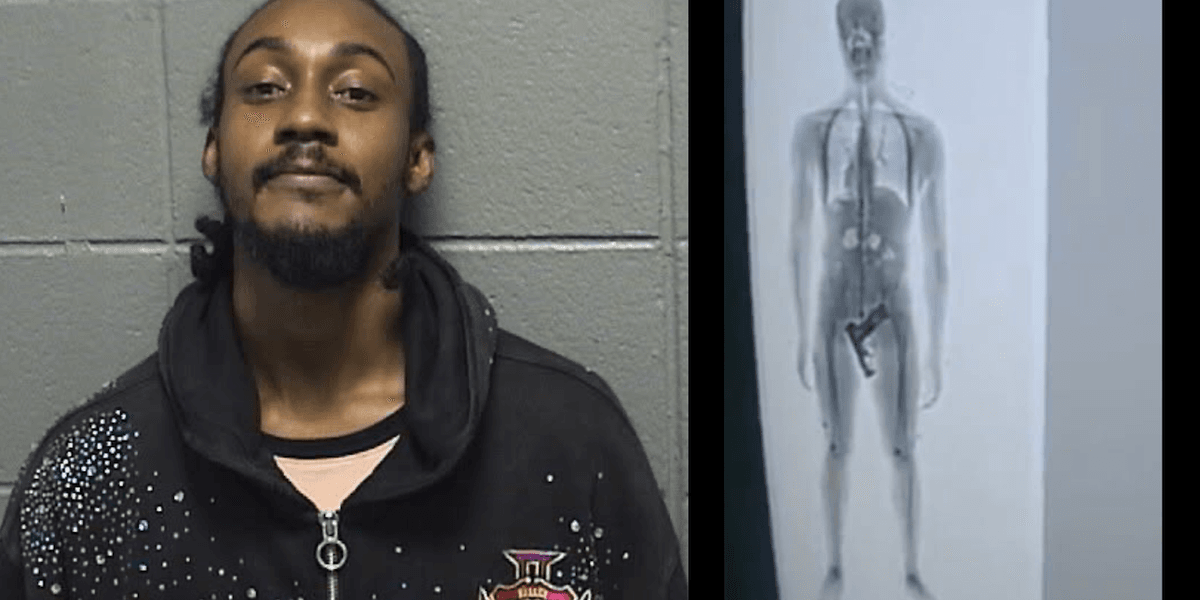
What started as a routine courthouse stop in Chicago turned into a much bigger headache for one man after security officers spotted something they were never supposed to see. A minor arrest quickly escalated once a screening turned up a weapon, adding a serious charge to an already bad day and putting another spotlight on how quickly courtroom security can change the entire course of a case.
Chicago police had arrested the man on lesser charges, and the expectation was a standard trip through the legal process. But courthouse security does not leave much room for surprise, and once the screening equipment did its job, the situation moved from ordinary to explosive in a matter of moments. What looked like a straightforward arrest suddenly became a far more serious criminal matter.
The discovery came during a security check at the courthouse, where a gun was found after the man passed through screening. That finding raised immediate alarms because courthouses are treated as tightly controlled spaces, and any weapon inside those walls is a major problem. Even a case that begins with relatively minor accusations can turn sharply when a prohibited item is uncovered in a place built for order and safety.
Security screening at public buildings often feels routine until it catches something dangerous, and that is exactly what happened here. The moment the weapon showed up, the legal stakes jumped, and the man was left facing consequences that go well beyond the original arrest. In court-related settings, those added charges can hit hard because the system treats firearms violations with real seriousness.
The Cook County Sheriff’s Office was tied to the courthouse side of the incident, which makes sense given the role sheriff’s deputies and security staff play in keeping those facilities protected. Courts are not the kind of place where a weapon gets brushed aside as a small mistake. A gun discovered during screening points to a breakdown in judgment that can carry real legal fallout and a lot more attention from prosecutors.
Moments like this also explain why courthouse security remains so tightly watched in cities like Chicago. The whole process is built to catch what should never make it inside, and when it works, it can prevent a potentially worse situation from unfolding. In this case, the system appears to have done exactly what it was designed to do, even if the end result was a much rougher road for the person already in custody.
The contrast is what makes the story stand out. A man enters the courthouse under arrest for minor charges, but one security screening later, the case takes on a whole new level of risk. That kind of shift can change plea talks, court dates, and the amount of attention a defendant suddenly receives from officials handling the matter.
For anyone following crime news, the incident is a sharp reminder that the smallest step in a legal process can reveal the biggest problem. One arrest was already enough trouble, but the courthouse search turned it into something far more serious and far more public. In a city that has seen its share of crime headlines, this one lands with a simple message: security checks can stop more than threats, they can expose them before they get any further.
