
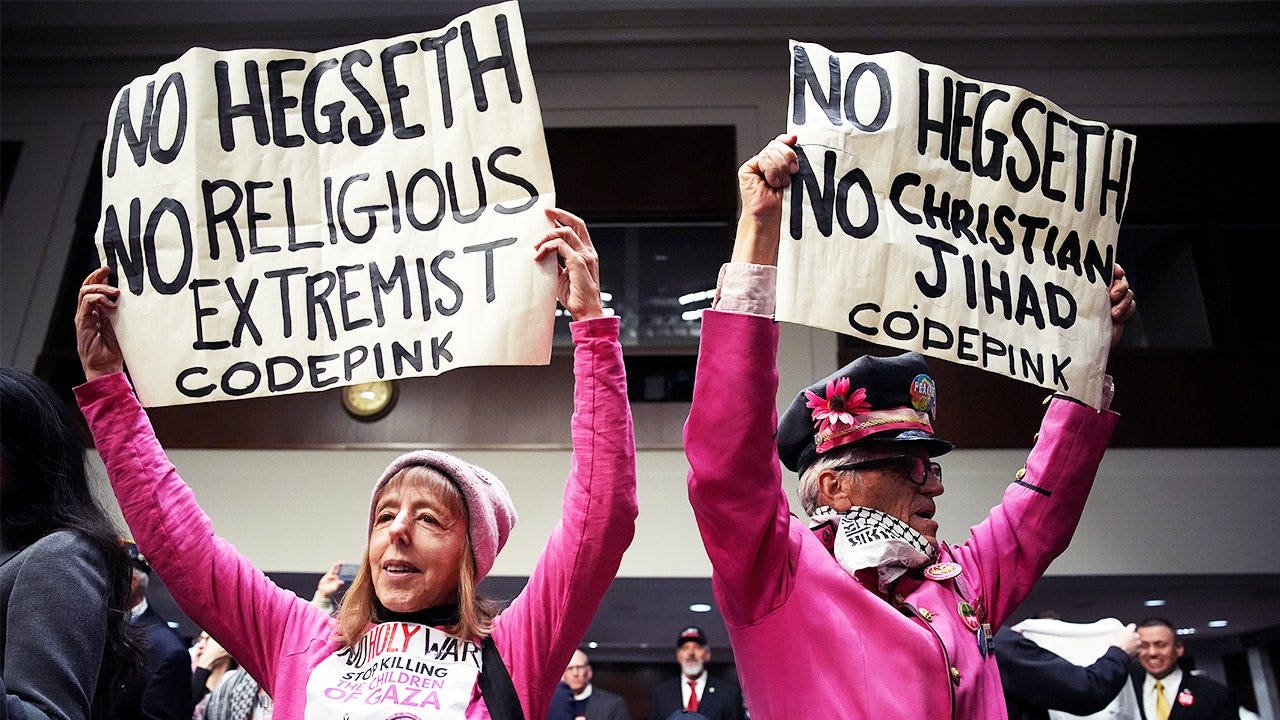
A Climate Week panel in New York City got jolted when a Code Pink activist broke in with a loud anti-military message, turning a conservation discussion into a political flashpoint. The interruption put The Nature Conservancy on the spot and pushed the group’s long-running antiwar climate argument right into the middle of a public event.
The protester argued that the U.S. military is a major driver of environmental damage and said climate groups cannot keep skirting that issue. The clash was less about a single speech and more about a familiar activist tactic, forcing everyone in the room to deal with a message that was designed to be impossible to ignore.
Code Pink said the target was The Nature Conservancy because, in its view, the organization refuses to confront what it calls the Pentagon’s huge carbon footprint and the broader damage tied to American wars and military bases. The group framed the moment as a reminder that climate politics is never just about trees, water, and emissions, but also about power, spending, and foreign policy.
One activist identified only as Aaron, described by Code Pink as the campaign organizer for its “War Is Not Green” effort, said there is “an elephant in the room that The Nature Conservancy does not want to address.” He claimed the military is “destroying ecosystems,” “destroying fish,” and “destroying the world,” language that fit the group’s blunt style and left little room for subtlety.
The protest also zeroed in on the Pentagon’s scale and budget, with Aaron pointing to military spending as proof that the issue is too large to ignore. Code Pink’s message was that a climate agenda built around forests, oceans, and land protection rings hollow if it leaves out what the group sees as the world’s biggest institutional polluter.
The Nature Conservancy, meanwhile, was left with the awkward task of having its event hijacked in front of an audience gathered for Climate Week. That kind of disruption does more than make noise, since it can shift attention away from policy talk and toward the spectacle of confrontation itself.
Code Pink said it wanted more than a dramatic moment and laid out a set of demands for environmental groups. It called for public acknowledgment of the U.S. military as a major polluter, a refusal to work with military-linked funding or partnerships, and a push to cut Pentagon spending while ending wars the group says ravage ecosystems.
That approach reflects the organization’s broader playbook, which often blends protest theater with sharp criticism of American defense policy. For supporters, it is a hard-edged way to force overlooked issues into the open, while critics see it as a predictable attempt to turn every debate into an attack on the military.
The group has repeatedly shown up where it expects maximum attention, and the Climate Week interruption fit that pattern neatly. By choosing a high-profile environmental event, the activists made sure the argument would land in a space where climate messaging is already charged, contested, and closely watched.
The exchange also highlighted a deeper split inside environmental politics, where some activists want climate conversations tied to military spending, wars, and global power, while others stay focused on conservation and emissions. That divide is not going away anytime soon, especially when a protest is loud enough to pull every eye in the room.
By the time the disruption ended, the original event had already been overshadowed by the spectacle of confrontation and the broader fight over what climate activism should include. The bigger question now hangs in the air: whether environmental groups will keep treating military policy as separate from climate policy, or whether activists like Code Pink will keep showing up to make that separation harder to defend.
