
Washington’s push to modernize air traffic control has run straight into a bigger problem than aging wires and broken towers. The real choke point sits halfway around the world, where China dominates the rare earth supply chain that modern aviation hardware depends on, and that makes a $50 billion upgrade far more complicated than it looks on paper.
The pressure ramped up after Friday’s nationwide ground stop, which exposed just how fragile the system has become. The Trump administration has blamed old equipment and years of delay, while calling on Congress to back a sweeping overhaul that would replace outdated infrastructure and bring the system into the modern age.
President Donald Trump said the breakdown was the result of worn-out gear failing in a dramatic way. “Essentially, what you saw on Friday was very, very old equipment that had a heart attack,” he told reporters Monday at the White House before heading to Asia.
But new equipment does not magically appear just because the need is obvious. The parts behind radar systems, satellite links, precision motors, navigation tools, and other aviation hardware all depend on rare earths, and China is the main power controlling the processing that turns raw material into usable industrial components.
Anupam Ghildyal, chief growth officer for REalloys, said the challenge reaches into the core of the FAA’s modernization plans. “For the FAA, radars, satellite systems, complex electrical systems, precision motors, navigation systems — all of these require rare earths inside them,” he said.
That reality creates a nasty bottleneck. Even if the U.S. wants to build these systems at home, the raw materials still have to come from somewhere, and Beijing can squeeze supply whenever it wants leverage. “For the FAA to upgrade the infrastructure, you need all of these components, and those components have to be manufactured here because China can limit the supply of these components to the U.S.,” he said. “But to manufacture these components in the U.S., we need the basic raw materials to make them from, which is something we do not have.”
That kind of dependence has become a strategic problem, not just an industrial one. Ghildyal said China can slow-walk shipments or cut them off entirely, putting U.S. efforts at risk before they really get moving.
“100% they can, and they’ve been doing it,” he said. That blunt answer reflects a larger truth that has been ignored for years, which is that the U.S. handed off too much of the hard, messy, toxic work and let the supply chain drift overseas.
Transportation Secretary Sean Duffy has asked Congress for $50 billion to rebuild and modernize the nation’s air traffic control system. The plan includes replacing decades-old copper wiring, outdated towers, and the old network architecture that has already failed in major cities.
Speaking on Fox News’ “Hannity,” Duffy tied the latest outage to the need for a clean break from the past. “So you saw a telecom issue on Friday. We’re replacing old copper wires with fiber, but this is an old architecture of a network,” he said. “You’ve seen Newark go down. You’ve seen Dallas go down. You saw all of New York go down just a couple of months ago because of telecom issues. I want to build a brand-new architecture of a resilient telecom network that’s worthy of 2026 and worthy of America.”
The rare earth problem did not happen overnight. Ghildyal said the U.S. used to process more of these materials domestically, but the work was pushed out as companies chased lower costs and easier margins. China stepped in and built the muscle America walked away from.
“The problem is we are starting from pretty much close to zero,” he said. “Back in the 1980s and 1990s, we actually processed a lot of rare earths, made a lot of magnets, and then we decided that these processes are too laborious and too toxic, so let’s offshore them. So we taught the Chinese how to do it, and over the last 40 years they’ve been doing it.”
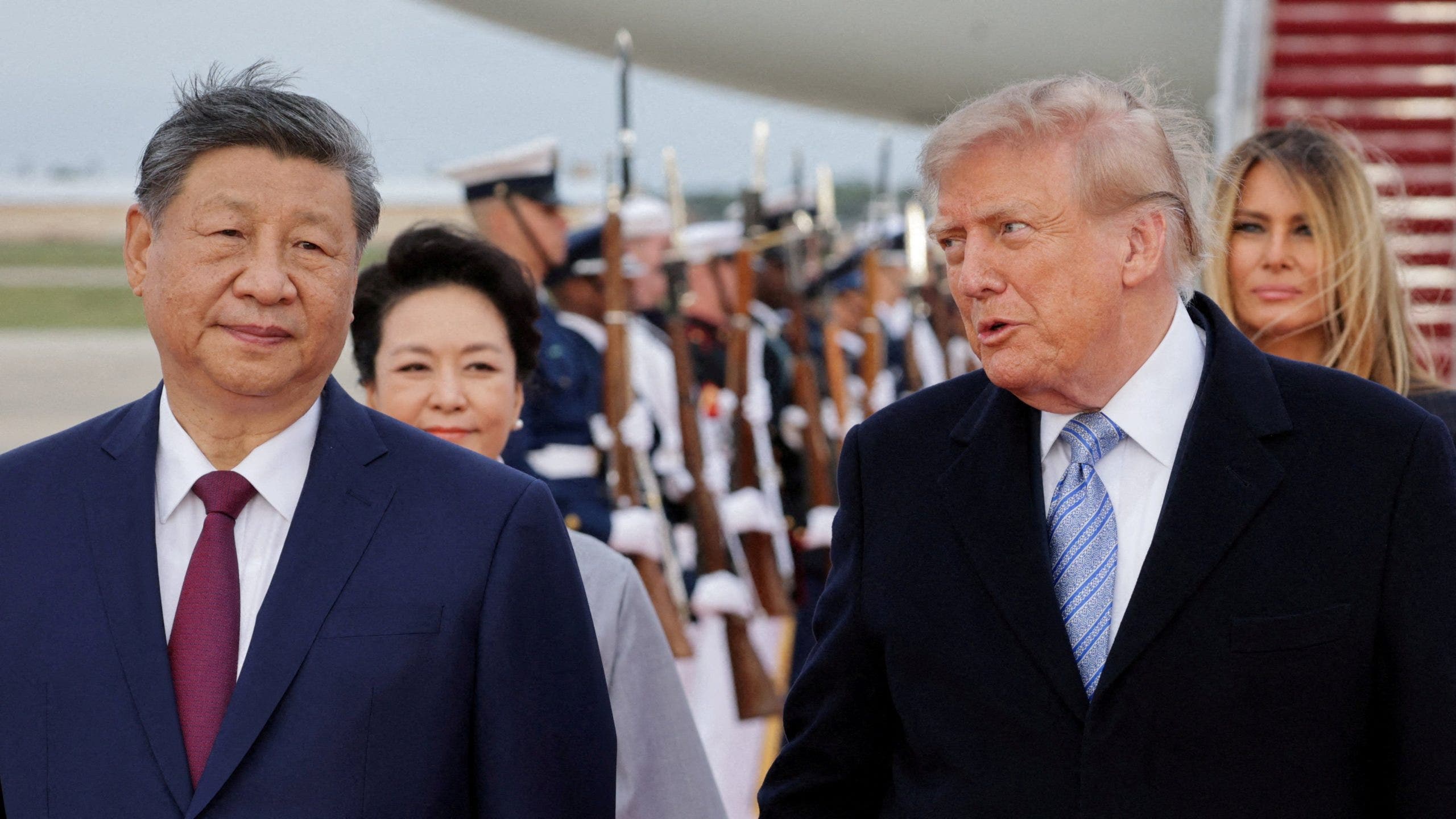
That leaves the U.S. trying to rebuild a base that was allowed to wither. The stakes are especially high because the equipment needed for a modern airspace system relies on specialized magnets and materials that China now dominates, and the timing is awkward with Trump expected to sit down with Chinese President Xi Jinping.
Ghildyal said the tension is built into the relationship. “China uses it as leverage on the negotiating table,” he said. “I would assume they want AI chips. We want their rare earth materials, and that’s how these transactions happen.”
The numbers alone show how big the gap is. U.S. demand for neodymium magnets is around 50,000 tons a year, while domestic output is only about 500 tons, leaving the country with just 1% of what it needs and a long climb ahead.
“We’ll make about 500 tons this year, so we are making 1% of what we need,” Ghildyal said. “So that 99% gap is not going away tomorrow or in the next two or three years. It’s a five-to-10-year journey, but I think we should all be ashamed of ourselves if 10 years down the line, we are not independent of China for these critical materials.”
