
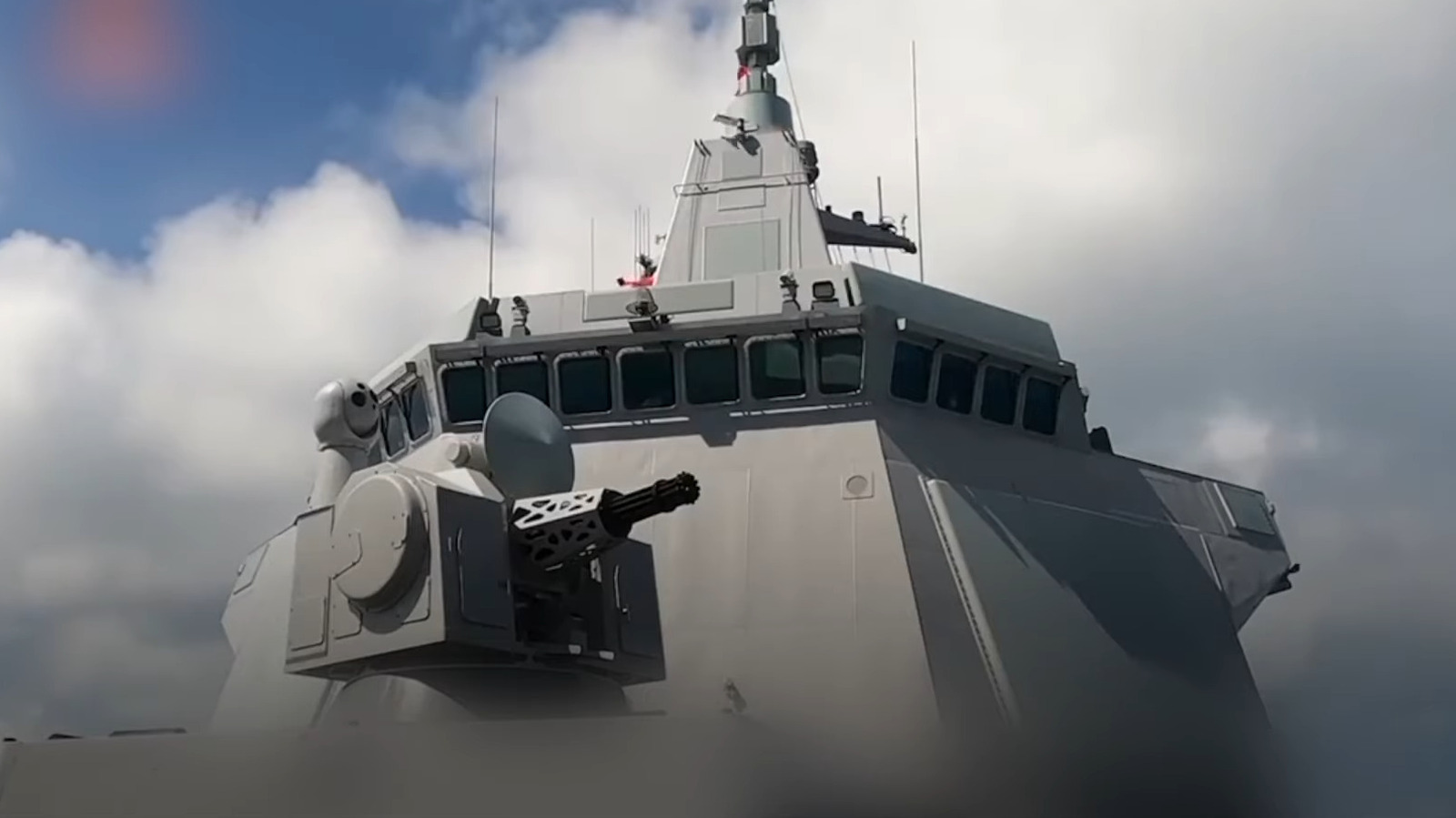
China’s Type 055 destroyers were reported to be conducting training exercises in early 2026, and these hulls are widely discussed as among the most powerful surface combatants afloat. This piece looks at their design, systems, intended roles, and what regular training means for their operational reach.
The Type 055 is a large, modern surface combatant designed around multi-mission flexibility and sustained presence. It combines significant missile loadouts with advanced sensors and a hull intended for high-end warfighting tasks far from home ports.
At roughly 12,000 to 13,000 tons displacement, the Type 055 sits in a space between traditional destroyers and cruisers. That size buys space for fuel, weapons, and systems that support long deployments and layered defense packages.
Sensors and combat systems are central to the ship’s purpose, and the Type 055 carries a suite built to track air, surface, and subsurface threats. Its radar architecture supports area air defense and integrated fleet operations, enabling it to coordinate with other assets.
Vessel designers packed the ship with vertical launch system cells, giving it the capacity to field a mix of surface-to-air, anti-ship, land-attack, and anti-submarine missiles. That VLS flexibility is a core reason observers label the Type 055 as highly capable across mission sets.
>
Anti-submarine capability is supported by hull-mounted sonar, towed arrays on some units, and onboard helicopters that expand detection and strike range. Anti-ship and land-attack roles rely on modern missile options and networked targeting inputs.
Propulsion choices aim to balance speed and range, allowing the ship to operate with carrier groups or independently on distant patrols. That endurance is one reason the Type 055 has been used in extended deployments and training scenarios designed to test logistics and sustained operations.
Crew accommodations and mission systems are tuned for long missions, and training cycles are crucial to bring crews up to speed on damage control, weapons integration, and coordinated maneuvers. Regular exercises in 2026 underline the emphasis on readiness rather than one-off demonstrations.
The ship’s role in fleet architecture is as a high-end escort and area controller, capable of protecting surface groups while exerting influence across a wide maritime zone. Its sensors and weapons let it shape battlespace options for commanders at sea.
Production has moved steadily, with multiple hulls joining the fleet over recent years and more under construction, reflecting a programmatic push toward numbers as well as capability. Shipbuilding pace affects training tempo and regional presence calculations.
Comparisons to other navies’ large destroyers and cruisers often focus on missile capacity, sensor reach, and command capabilities. While exact performance depends on systems integration and training, the Type 055 is clearly designed to compete with the most capable surface combatants worldwide.
From a practical standpoint, operating such large warships requires robust logistics, strike planning, and secure supply lines, all areas emphasized during sea trials and training missions. Exercises help identify gaps in sustainment and tactical employment under realistic conditions.
Chinese planners appear to use the Type 055 both as a deterrent and as a tool for forward presence, deploying them on missions that signal capability and intent. Those missions are part of a wider naval posture that combines diplomacy, presence, and operational reach.
Modern naval combat demands integration with air, cyber, and space layers, and the Type 055 is a node in a larger network of sensors and shooters. Effective employment depends heavily on communications, datalinks, and cross-domain awareness, which get stress-tested during training.
International observers track these training cycles closely because repetitive, well-executed drills change regional calculations over time. As crews mature and exercises grow more complex, the ship’s theoretical capabilities turn into practical tools for state policy at sea.
Maintenance, upgrades, and crew experience will ultimately determine how these ships perform years from now, not just the hardware installed at launch. Ongoing training in 2026 is one piece of a longer arc toward operational proficiency and fleet utility.
