
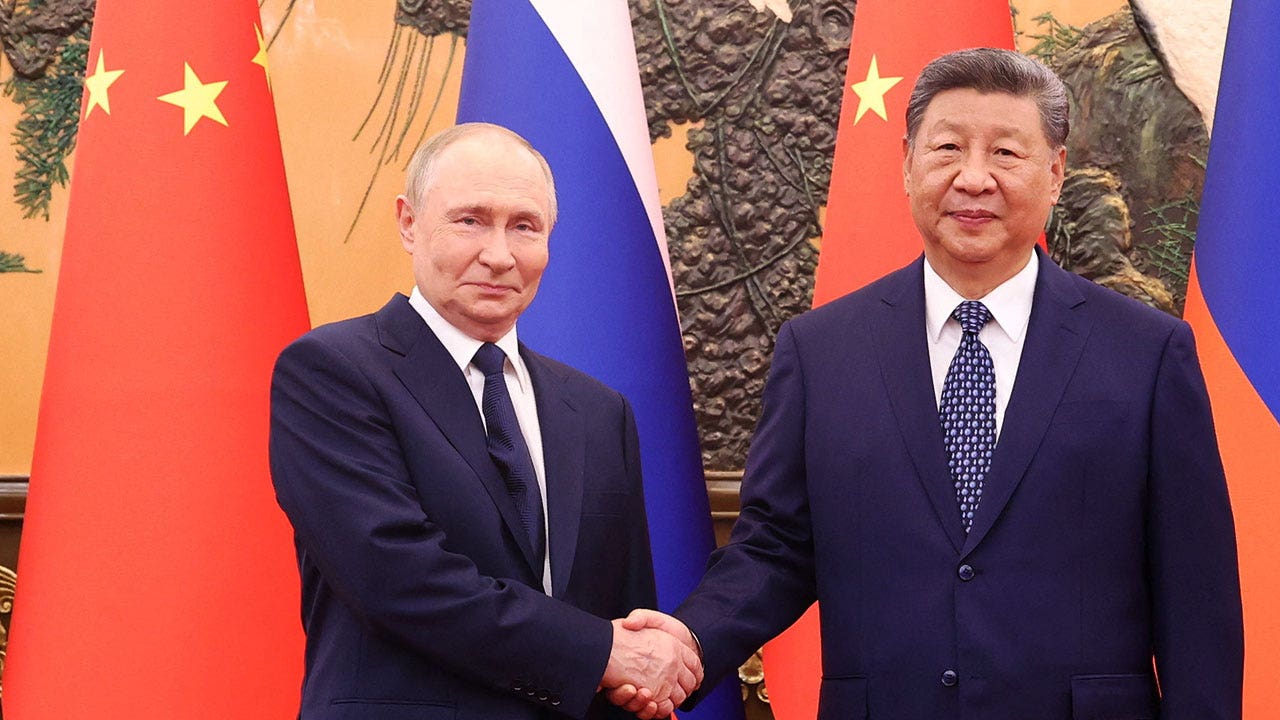
Congressional pressure is tightening around Beijing’s role in Russia’s war, and the argument is blunt: Moscow may fire the missiles, but China helps supply the machinery, the money, and the staying power. With sanctions tools now on the books, the real fight is whether Washington will use them hard enough to raise the cost of backing Putin and force Xi Jinping to choose between global respectability and wartime collaboration.
When Russian attacks hit Ukrainian cities, the blame lands on Vladimir Putin, and rightly so. But the supply chain behind that violence runs far beyond the Kremlin, with Chinese factories churning out critical parts, chemicals, chips, and equipment that keep Russia’s defense industry running. Beijing also keeps buying Russian oil in massive quantities, feeding the Kremlin’s budget and helping Moscow ignore the pressure that would cripple a less protected war machine.
The scale of that support matters because Russia has not been able to sustain its assault on its own. Civilian deaths and destruction keep piling up, and the damage is not limited to the battlefield. Apartment blocks, hospitals, passenger trains, and rescue workers have all been caught in the blast radius of a conflict that is increasingly powered by an international support network instead of a purely domestic Russian economy.
That is why the new sanctions law has become such a big deal. It gives the administration sharper tools to hit the buyers of Russian energy, target the middlemen who move dirty money, and go after the shadow fleet that helps Moscow keep its exports flowing. In plain terms, it is designed to make life harder for the countries and companies that keep Russia’s war chest full.
China’s role is especially hard to ignore because it has tried to present itself as a neutral voice while acting like a war partner in everything but name. The numbers are ugly, and they point in one direction: Beijing provides most of the dual-use gear Russia needs for artillery shells, glide bombs, and attack drones, while also serving as one of the Kremlin’s biggest customers for fossil fuels. That combination makes it more than a bystander. It makes China part of the machinery of the war.
There is also a financial truth that tends to get glossed over in diplomatic talk. When Chinese banks and businesses get nervous about being cut off from the dollar system, they change behavior fast. They know access to Western finance and markets matters more than the prestige of propping up an increasingly isolated Russia, and that is exactly why targeted economic pressure can still bite.
Ukrainian officials have been pushing for this kind of action for a long time. Their message has been consistent because they have lived the consequences, and they understand that sanctions are not just symbolic gestures when they are enforced with real consequences. Republicans and Democrats came together to move the law forward, and that rare moment of unity now has to translate into actual pressure, not just paperwork.
Beijing is also playing a risky game by squeezing global supply chains in other ways. Its grip on critical minerals gives it leverage over industries that matter to the United States and its allies, especially when it tries to use rare earths and magnets as bargaining chips. Giving in to that kind of threat would only encourage more of it, while rewarding the same government that is helping keep Russia’s war economy alive.
The larger strategic picture is hard to miss. Europe and the Indo-Pacific are connected, and leaders in both regions understand that aggression in one theater can invite more aggression in the other. If China keeps helping Russia while pressuring Taiwan and challenging the South China Sea, the message to authoritarians everywhere gets louder, not quieter.
Peace will not come from wishful thinking or polite warnings. It comes when the cost of enabling aggression gets high enough that even Beijing has to rethink the bargain. That is where the new sanctions fight lands now, with Washington deciding whether it means business or just likes the sound of it.
