
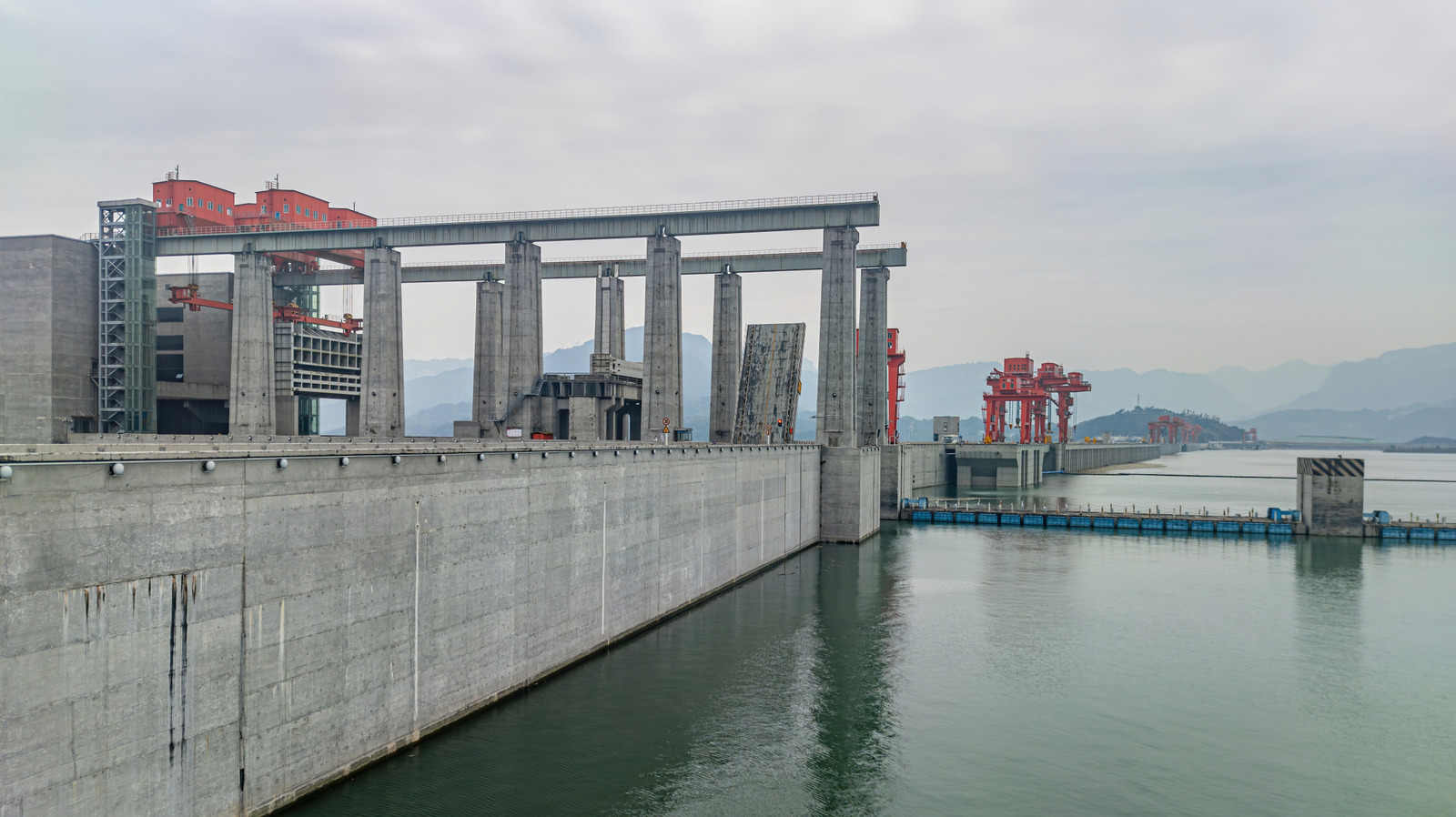
This piece looks at a massive ship elevator in China that lifts vessels of up to 3,000 metric tons nearly 370 feet in about 40 minutes, and explores how such a machine reshapes engineering, commerce, and local life without getting bogged down in technical minutiae. It walks through the engineering backbone that makes the lift possible, the operational gains for ports and inland waterways, the economic ripple effects nearby, and the environmental and safety tradeoffs to watch. The tone is direct and practical, aiming to explain what makes the installation significant and what it means for the region going forward.
The structure itself is a bold bit of civil engineering: a vertical lift that hoists whole vessels instead of moving water through long series of locks, handling a 3,000 metric ton displacement in roughly 40 minutes while climbing about 370 feet. That capacity opens up navigable routes that were previously impractical, linking inland rivers to higher elevation canals without the usual slow, lock-by-lock process. For captains and cargo operators, the lift is less a novelty and more a practical shortcut that changes scheduling and fleet usage.
Under the skin, the project depends on massive steel and concrete work teamed with precise mechanical systems to balance enormous loads and control speed safely. Redundancy in winches, hydraulic systems, and braking mechanisms is critical because a failure at scale would be catastrophic; engineers use layered backups and real-time monitoring to manage risks. The civil works that cradle the machinery also had to account for soil, seismic concerns, and long-term settlement to keep alignment exact over decades of heavy cycles.
Operationally, the elevator trims transit time and simplifies logistics for certain classes of vessels, letting operators avoid lengthy detours or multi-lock transits that chew up time and fuel. Scheduling becomes more predictable when you know a lift can move a boat in under an hour, which matters for time-sensitive cargo and for optimizing tug and crew rotations. It also changes maintenance planning: a concentrated lift means different wear points than a long lock flight does, so port planners adjust inspection routines and spare-part stocks accordingly.
The economic implications are tangible in nearby shipyards, suppliers, and service firms that see fresh demand for repairs, retrofits, and lifts-capable designs. Inland regions connected by the lift can advertise faster routes to coastal export terminals, encouraging factories and warehouses to rethink where they place inventory. That cascade of activity creates jobs and raises local tax revenues, though the long-term payoff depends on steady traffic volume and good integration with rail and road links to absorb the extra throughput.
Environmental tradeoffs are real and deserve attention, because replacing locks with a big mechanical lift shifts the footprint rather than erases it. You avoid some dredging and reduce the water exchange issues that locks can cause, yet building and running a lift has embodied carbon costs and energy demands that must be managed. Smart operation, renewable energy sourcing, and careful design of access roads and staging areas can tip the balance toward a net benefit, but those choices require political will and budget discipline.
For the community, the lift becomes a landmark and a magnet for technical tourism and education, drawing curiosity and sometimes controversy over land use and resettlement. Export potential for the technology is plausible if the installation proves reliable and cost-effective, giving other countries a template for moving heavy vessels over elevation changes without sprawling lock complexes. Whatever the next chapter, the machine is another reminder that clever engineering can redraw trade routes and reshape possibilities for regions willing to invest in big infrastructure.
