
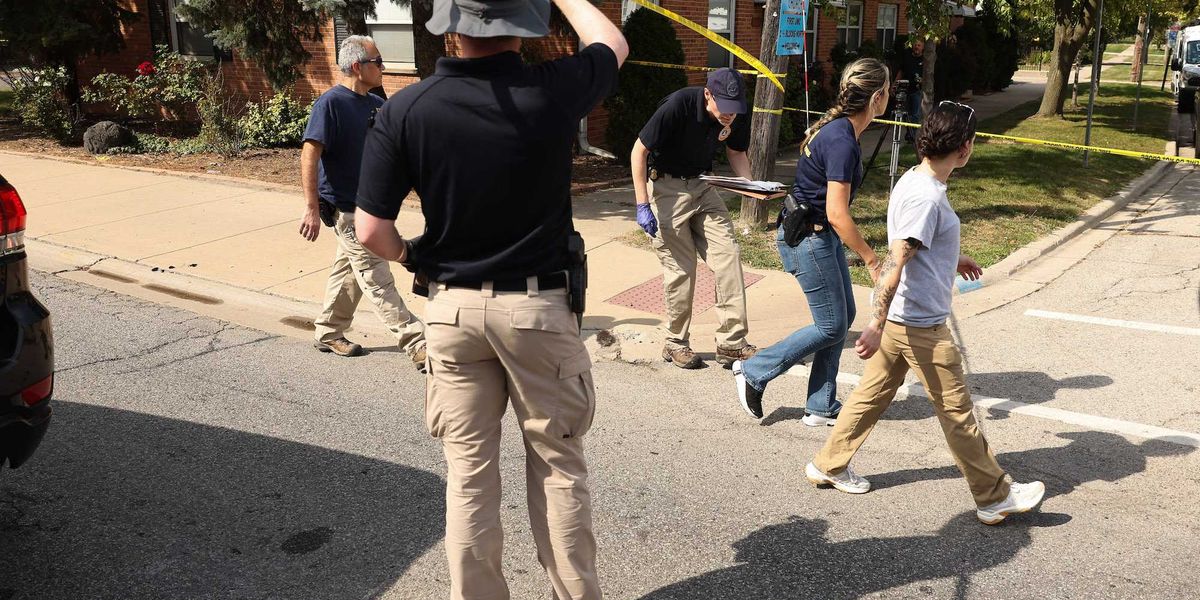
A violent crime in Chicago has reignited a familiar fight over immigration enforcement, public safety, and how local and federal officials handle repeat offenders. According to the Department of Homeland Security, the suspect had already been given multiple chances by Democrats before allegedly firing into a homeless encampment, a detail that has sharpened frustration over a system that keeps letting dangerous people slip back into communities. The case has become another ugly example of what happens when political caution outruns common sense.
DHS says the man at the center of the incident should never have been loose in the country in the first place. Instead, he was able to move through a process that, critics argue, rewards delay and excuses while ordinary people are left to deal with the fallout. That tension is now sitting front and center again in a city already worn down by crime, disorder, and the steady pressure on law enforcement.
The alleged shooting into a homeless encampment adds another layer of outrage because it put some of the most vulnerable people in the city in danger. A place that already lives on the edge should not have to absorb violence from someone who, by the government’s own account, had been spared more than once. The story hits hard because it combines chaos, failed oversight, and a stunning lack of urgency from the people entrusted to stop this kind of thing.
What makes the case especially maddening is the apparent pattern behind it. When someone with a risky record gets a pass not once but twice, the message sent is obvious: consequences are optional, and public safety comes second. That is exactly the kind of thinking that has fueled backlash across the country, especially in places where residents feel like they are paying the price for policy decisions made far away from the street.
Chicago has become a proving ground for every bad outcome tied to weak border control and lenient enforcement. Families, workers, and neighborhood residents are forced to live with the consequences while politicians talk around the problem, frame it as complicated, or pretend the damage is exaggerated. Meanwhile, the same names and the same failures keep showing up, usually after somebody gets hurt.
DHS’s description of the suspect as a “monster” reflects the intensity of the reaction, and it is not hard to see why people are angry. When officials know someone is dangerous and still let the person slip back into the mix, the system is not just broken, it is reckless. That kind of failure does not stay abstract for long, because eventually it lands in a neighborhood, on a sidewalk, or in a camp where people have nowhere else to go.
The homeless encampment itself also underscores how many layers of neglect can pile up in one place. People living there are already dealing with instability, addiction, mental illness, or simple bad luck, and they do not need gunfire added to the list. When policy failures ripple outward like this, the people with the least protection usually get hit first and hardest.
The broader political fight around immigration is not slowing down, and cases like this make it even harder for voters to ignore. For plenty of Americans, the issue is no longer about abstract debates over process, but about whether leaders are willing to draw a bright line between lawful order and dangerous disorder. Every new failure strengthens the argument that enforcement has to mean something, and that the public should never be asked to absorb the cost of avoidable leniency.
That is why this case is landing with so much force. It is not just about one suspect or one shooting, but about a system that keeps creating the conditions for the next headline. And in cities already stretched thin, people are running out of patience for officials who keep acting surprised when predictable consequences show up right on schedule.
