
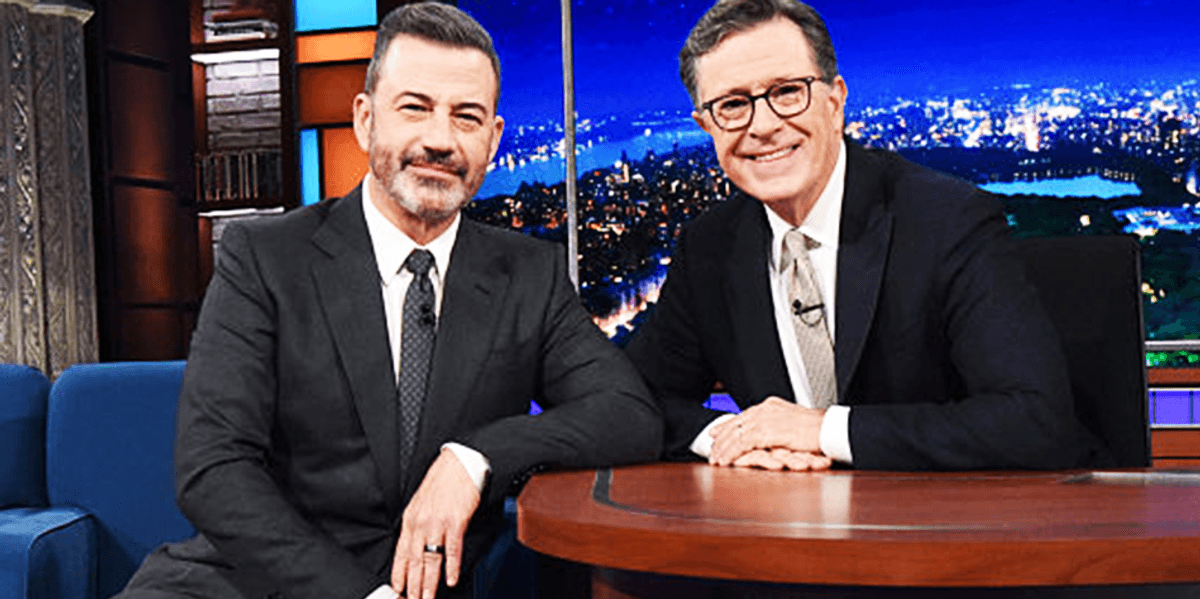
Jimmy Kimmel is floating an idea that could put Stephen Colbert back in the late-night mix, and it comes at a time when TV audiences are already split on what they want from that space. The chatter centers on a possible comeback route that would keep Colbert visible, keep the conversation going, and give late-night a shot of energy when it could use one.
Colbert has become one of the biggest names in the business, but late-night is a weird, crowded world right now. Viewers are more scattered than ever, and the old formula does not carry the same punch it once did, which is why any move involving a major host tends to spark attention fast.
Kimmel’s suggestion is less about nostalgia and more about staying in the game. If a familiar face like Colbert is available, networks have a real incentive to think creatively, especially when competition, ratings pressure, and changing viewing habits are all hanging over the format at once.
The idea also feeds into a bigger reality: late-night television is no longer just about punchlines and desk bits. It is now tied to brand identity, network strategy, and whether a host can still pull in a loyal audience in a streaming-first world where attention is hard to win and even harder to keep.
That is part of why this kind of talk gets traction so quickly. Kimmel and Colbert both carry enough name recognition to turn a casual comment into a full-blown entertainment conversation, and fans know that a move like this would not just be about one show, but about the shape of late-night itself.
There is also a natural curiosity around what Colbert would do next if given another runway. He has built his reputation on sharp timing, political humor, and a strong on-camera presence, which makes him one of those hosts who can fit into a lot of conversations without ever needing to force it.
For ABC, CBS, or any other player watching the landscape, the appeal is obvious. A proven performer brings built-in attention, and in entertainment, attention is the currency that keeps everything moving, from ad dollars to social media buzz to the kind of word-of-mouth that can keep a show alive longer than expected.
Still, any real move would have to make sense for the people involved. Late-night slots are tight, network schedules are unforgiving, and a decision like this would depend on timing, audience appetite, and whether the right deal could be struck without turning the whole thing into a stunt.
What makes Kimmel’s idea interesting is that it taps into something viewers already understand, even if they cannot always name it. They know when a host feels like a genuine event, and Colbert still has that kind of presence, the kind that makes people stop scrolling and actually pay attention for a minute.
So while nothing is locked in and nothing is guaranteed, the conversation itself says plenty about where late-night stands. The format is still alive, still capable of surprises, and still powered by the kind of personalities who can make a simple suggestion sound like the start of a much bigger shift.
