
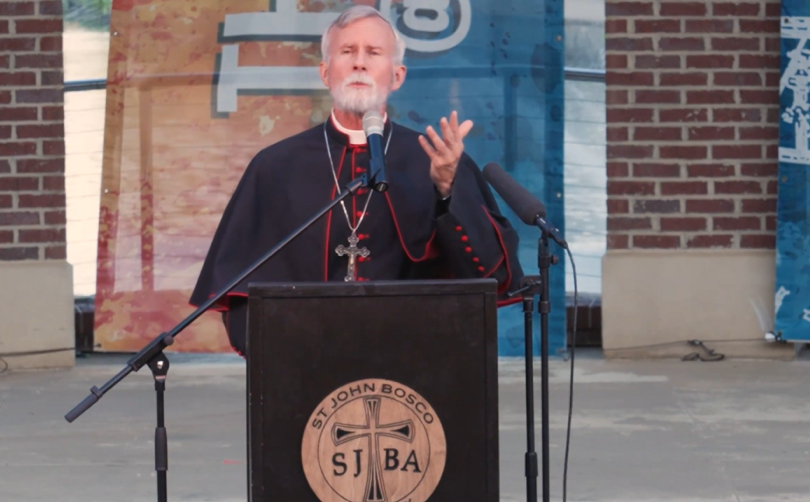
Bishop Joseph Strickland, speaking in a candid interview, lays out his concerns about the state of the Catholic Church and calls for a renewed focus on truth, conscience, and pastoral care. He frames the crisis as both institutional and spiritual, arguing that loyalty to doctrine and the person of Jesus Christ must guide responses to scandal and confusion. The conversation challenges leaders to listen to laypeople, prioritize transparency, and restore trust through concrete changes in governance and pastoral practice.
Strickland describes the crisis as layered, not limited to isolated scandals but rooted in a breakdown of accountability and a weakening of clear teaching, which leaves many faithful feeling uncertain and abandoned. He stresses that when structures shield wrongdoing or tolerate ambiguity, people lose confidence in the institution meant to guide them morally and spiritually. His tone is measured but urgent, urging leaders to re-engage with the core mission of the Church rather than retreat into defensive posturing.
The bishop argues that obedience must be redefined around fidelity to truth rather than blind compliance to authority, and he repeatedly emphasizes the need for moral clarity from bishops and priests. For him, the benchmark is not popularity or institutional survival but alignment with the gospel and the teachings that have shaped Catholic identity for centuries. This view places conscience and scripture at the center of reform efforts, suggesting that renewing catechesis and preaching should be a priority.
Beyond words, Strickland calls for practical steps that restore trust, such as improved safeguarding measures, independent oversight where necessary, and more transparent communication when failures occur. He points out that the faithful need to see consistent consequences for misconduct and clear procedures that protect victims and hold leaders accountable. Without visible systems that work, promises of reform sound hollow and the wounds inflicted on communities deepen over time.
Pastoral care gets significant attention in his remarks, with Strickland urging clergy to meet people where they are while still offering uncompromising moral guidance, especially in a culture that increasingly questions traditional teachings. He stresses the importance of accompaniment, listening, and genuine mercy that does not dilute doctrine but presents it in a compassionate, relevant way. The bishop believes this balance can rebuild bridges with people who have drifted away or who feel alienated by judgmental approaches.
Education and formation are also central to his prescription for renewal, because well-formed priests and laity are better able to defend and live out their faith amid confusion. Strickland recommends revitalizing seminaries and catechetical programs so future generations understand why the Church teaches what it does and how those teachings apply in everyday life. Strong formation, he suggests, also equips leaders to resist factionalism and to shepherd communities with wisdom and humility.
Accountability, he insists, must include listening to the laity, particularly survivors of abuse and families harmed by institutional failures, who often carry the clearest insight into where systems have failed. Strickland urges the Church to create channels for honest feedback and to treat that feedback as a resource for healing rather than a threat to be silenced. He believes meaningful reform will come when leadership recognizes that the whole Church, not just a clerical class, has a stake in restoring integrity and trust.
Finally, Strickland frames renewal as less about preserving an image and more about renewing a vocation, asking clergy and lay leaders to rediscover the radical commitment that animated the early Church. He calls for a return to prayerful discernment, courageous truth-telling, and concrete action that honors both the suffering of victims and the spiritual needs of the faithful. His interview is a clear invitation to a serious, humble conversation about how the Church can reclaim its moral authority through honesty, reform, and a renewed focus on the core message it exists to proclaim.
