
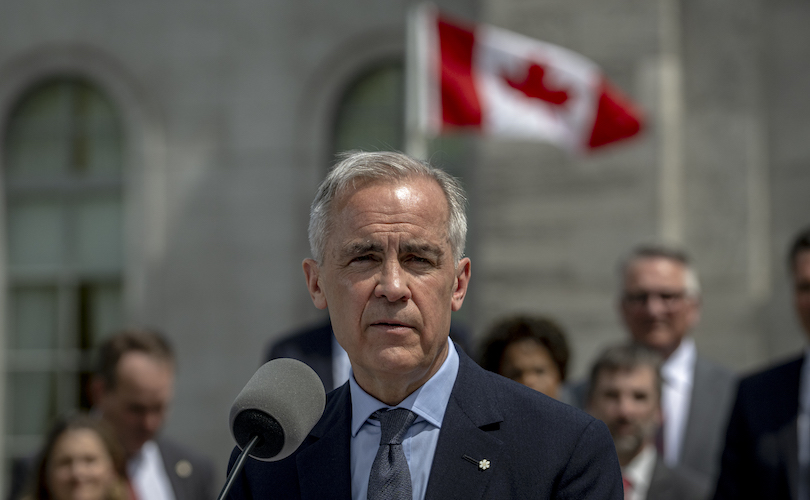
A closed-door session quietly gathered senior federal officials — a mix of policy, finance, immigration, foreign affairs, and revenue experts — and it deserves attention for what it signals about government control, transparency, and the role of media in a free society.
The meeting included members of Carney’s Privy Council Office, the Treasury Board, immigration department, Global Affairs Canada, and the Canada Revenue Agency. That lineup reads like the architecture of state power coming together to coordinate decisions that could reach into public information flows and citizen trust. When so many levers of government are in the same room, the public has a right to ask why and to demand answers about scope and intent.
Talk behind closed doors is normal for officials hashing out logistics, but secrecy breeds suspicion when it touches the press. Conservatives worry that government officials may be laying the groundwork for policies that sideline dissenting voices or favor friendly outlets. Transparency is not optional if we expect accountable leadership, and we should be alert to any pattern that limits independent inquiry.
Big-government coordination between agencies like the Treasury Board and the Canada Revenue Agency can signal administrative clampdowns as easily as fiscal reforms. When funding, regulatory power, and diplomatic messaging converge, the risk is that policy becomes an instrument for political steering rather than neutral governance. Citizens who prize free markets and free speech should be cautious about concentrated bureaucratic power being used as a blunt tool rather than a neutral mechanism.
There are legitimate reasons that immigration and Global Affairs officials might meet with domestic policy teams — national security, consular priorities, or cross-border information sharing come to mind. Still, those justifications do not eliminate the need for boundaries and public oversight. Procedure matters: clear mandates, documented objectives, and post-meeting disclosures can keep such coordination within democratic norms.
From a Republican-leaning perspective, the concern isn’t conspiracy but competence and restraint. We value efficient government, but we also demand it respect private institutions and the watchdog role of media. Any steps that look like centralized lists, media influence, or indirect pressure should be met with scrutiny, not complacency. The proper response is tough questions, not blind trust.
The Canada Revenue Agency’s presence is especially notable because tax authorities have immense reach and discretion. When CRA interactions touch on media entities, the potential for coercion or selective enforcement becomes a live issue. Political actors on either side must resist the temptation to weaponize financial audits or tax rules against institutions that challenge them.
Meanwhile, the Treasury Board handles the purse strings and administrative rules that shape public service behavior. If those rules evolve in secret toward content oversight or to reward compliant outlets, the effect will be chilling. Public servants must follow law and policy, not political preference, and citizens deserve mechanisms to review how those standards are set and applied.
Global Affairs brings the international angle: foreign policy messaging, diplomatic sensitivities, and cross-border media relations can complicate domestic norms. When foreign-facing communications mix with domestic media management, lines blur and accountability fades. Reinforcing the distinction between international diplomacy and domestic press relations is essential to protect free expression at home.
All institutions in a free society must operate with checks, balances, and clear records. Closed meetings are not inherently sinister, but secrecy must be justified and followed by sufficient disclosure. Demand records where appropriate, call for independent review when powers overlap, and insist that citizen rights always outrank bureaucratic convenience.
In the end, the key is preserving a robust public square where taxpayers get straight answers about how decisions that affect media and public discourse are made. If officials want trust, they should earn it with openness, not cultivate it through opaque meetings and guarded explanations. Democracy thrives on sunlight, not secrecy.
