
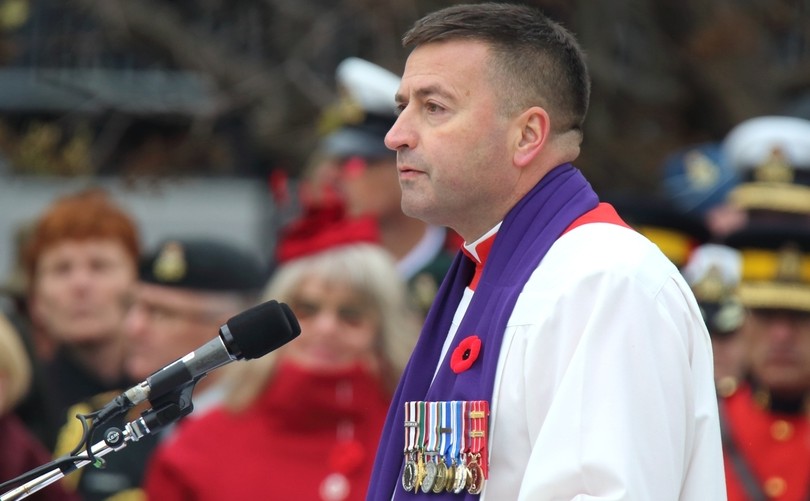
Canada’s military has rolled out a new “spiritual reflections” policy that is stirring up a lot of backlash, especially because it tightens the rules around prayer at public ceremonies. The change affects the way chaplains and service members can speak at events tied to remembrance, awards, commissioning, and other official moments, and critics say it strips faith right out of traditions that have long carried it.
A Canadian Armed Forces member says the old approach made room for prayer that could be shared across faith traditions without flattening everything into bland, generic language. That matters, he argued, because ceremonies like Remembrance Day are not just pageantry, they are moments when people honor sacrifice, loss, and duty in a way that often reaches beyond simple civic language.
The new direction says public or semi-public remarks must reflect state religious and spiritual neutrality, which means avoiding words, symbols, and actions tied to a particular faith tradition. In plain English, that means no prayer in public settings and, in many cases, only a secular reflection where a prayer used to be. For people who believe those ceremonies should still leave room for God, that feels less like neutrality and more like a shutout.
The policy lays out a broad range of events where this stripped-down approach applies, including graduation parades, change of command ceremonies, ship commissioning, ribbon-cuttings, honours and awards, festive or seasonal mess dinners, and military commemorations. That is a wide net, and it reaches into the everyday ritual life of the armed forces, not just the biggest public holidays.
One of the most controversial parts is the carve-out for Indigenous cultural practices, which the policy says can be included for cultural, historical, and educational purposes. The document ties that to reconciliation and Canada’s constitutional recognition of Indigenous rights, while making clear it does not count as endorsing a belief system. Critics say the result looks uneven, since traditional faith expressions are being squeezed while other spiritual practices are given more room.
The CAF member interviewed on the matter did not hide his frustration. He said the old policy allowed inclusive prayer rooted in different faith traditions, while the new one pushes religion out of public view and leaves what he described as a state-backed secularism that sidelines believers.
He also pointed to the message this sends in ceremonies that honor the dead, saying prayer has historically been part of how Canadians mark sacrifice and memory. In his view, removing that public expression does not create harmony, it just tells religious people to keep quiet when the country is supposed to be honoring them too.
There is also a deeper tension here about what neutrality actually means. If neutrality is supposed to mean the state does not pick a winner, then a system that allows some spiritual expressions while blocking others starts to look less neutral and more selective. That is why the member said the policy ends up “favouring atheism over belief,” while also treating non-Christian First Nations beliefs differently from monotheistic ones.
The member was especially blunt about the impact on Christian First Nations personnel, who may not connect with pre-Christian indigenous religious expressions. He said it is hard to square the policy with real inclusion when the rules can leave some Indigenous Christians feeling like their own faith is being pushed aside in the name of reconciliation.
He also argued that the changes close off what may be one of the last spaces where prayer can still be heard in a public Canadian setting. That is a big claim, but it captures the larger fight over whether public institutions should preserve room for faith or reduce everything to a neutral script that never risks offending anyone.
The policy change did not come out of nowhere. The CAF had already tried to clamp down on public prayer in the past, and it faced sharp pushback from service members, veterans, and other Canadians who saw the move as unnecessary and hostile to religious tradition. In earlier episodes, that pressure forced reversals, which is why this latest policy is landing with so much skepticism.
Even now, the debate is bigger than one ceremony or one branch of service. It is really about whether Canada’s institutions can still recognize faith as part of public life, or whether they will keep narrowing the space until belief is treated like a private hobby that has no business showing up when the nation gathers to remember, honor, and speak plainly about what matters.
