
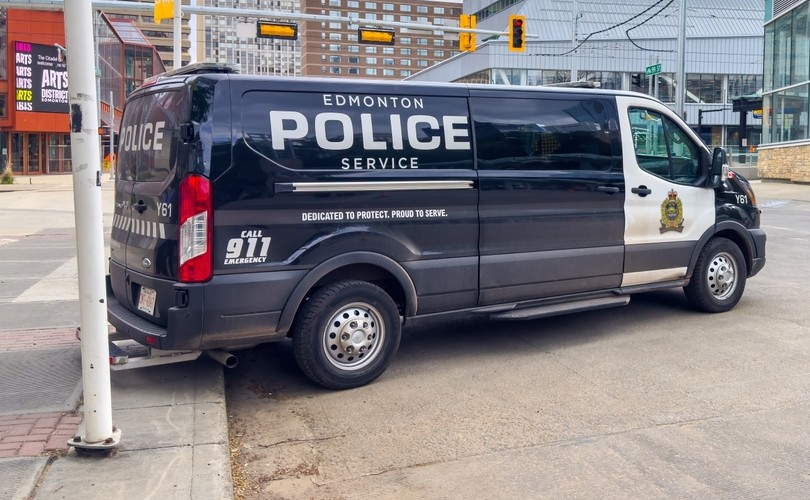
Canada’s free speech fight is getting louder, and the latest flashpoint came from a deleted Edmonton Police post urging people to report “online hate.” The backlash was immediate, with critics warning that vague hate-speech rules can quickly turn into a pressure campaign against ordinary Canadians, especially when the line between offensive speech and criminal speech starts to blur.
The police post used stark language, saying, “You typed it. Someone lived it. Online hate isn’t ‘just a comment.’ It hurts real people and harms real communities. Hate has no home here.” It also pushed viewers toward examples of reportable comments, which only added to the anger once people realized how broad the message sounded.
Andrew Lawton argued that the problem is not just bad taste or rough language, but the way authorities seem to be stretching the meaning of hate speech. “Some of these posts call for violence and could meet criminal threshold, but I struggle to see how most of these sample hate posts would be illegal (which is different from offensive, hurtful, uncivil, etc.),” Lawton . “This is precisely the chilling effect I warned about with Bill C-9.”
Howard Anglin made a similar case, saying the police response crossed a line. “This is outrageous,” Anglin . “None of the comments I can see, as offensive as they may be, meets the standard for hate speech set out by the Supreme Court in Whatcott. The Alberta government needs to remind the (Edmonton Police) what the law they are supposed to be enforcing is, and isn’t.”
https://x.com/AndrewLawton/status/2083626492462878908
That concern is not coming out of nowhere. In Canada, the language around hate, violence, and extremism has already grown elastic enough to make many people wonder what gets flagged next. What one agency calls harmful rhetoric, another may treat as political speech, religious conviction, or plain old disagreement.
The deeper fear is that this sort of official messaging teaches people to self-censor before anyone ever knocks on a door. Most people do not want to be dragged into a police conversation over a sharp post or a crude comment, even if the comment is ugly rather than illegal. Once that fear sets in, the public square gets smaller without any court ever saying it should.
That is where the debate around Bill C-9 and broader federal policy becomes impossible to ignore. Critics say the government has been taking an increasingly expansive view of hate speech, one that reaches beyond true threats or direct incitement and into areas that look a lot like ideological enforcement. In that climate, even basic disagreement can start to feel risky.
The conversation gets even murkier when “gender-based violence” enters the picture. Earlier reporting noted that federal definitions have treated “deadnaming” as an example of harm, which means speech that many would view as a name or identity dispute can get folded into a much more serious category. That is a big leap, and it matters because words like that can be used to justify more surveillance and more pressure from institutions.
Canada’s intelligence apparatus has also been watching online opposition to LGBT ideology for years, and that raises the stakes even higher. Parental rights activists have appeared in CSIS reporting as potential threats, which tells a lot about how broad the net can become when institutions start looking for “extremism” instead of actual criminal conduct.
A June report about a CSIS memo added fuel to the fire by saying more than 10,000 “anti-LGBTQ” posts appeared after the Tumbler Ridge shooting involving a trans-identifying shooter. The memo warned about increased intimidation and harassment, along with possible extremist violence, while also saying a targeted attack on LGBTQ public officials was unlikely. That mix of caution and alarm is exactly why so many Canadians are asking who gets to define the danger and how far that definition can stretch.
The real issue is not whether cruel speech is ugly. It is ugly, and most people know it. The issue is whether government agencies begin treating religious belief, traditional moral views, or even sharp criticism of ideology as evidence of extremism, because that is when free speech stops being a right and starts looking like a permission slip.
That is why the deleted Edmonton Police post landed so hard. It was not just a social media mistake, but a glimpse of how quickly public institutions can slide from policing conduct to policing thought, and that shift is exactly what has so many Canadians on edge.

1 Comment
Canada always censors ALL