
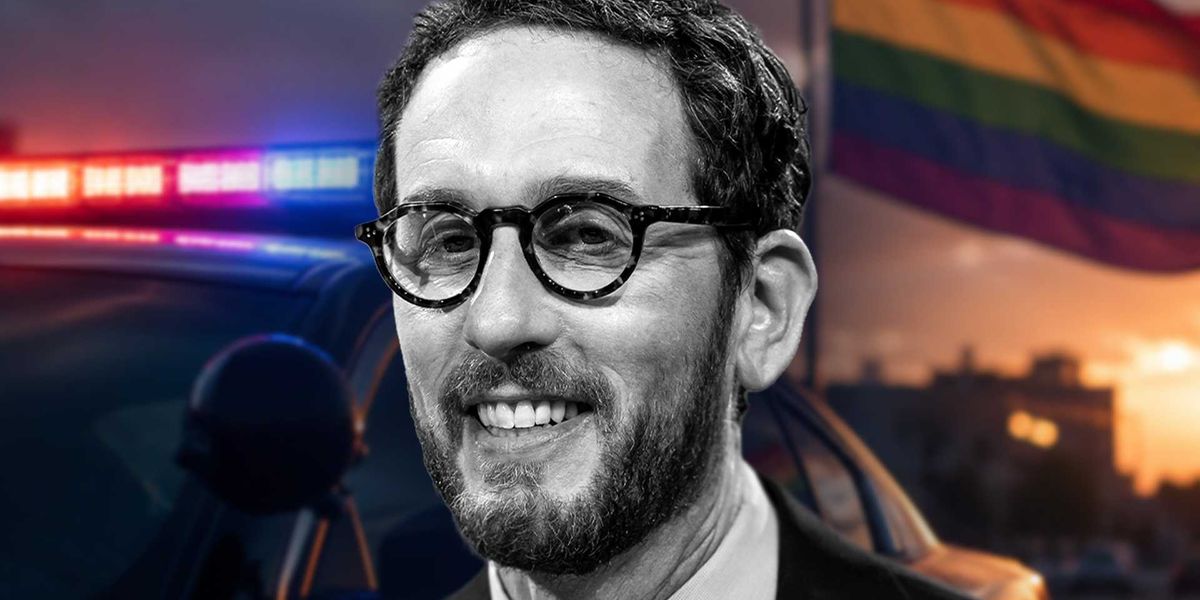
The story centers on California politics, the strange ways money moves through the system, and the growing backlash around Scott Wiener’s agenda. It also digs into the tension between law enforcement support, LGBTQ activism, and the power players who keep the whole machine humming.
California’s political world has a talent for turning contradictions into routine. That is exactly what makes the debate around Scott Wiener so combustible, because the guy at the center of it keeps drawing support from places that do not fit neatly together.
Wiener has built a name for himself as one of the most aggressive progressive voices in Sacramento, and that reputation is doing a lot of work. He is tied to a brand of politics that leans hard into LGBTQ activism, pushes back against police priorities, and treats cultural battles like a permanent campaign.
What has people scratching their heads is the kind of backing that sometimes flows his way. When police-friendly donors, business interests, and institutional Democrats end up crossing paths with a lawmaker who is openly hostile to the law-and-order side of the conversation, the whole thing starts to look less like principle and more like raw political math.
That is the ugly little secret of California politics. Officials can say one thing in public, vote another way behind closed doors, and still collect checks from people who claim to care about stability, public safety, or community trust.
The result is a mess that ordinary voters can feel but rarely untangle. A cop may back a candidate because of one issue, a donor may follow party loyalty, and a big-name Democrat may protect a rising ally because the broader machine needs the votes, the favors, and the headlines.
Wiener’s rise also says a lot about how far the California left has pushed the Overton window. Ideas that once would have sparked immediate pushback now get packaged as progress, while concerns about police morale, crime, and public order are treated like obstacles to be managed, not problems to be solved.
That shift matters because it changes who gets rewarded. Politicians who keep turning up the heat on police, parents, and traditional neighborhood concerns still get rewarded by activist networks and elite insiders who prefer ideology over common sense.
The name Nancy Pelosi sits in the background of all this for a reason. In California, influence often works through relationships, not just public speeches, and the state’s Democratic establishment has long been skilled at shielding its own while presenting a polished message to the rest of the country.
That is why the money trail matters so much. Voters are told to trust the slogans, but the donations, endorsements, and alliances often tell a different story, one where power is the real product and ideology is just the wrapper.
People across the state are also getting weary of the performative politics attached to these fights. They see crime, school problems, and public disorder in real time, then hear elected officials insist the real issue is language, optics, or who feels offended in the latest debate.
That disconnect is where the backlash grows. When residents think leaders care more about ideological purity than practical results, trust erodes fast, and once that happens, every new scandal or donor revelation lands harder than the last.
Wiener’s political lane thrives in that kind of environment because it rewards noise and confrontation. But it also exposes a deeper problem in California, where the same institutions that claim to stand for public safety and fairness keep making room for policies that many voters believe are driving the state in the wrong direction.
That tension is not going away anytime soon. As long as the state keeps feeding the same alliances, the same money, and the same polished talking points, voters will keep seeing the gap between what California politicians say and what they actually support.
