
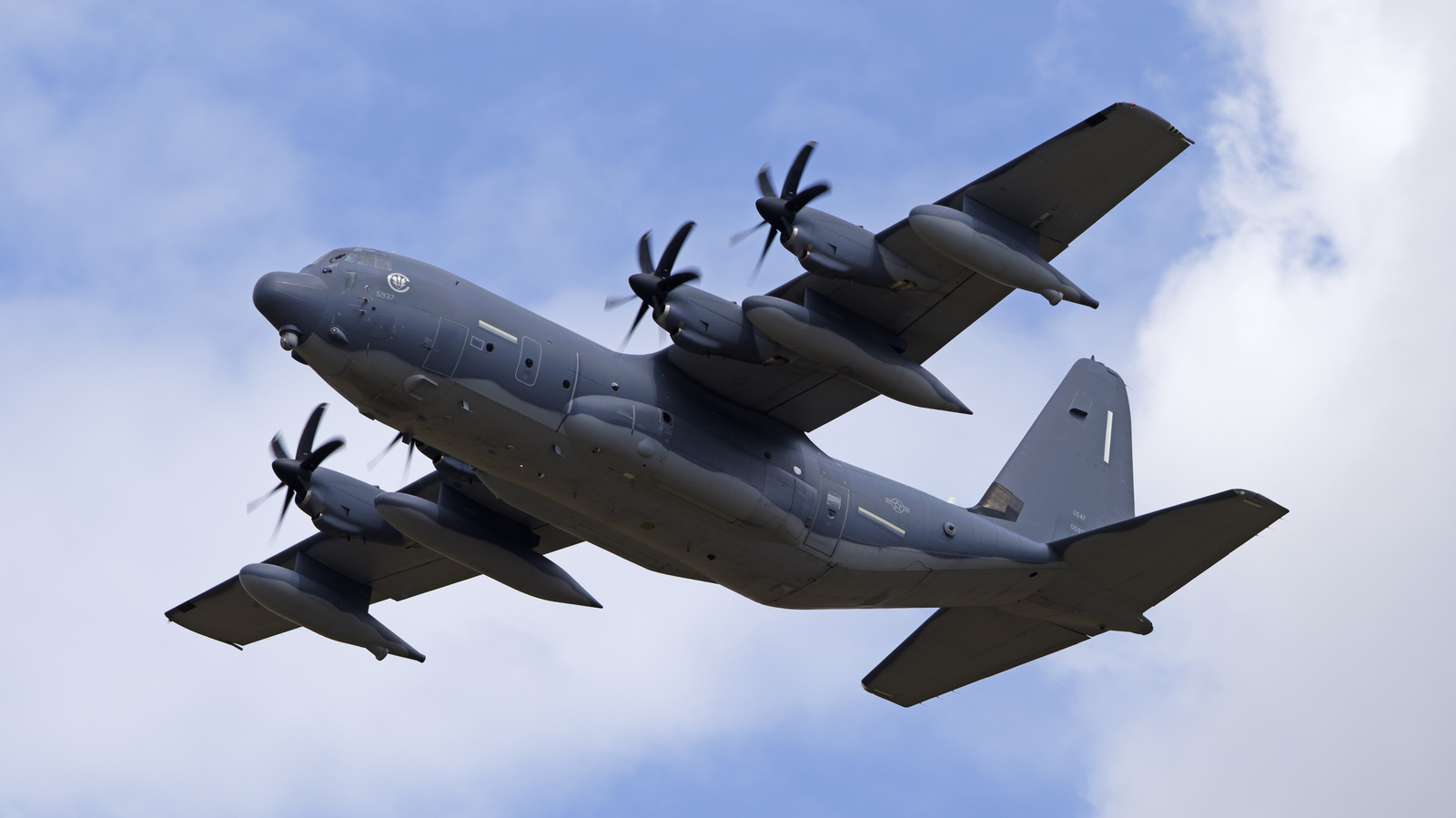
This piece explores a C-130 variant built for moving large loads and slipping in and out at very low altitude, focusing on what makes it suited for infiltration and exfiltration missions, how crews prepare for those risks, and the technologies that enable precise low-level operations. It outlines structural features, mission profiles, crew roles, and the trade-offs commanders accept when using such an aircraft in contested or austere environments. The goal is a clear, practical look at why this platform remains valuable for inserting and extracting people and gear where other aircraft cannot go.
At its core, this C-130 variant combines big cargo volume with rugged, short-field performance. The airframe accepts outsized pallets, vehicles, and groups of personnel, all while keeping a low radar and visual profile during certain mission phases. That cargo capability lets planners deliver whole teams and their equipment in a single lift instead of piecing a mission together from multiple helicopters.
Design tweaks for low-altitude work include reinforced landing gear, modified flaps, and specialized avionics for terrain following. The plane’s structure tolerates rough, unprepared strips that would damage lighter transports. Those physical advantages are paired with sensors and navigation suites that let the crew navigate tightly choreographed routes at night or in poor weather.
Crew composition shifts to support the mission set: additional loadmasters, a dedicated navigator, and often a systems operator for electronic sensors join the standard pilot and co-pilot. Loadmasters choreograph rapid exits and entries while keeping weight and balance within tight margins. Each role is drilled to a repeatable rhythm because timing matters when the aircraft is briefly exposed in hostile airspace.
Operationally, infiltration missions usually favor surprise and speed, getting people in quietly under radar or visual barriers. Exfiltration emphasizes safe recovery and preservation of forces, often requiring the plane to hover or roll slowly over a pickup zone for only seconds. Both types of missions rely on precise coordination on the ground, with marking devices, forward air controllers, or pre-positioned guides to orient the crew at low altitude.
Night operations multiply the platform’s strengths by using darkness as concealment, but they also magnify the dangers of terrain and obstacles. Night-vision goggles, forward-looking infrared, and terrain-following radar reduce those hazards but do not eliminate them. Pilots train repeatedly in realistic environments so decisions under pressure become automatic and errors decrease.
The aircraft’s defensive fit can include flare and chaff dispensers, infrared suppressors on engines, and limited electronic countermeasures. Those systems improve survivability during the brief periods the aircraft is vulnerable, but they do not make it invulnerable to well-prepared air defenses. Mission planners factor in likely threat levels and will reroute, delay, or cancel if risks become unacceptable.
Because these missions often occur in austere locations, logistical planning is as important as flying skill. Fuel caches, maintenance support, and contingency plans for damaged aircraft or bad weather must be in place before crews commit. The ability to carry spare parts and basic repair tools on board adds resilience and keeps options open if a quick turnaround is needed.
Loadout choices reflect the mission: light and agile for rapid exfiltration, heavier and more robust for long-range infiltration with equipment. Seat and pallet configurations change quickly to meet the task, and crews practice reconfigurations until they become second nature. That flexibility is a major reason commanders prefer this type of transport for complex insertion missions.
The aircraft’s sheer presence also shapes strategy; knowing a large, capable transport can insert and recover teams at unexpected points forces adversaries to spread their defenses thin. That psychological and operational effect can be as valuable as the physical delivery of people and gear. Commanders weigh that advantage against the obvious cost: missions in contested airspace are inherently risky and demand top-level planning and execution.
Training, maintenance, and continuous upgrades keep the platform relevant despite evolving threats. Software updates for navigation, new sensor packages, and improved defensive systems extend operational life and capability. The combination of cargo capacity, low-altitude performance, and adaptable crew procedures ensures this C-130 variant remains a go-to choice when teams must get in and out where other aircraft can’t.
