
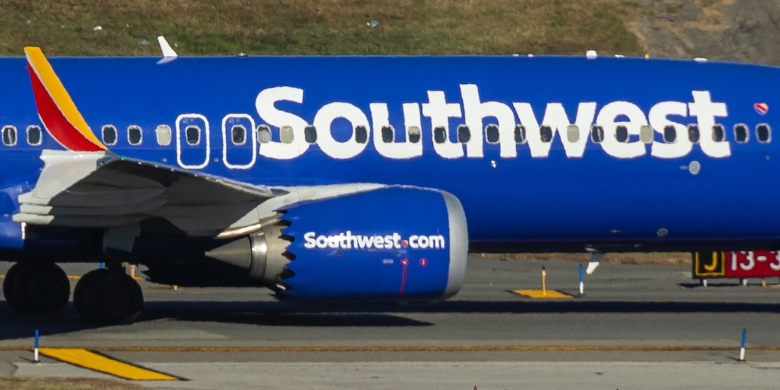
In a shocking incident at Dallas Love Field, a Southwest Airlines flight preparing for takeoff was struck by a bullet near the cockpit. The incident occurred Friday night as Flight 2494 was taxiing for departure to Indianapolis. The plane immediately returned to the gate, and all passengers were evacuated.
The Federal Aviation Administration (FAA) and local police confirmed the incident, and authorities are now investigating the source of the gunfire. Dallas Police and an FBI airport liaison are working together to determine whether the shot was intentional or a random occurrence.
Flight 2494 was hit by gunfire at approximately 8:30 p.m., according to KXAS-TV. The plane, which was carrying passengers for a routine flight, was forced to return to the gate after the pilot reported unusual sounds coming from outside the aircraft.
Southwest Airlines swiftly removed the plane from service, and the runway was temporarily shut down as police conducted a thorough investigation. Although no one was injured, the event left passengers rattled once they learned the details.
Shannon and Jamie Lee were on board with their two children when the incident occurred. They recounted to KXAS that the pilot initially downplayed the situation, referring to it as a mechanical issue.
“He said there was a rattle outside of the plane, and they needed to return to the gate,” Jamie Lee recalled. Passengers were told that the front of the plane was damaged, and everyone had to deplane.
The Lees, like other passengers, remained calm, assuming it was a standard technical problem. It wasn’t until they landed in Indianapolis and encountered a news crew that they learned the plane had been hit by a bullet.
Shannon Lee expressed concern about how close their family was to the cockpit. “My son was in the window seat, and we were in row 13. That’s not far from the cockpit,” he said.
While the Lees appreciated Southwest’s initial handling of the situation, they felt the airline should have been more transparent. “Had we known the plane was shot at, we likely would’ve delayed our trip or flown out of a different airport,” Jamie Lee stated. “Passengers deserve to make an informed choice about their safety.”
Armen Kurdian, a retired Navy captain and aviation expert, emphasized the severity of the situation. “Holy cow, someone shot at a commercial aircraft!” Kurdian told KXAS.
He speculated that investigators will analyze the bullet’s trajectory to determine the shooter’s location. “They’ll look at the depth of penetration and speed to estimate the range. The fact that it struck so close to the cockpit is unlikely to be a coincidence,” he explained.
Kurdian also highlighted the potential risks: “If the bullet had hit something critical, like a hydraulic system, the pilots would’ve been alerted immediately.” However, he reassured that modern airliners have multiple backup systems, making a catastrophic failure unlikely.
Despite the low probability of severe damage, Kurdian raised concerns about security vulnerabilities. “This incident might inspire bad actors to target planes. It’s a wake-up call for airports to rethink their security measures,” he said.
The incident has raised urgent questions about airport security. Kurdian suggested implementing more robust barriers around airports and increasing patrols near runways. “Physical barricades or concrete walls could help prevent similar events,” he proposed.
The Minnesota Secretary of State’s Office, which oversees election security, noted that swift action by the Hubbard County Auditor ensured a quick response. Local and federal authorities are expected to review current protocols and consider whether additional measures are necessary to protect aircraft and passengers.
In the aftermath, Southwest Airlines issued an apology to affected passengers, offering them vouchers for future flights. While the airline’s swift actions on the ground were praised, some passengers, like the Lees, believe there’s room for improvement in how such incidents are communicated.
“We fly frequently, and our kids often fly alone,” Shannon Lee said. “Incidents like this make you think twice about airport security.”
As police and federal agents investigate, they’re focused on identifying the shooter and determining the motive. Whether the shot was a deliberate act of sabotage or a random accident remains unknown.
This incident has spotlighted the vulnerabilities in aviation security, prompting discussions about how to prevent future occurrences. From increasing surveillance to enhancing physical barriers, the aviation industry may face significant changes in the wake of this near-tragedy.
For now, passengers can only wait and hope that lessons from this alarming event lead to better protections in the skies.
