
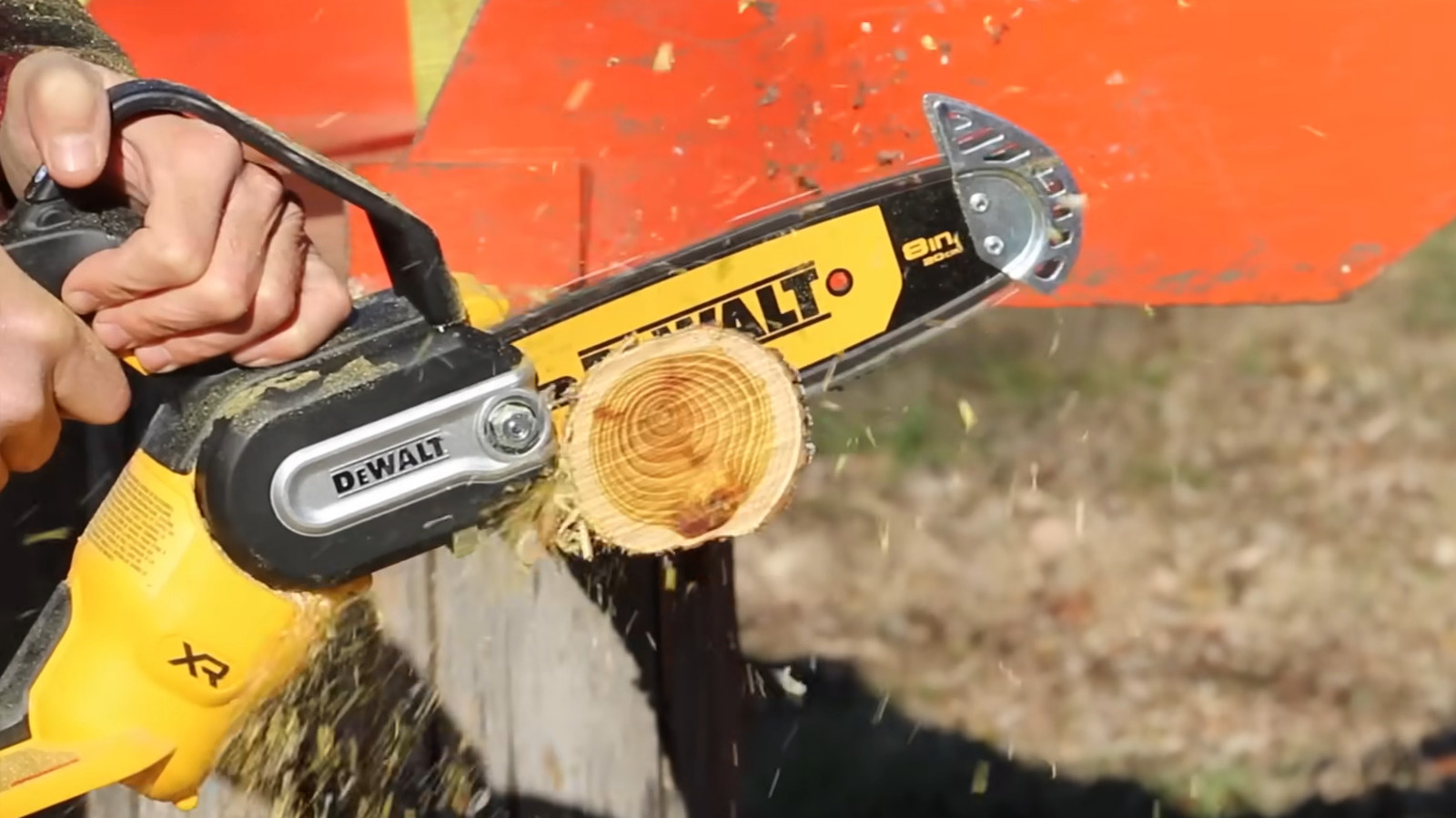
A tool reviewer put an inexpensive pruning chainsaw head to head with a genuine DeWalt model to see whether paying more actually buys better performance, and the matchup produced some unexpected takeaways about power, durability, and value for money.
The tester set up real-world trimming scenarios instead of relying on lab numbers, so the comparison focused on what matters when you are out in the yard. Both saws were evaluated for cutting speed, battery life, ease of use, and how they handled branches of different sizes. That hands-on approach highlights the kind of trade offs most buyers face when choosing a compact chainsaw.
Right away the budget unit looked the part for light jobs, with a compact design and controls that felt familiar. It was noticeably lighter than the DeWalt, which helped during extended use around the garden. But lighter does not always mean better, and the savings show up in build quality and feel.
When the first cuts started, the DeWalt proved consistently quicker through thicker limbs, keeping a steady chain speed under load. The cheaper saw managed fine on small branches and brush, but it slowed and struggled once the bark and grain became tougher. That capacity gap matters if you plan to tackle more than occasional trimming.
Battery performance is where the gap narrowed in a surprising way, since both units used similar capacity packs in the tests. The budget saw lasted through multiple light sessions without needing a recharge, and the DeWalt offered longer runtime under heavier load. For most homeowners doing spot pruning, the cheaper option could still cover a weekend of yard work without drama.
Ergonomics favored the DeWalt for comfort and vibration control, which reduces fatigue when you are cutting for a while. The budget model put more vibration into the hands and had a less refined grip, making longer tasks more taxing. Both machines felt stable, but the premium feel of the DeWalt is hard to ignore once you spend time with it.
Safety features diverged in key ways, with the DeWalt including more advanced chain brakes and a smoother throttle response. The budget saw had basic protections and worked as expected, but it lacked the extras that ease uncertain moments when a cut binds or a branch shifts. Those additional fail safes are worth thinking about if you use the tool frequently or on larger material.
Maintenance revealed another difference, as the DeWalt’s tensioning and chain adjustments were simpler and more robust over repeated use. The budget saw required more frequent attention to the bar and chain to keep it cutting cleanly. Over time that added maintenance can erode the initial cost savings, especially for regular users.
Noise levels were comparable for casual use, though the DeWalt was a touch smoother and less shrill under strain. For neighbors and nearby pets, both units are loud enough to notice, so hearing protection is a must either way. The quieter operation under heavy load was another detail that leaned in the DeWalt’s favor.
Price is the most obvious difference and it still matters. If your trimming needs are light and occasional, the budget model delivers real value and gets the job done. If you need durability, less maintenance, and stronger performance across a range of tasks, the DeWalt proves why some tools cost more.
Buying a pruning chainsaw comes down to a clear question of expectations and frequency of use, not just sticker price. Consider how often you will use it, how large the material will be, and whether reduced maintenance and improved safety justify spending more. For occasional yard work the budget saw is a smart pick, while the DeWalt remains the choice for heavier duty and longer term peace of mind.
