
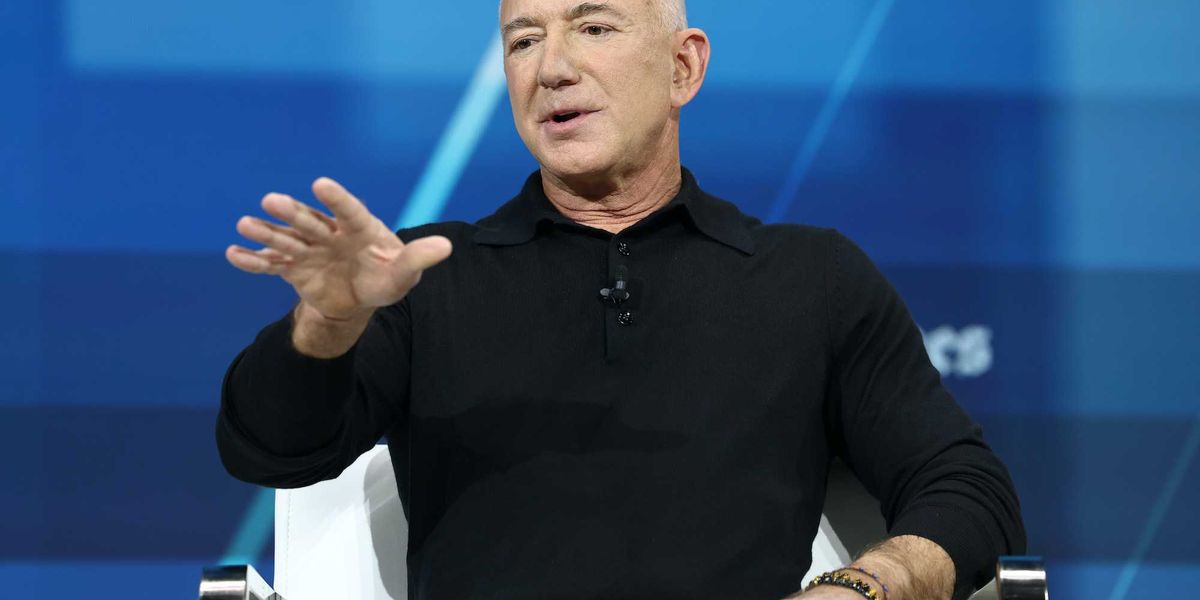
Jeff Bezos walked onto a Blue Origin factory floor and publicly unloaded on the big-government solutions coming from the left, arguing that tax rhetoric ignores the real problem: out-of-control spending and misplaced priorities. He used a clear, human example to make his point, called out political theater, and pushed for a system that protects lower-income workers instead of punishing them. The interview landed on CNBC’s Squawk Box and went viral because it spoke plainly about money, competence, and who actually bears the tax burden.
Standing among engineers and parts, Bezos didn’t mince words about taxes or the people he says politicians are overlooking. He framed the debate around fairness and consequence, insisting policy should lift ordinary workers rather than treat them as piggy banks. For Republicans and fiscal conservatives, his message lands: target waste, not wages, and stop the virtue signaling that hides policy failures.
He drove the point home with a concrete example to show how the system hits typical Americans. “People talk about making the tax system more progressive. How about we start by having the nurse in Queens not pay taxes? At all,” . The image of a nurse, juggling shifts and bills, stripped the argument of abstract numbers and forced a moral question about who policy choices actually help.
‘We shouldn’t be asking this nurse in Queens to send money to Washington. They should be sending her an apology!’
Bezos laid out the arithmetic and the moral shock together to make the case visceral and simple. “Why is a nurse in Queens who makes $75,000 a year paying more than $1,000 a month in taxes? That’s $1,000 a month that could help with rent or groceries or anything. And by the way, do you know what that all adds up to? The bottom half of income earners in this country pay only 3% of the taxes,” Bezos added. He wanted listeners to feel how much strain a thousand dollars a month represents for a family on a tight budget.
He didn’t stop at sympathy. Bezos argued those numbers expose the wrong conversation happening in Washington. “It’s only 3%. We can find 3%. It’s a small amount of money for the government,” he continued. “And the more I thought about it, to me it’s kind of absurd that we’re doing this. You know, we shouldn’t be asking this nurse in Queens to send money to Washington. They should be sending her an apology! It really makes no sense!”
https://x.com/StockSavvyShay/status/2057076626123628892
Step by step he turned the tax debate into a question of priorities and competence rather than purity. “If you’re really being honest about it, we don’t have a revenue problem in this country. We already have the most progressive tax system in the world,” Bezos said. “The top 1% of taxpayers pay 40% of all tax revenue, the bottom half pay only 3%, and I think it should be zero.”
From that stance he pivoted to spending, calling out waste that swallows resources without improving outcomes. “We actually have a spending problem,” he added and cited the $44,000 that is spent on every child in the New York City school system with worse outcomes than other cities. His point was blunt: money alone doesn’t buy results if systems are broken.
To land the point, he joked about efficiency the only way a private sector person can: by imagining Amazon run like a failing bureaucracy. “If we ran Amazon the way New York City runs their school system,” Bezos joked, “packages would take six weeks to arrive, we would charge you a $100 delivery fee, and when the package did finally arrive, it would have the wrong item in it!” The crowd could picture it, and the laughter — or lack of it — said everything.
Sorkin didn’t laugh. “That’s a skills issue!” Bezos added. The terse exchange underscored his larger claim that many public-sector failures come back to competence, not simply funding levels, and that accountability matters for outcomes taxpayers actually care about.
He closed the loop by rejecting the neat political story that more tax revenue equals help for middle-class families. “You can’t connect those two things, not logically,” he said. For listeners who worry about inflation or stagnant wages, his claim was direct: fixing spending and competence will do more for ordinary Americans than chasing revenue from a shrinking pool of taxpayers.
The interview was short and sharp, and that’s what made it sticky: it linked policy to real lives, mocked the political theater that blames wealth rather than waste, and insisted the conversation shift to protecting workers who are already stretched thin. In a media landscape that often prefers soundbites to scrutiny, his delivery felt like a call to refocus on efficiency, fairness, and results.
