The story follows a Connecticut biotech that moved from reviving pig brains to keeping recently deceased human brains functional for drug testing, using a perfusion system to supply oxygen and nutrients, suppressing electrical activity with anesthetics, slicing tissues for experiments, and drawing ethical debate over oversight and the nature of consciousness.
A few years back, researchers proved they could revive pig brains taken from a slaughterhouse, and that experiment paved the way for something far bolder. A company formed out of that work is now obtaining human donor brains after death and running them on machines designed to mimic circulation and clearance. The stated goal is straightforward: make preclinical drug testing more predictive by using intact human tissue rather than animal models or tiny lab-grown organoids.
In practice the setup looks like an industrial wet lab. Whole brains are removed from donors and connected to a perfusion circuit that pumps a blood substitute through major vessels, supplies oxygen with an artificial lung, and filters waste through a faux kidney. Tubes meet the organ via ports grafted to blood vessels, and the system keeps cells metabolically active long enough for investigators to dose drugs and measure biochemical and cellular responses.
The company says it does not restore awareness. “higher-level brain functions are not restored.” Still, safety steps are layered in. Researchers report using anesthetic agents to blunt coordinated electrical firing, and they emphasize that global patterns associated with perception and consciousness have not been seen in experiments to date. Yet the very notion of sustaining key cellular and synaptic processes in human tissue raises hard, uncomfortable questions that standard oversight frameworks were not designed to answer.
A 2019 study from the team behind the original technique warned against overreading the results. “The observed restoration of molecular and cellular processes following 4h of global anoxia/ischemia should not be extrapolated to signify resurgence of normal brain function. Indeed, quite the opposite: at no point did we observe the kind of organized global electrical activity associated with awareness, perception, or other higher-order brain functions.” That passage repeats the authors’ caution that cellular life is not the same as returned consciousness.
To reduce any possibility of coordinated activity, labs add propofol and similar agents. Propofol destabilizes brain firing patterns and drives unconsciousness by disrupting the coordinated activity that underlies awareness. Investigators argue the tissue is “almost devoid of the coordinated neural firing necessary even for minimal consciousness,” and they point to pharmacologic suppression as an added safeguard.
Still, ethicists and outside scientists have flagged gaps. Some warn there is limited institutional oversight tailored to this gray area between dead tissue and a functioning brain, and they question whether existing committees can or should govern experiments where the boundary of consciousness is both theoretical and experimentally malleable. Critics say the field moved fast, and governance has struggled to keep up with technical advances that blur the old categories of living subject versus discarded tissue.
On the practical side, companies and collaborators report real advantages. Using intact human brains arguably gives a closer read on how candidate therapies interact with human neural tissue than mouse models or simplified cell cultures. Developers say this has sped decision-making for drug companies, helping avoid false leads and prioritizing compounds that show meaningful effects in human tissue at realistic doses.
Part of the tension comes down to trade-offs: the desire to improve treatments for devastating brain diseases versus the moral unease of experimenting on recently deceased human brains. “This is brand-new, and there’s no kind of institutional oversight,” one bioethicist cautioned about the dawn of these techniques, stressing that current review systems were not created for this kind of work. Others insist on building strong, transparent governance before techniques become routine.
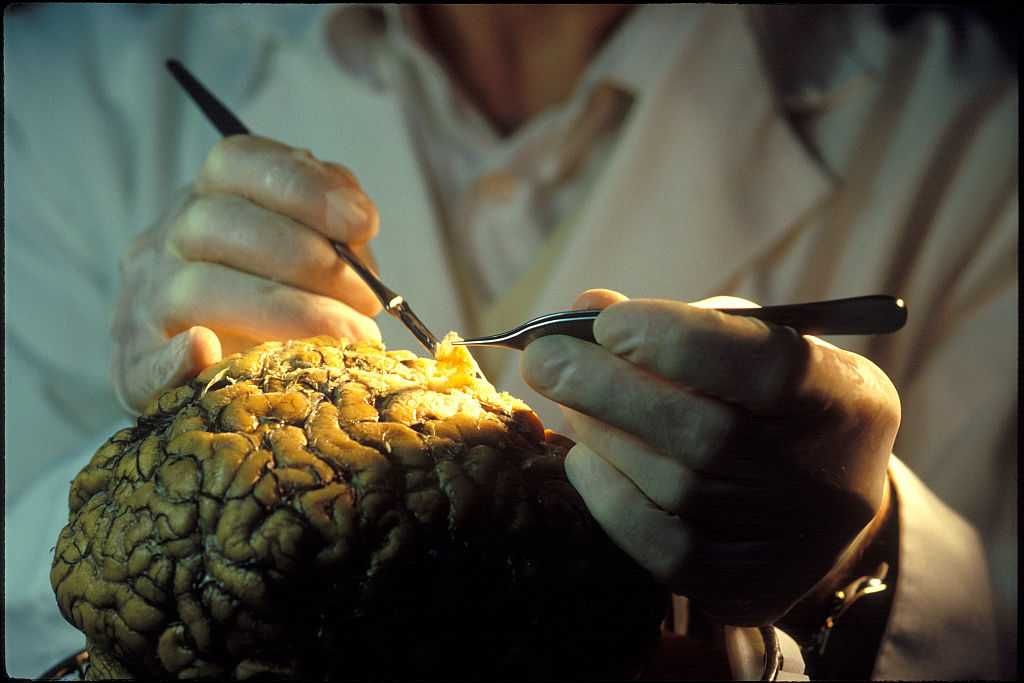
After a period of perfusion and study, the organs are typically sectioned for more detailed analyses. Researchers will dissect brains into many samples to map drug effects across regions and cell types, aiming to accelerate discovery for disorders like Alzheimer’s disease. Proponents say this approach could increase the odds of finding effective therapies, while opponents worry it normalizes an activity area that still sits in a legal and ethical blind spot.
An industry voice called the collection a useful resource. ‘It’s a remarkable brain bank.’ That praise captures why some scientists are enthusiastic: intact human tissue can fill gaps left by models that are elegant but limited. Still, excitement does not erase the call for clear rules, stronger oversight, and a public conversation about whether and how this work should proceed. Only a careful mix of scientific rigor and ethical clarity will determine what comes next.