
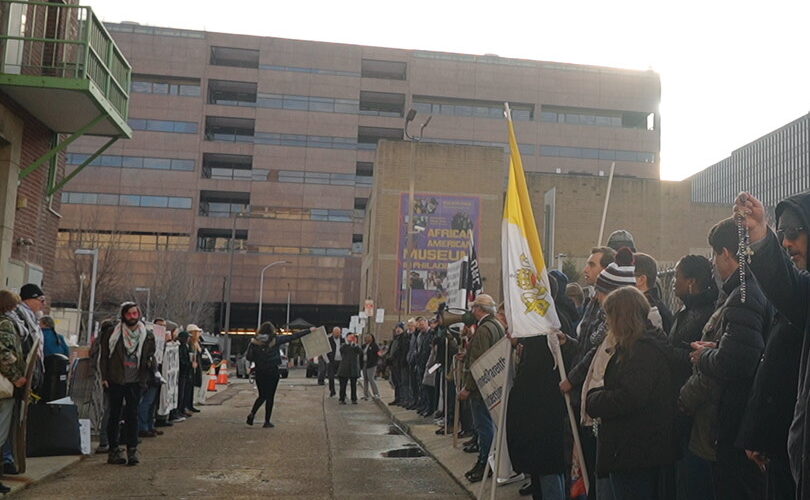
Auxiliary Bishop Joseph Coffey joined priests, the Sisters of Life, and committed pro-lifers at the Philadelphia Women’s Center as they prayed the rosary under sustained harassment. For about two hours the group stood firm, chanting and praying while facing loud interruptions and confrontational behavior from pro-abortion activists. The scene focused on peaceful prayer, the resolve of religious volunteers, and the tension between public witness and aggressive protest tactics. The gathering highlighted questions about free expression, public order, and respect for prayerful presence near an abortion clinic.
The crowd of faithful gathered early with a clear purpose: to pray and to witness without escalating tension. They held rosaries, spoke aloud in unison, and maintained a calm posture even as shouts and insults rose from nearby opponents. Auxiliary Bishop Joseph Coffey and local priests provided spiritual leadership, not provocation, and the Sisters of Life offered a solemn example of charity mixed with conviction. Their presence turned the moment into a testimony more than a confrontation.
Pro-abortion activists tried to drown out prayer with screaming and aggressive chants, but that did not halt the rosary or the silence between Ave Marias. The protesters aimed to intimidate, yet the pro-life group treated the disturbance as background noise rather than a reason to mirror hostility. This was not a political rally in the conventional sense; it was an act of religious devotion carried out in public space. That choice to pray in view of the public is both deliberate and protected.
From a Republican perspective, the episode makes clear that free assembly and religious liberty must be robustly defended. Citizens who gather for prayer have the right to be heard and to be left alone to practice their faith without harassment. Law enforcement should tolerate peaceful dissent but also ensure that no group is silenced by aggressive tactics or unlawful behavior. Respecting the rule of law means protecting the quiet exercise of conscience as well as the right to protest.
The Sisters of Life and local clergy modeled a disciplined response: no counter-shouting, no escalation, only prayerful presence and occasional calm instruction to avoid obstruction. That restraint underscored the moral high ground of those who simply seek to stand in solidarity with the unborn and their mothers. It also placed civic responsibility squarely on local officials and police to manage the line between passionate protest and unlawful harassment. Allowing mobs to intimidate peaceful religious gatherings sets a dangerous precedent.
Watching religious leaders pray while being yelled at brings uncomfortable questions about civic norms. Are citizens free to practice religion without being harassed on the sidewalk? Do communities value public order over performative outrage? In cities where political passions run high, the answer should be a firm yes: peaceful religious practice must not be sacrificed to noisy intimidation. Otherwise, civic life tilts toward the loudest and most coercive voices, which is no victory for pluralism.
For pro-lifers on that sidewalk, the encounter was a test of perseverance and a public witness to what they care about most. The two-hour window of prayer became a compact lesson in steadfastness for volunteers who face similar challenges daily outside clinics nationwide. Their steady posture was a reminder that conviction often requires calm endurance, not spectacle. That kind of resolve invites respect rather than ridicule.
The scene at the Philadelphia Women’s Center will likely be replayed in political debates about abortion, public space, and religious freedom. Conservatives should highlight the need for clear protections for peaceful religious assembly and call out tactics that amount to intimidation. More than partisan scoring, the moment deserves sober attention to how communities treat those who peacefully express deeply held beliefs. When prayer is met with screaming, it reveals more about the state of our public discourse than about the act of praying itself.
