
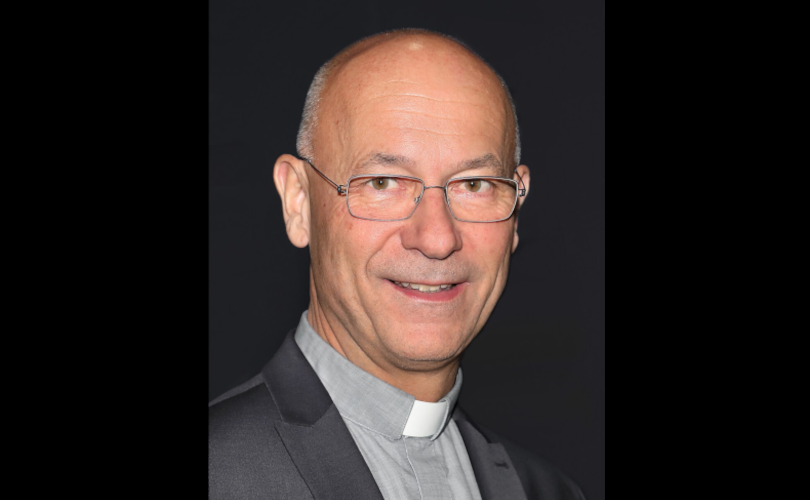
Fr. Anton “Toni” Faber, a well-known Austrian priest, has announced an early retirement after images and appearances with a blonde woman presented as his companion stirred public controversy. The episode has prompted questions about priestly conduct, church accountability, and the line between private life and public expectation. This piece walks through the incident, the reactions it produced, and the broader issues it exposed.
The controversy began when Faber was seen at several high-profile social gatherings accompanied by a woman who was portrayed as his partner. Photos circulated widely and quickly turned a local curiosity into a national topic, drawing attention from parishioners, secular media, and online commentators. For a priest with a long public presence, the optics alone were enough to generate heated debate.
Many faithful felt betrayed by what they saw as a breach of clerical standards, while others pushed back, calling for restraint and for the protection of personal privacy. Different corners of the public sphere treated the story as either evidence of hypocrisy or as a cautionary tale about social media judgment. That split response underscored how charged conversations about clergy and personal life remain.
Church leaders moved to contain the fallout and signaled that Faber would step down earlier than planned. The decision to retire was framed in institutional terms, aimed at calming tensions and allowing for an orderly transition in parish leadership. Whether the move fully addresses the questions raised about conduct and responsibilities is something people continue to debate.
Faber is not an ordinary parish priest. His profile and connections to cultural and social circles made his behavior fodder for a wider audience, and that amplified the reaction. When a public figure tied to a religious office appears in settings that clash with expectations, the story becomes less about a single act and more about what institutions represent to their communities.
Catholic clergy are bound by vows and a visible set of expectations, and deviations from that model tend to create intense scrutiny. Observers pointed out that public trust in religious figures relies heavily on perceived consistency between words and actions. That expectation is part practical and part symbolic, but it drives a lot of the anger these stories generate.
At the same time, the line between a priest’s private life and his public role is not always clear, especially in an age when cameras follow social calendars as much as sermons. Some argued that moral failings demand accountability, while others urged compassion and due process. Both impulses reflect a society trying to balance high standards with human complexity.
Past controversies involving clergy have taught institutions that transparency and swift, fair processes help manage damage and restore confidence. Critics argued that any response should not be merely performative, and that transparent investigation and clear communication are necessary to rebuild trust. How the diocese handles follow-up steps will be watched closely.
Parishes feel the ripple effects fast. Congregations that admired a long-serving priest must now come to terms with sudden change, and that can create confusion, anger, or withdrawal. Local communities often shoulder the emotional fallout, and parish leaders face the immediate task of pastoral care while the institution sorts the broader implications.
For Faber personally, retirement opens several possible paths: a quieter private life, pastoral work outside the public eye, or engagement with the questions that led to this moment. Canonical procedures and personal circumstances will shape the details, and those outcomes will influence how the story is remembered. The human side of these episodes is easy to overlook amid headlines and commentary.
The episode also highlights a wider cultural tension in Austria and similar societies between traditional religious expectations and modern social norms. Religious figures who inhabit both sacred and secular spheres face particular risks when public appearances clash with institutional rules. That tension will keep these conversations alive beyond any single resignation or retirement.
Ultimately, this situation tests both individuals and institutions: how leaders respond, how communities process disappointment, and how transparent oversight is applied. The story remains unresolved in many ways, and its longer-term impact will depend on the steps taken next by church authorities and by the people directly affected.
