
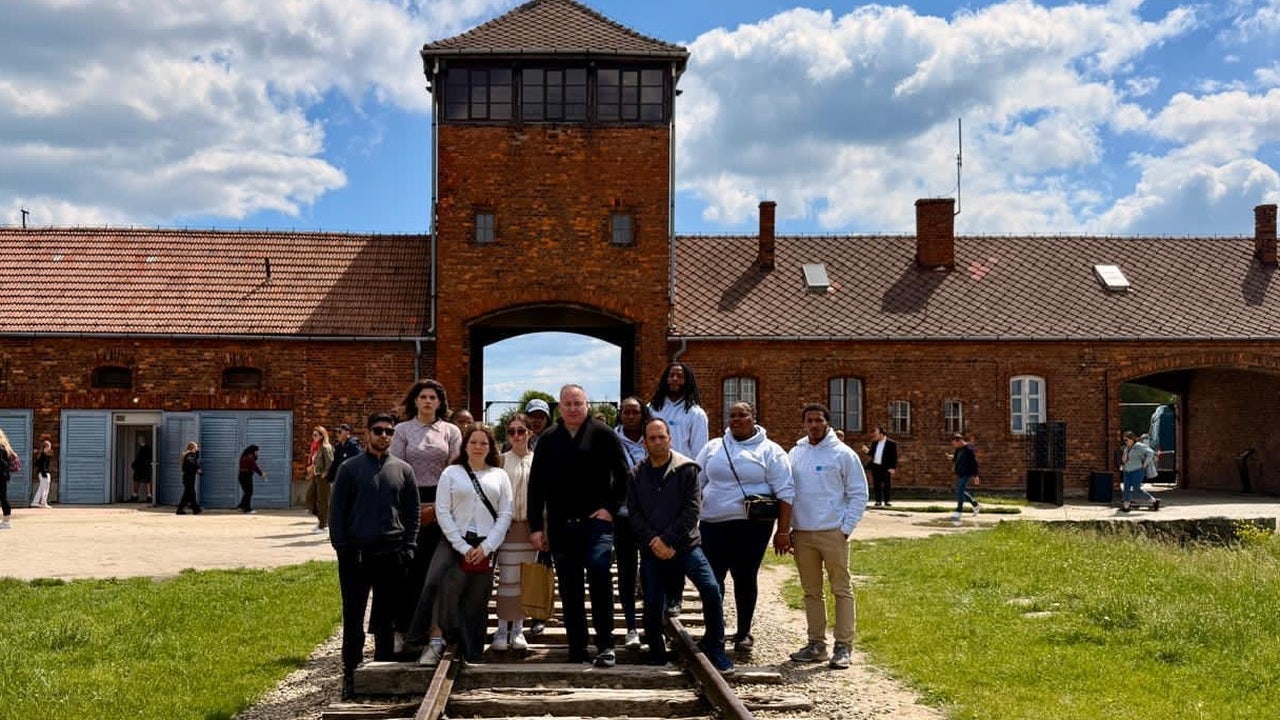
Students do not just learn from lectures and textbooks. Sometimes the real lesson comes from being thrown into a place where history still hurts, and then having to decide whether to turn away or stand together.
A recent joint trip to Poland for Black and Jewish college students turned into exactly that kind of moment. A simple act of disrespect in Warsaw put prejudice right in the middle of the journey, but it also showed how quickly solidarity can rise when students refuse to leave one another alone.
The group had come to study the Holocaust at Auschwitz and to face the machinery of hatred up close. But the trip was not only about looking back. It was also about seeing how old wounds still echo on modern campuses, where division often runs deeper than administrators want to admit.
What happened in the shop was ugly and plain. A clerk would not place change directly into the hand of a young Wilberforce University student, and that insult hit hard because it came on a trip meant to confront bias, not carry it around. The moment could have split the group apart, but instead it pulled them tighter together.
Black students from Wilberforce and Jewish students from Touro University responded the way the best campus communities should. They closed ranks, walked together, and kept moving even as people stared. That choice mattered because it turned an isolated act of prejudice into a shared lesson about dignity and backbone.
The trip itself was designed to do more than educate. It brought students together in New York with Holocaust survivors, then carried them to Warsaw, Treblinka, Auschwitz-Birkenau, and Kraków, where history was not abstract or polished. It was raw, physical, and impossible to ignore, from the remains of the Warsaw Ghetto to the piles of shoes and luggage at Auschwitz.
That kind of experience lands differently than a classroom talk. Students ate together, prayed together, listened to survivors, and stood in places where millions were robbed of life and identity. By the end, the group was no longer made up of separate identities side by side. It had become a small circle of people carrying one another’s stories.
The deeper point reaches far beyond one pilgrimage. Campuses across the country are split into smaller and smaller camps, with students clustering around grievance, background, and shared suspicion. At the same time, antisemitism keeps rising, racism keeps showing its face, and too many students go through college without ever really meeting the people they have been told to misunderstand.
That is why the experience resonated so strongly. Jewish students, including descendants of survivors, heard their Black peers describe another brutal inheritance, one shaped by slavery and the deliberate erasure of names, languages, and family lines. The histories are not the same, but the pain of trying to survive what was meant to erase a people carries a shocking resemblance.
There is also a bigger American story here. Black and Jewish Americans once built a powerful alliance in the civil rights era, marching, organizing, and pushing for justice side by side. That bond has weakened over time, not because it had to, but because division is a profitable business for people who love keeping communities apart.
Programs like this do not pretend to solve campus hate in one sweep. They do something more useful and more human: they create shared memory, shared grief, and shared responsibility. A meal, a long walk, a difficult conversation, and a place soaked in history can do more than a stack of official statements ever will.
The next step in the exchange takes the same students to Ghana, where they will face another chapter of global suffering and survival in the history of the transatlantic slave trade. That back-and-forth matters because it keeps the learning honest, and it refuses the lazy idea that one group only gets to tell its own story while ignoring everyone else’s.
Universities love talking about inclusion, but real inclusion asks for something tougher than slogans. It asks students to listen when the story is uncomfortable, to stay when the moment gets awkward, and to reach out when someone in the room is singled out. In Warsaw, one student was treated badly, and every hand in the group seemed to answer back.
