
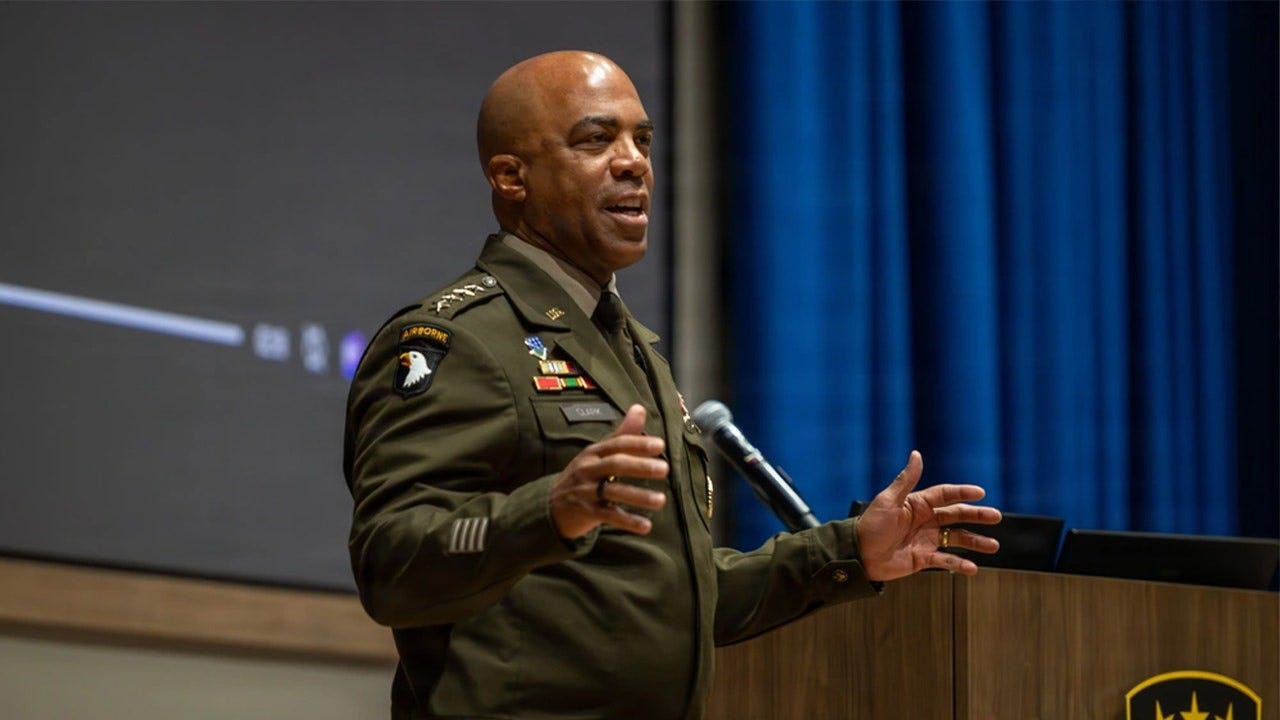
Gen. Ronald Clark says the latest shakeup in U.S. missile defenses has not weakened America’s position in the Pacific. Instead, he argues the pressure created by the Iran conflict is pushing the Army to sharpen its edge, upgrade its systems, and keep building out its posture near China’s front door. That view cuts against the usual worry that every interceptor sent elsewhere leaves the Indo-Pacific more exposed.
Clark, who leads U.S. Army Pacific, said the relocation of Patriot batteries and THAAD interceptors has not left the region hanging by a thread. In his telling, the Army is using the moment to improve how it fights, how it defends, and how quickly it can adapt if a bigger crisis comes. He described the current setup as better than what he has seen at any other point in his career.
He made clear that the redeployments are not just about moving hardware around on a map. Patriot crews are getting real-world experience under pressure, while upgrades to the systems are making each battery do more work than before. Clark said newer configurations can cover ground that once took an entire battalion, even if he did not spell out every detail of what that means in practice.
The broader concern is hard to miss. U.S. forces have spent huge numbers of interceptors in the Middle East, and officials have warned that rebuilding inventories will not happen overnight. Reports cited by congressional and defense watchdogs have pointed to steep drawdowns, manufacturing bottlenecks, and the uncomfortable reality that advanced missiles are expensive, limited, and not easy to replace fast.
Still, Clark’s message was that the Army should not stare only at what has been spent. He said the current deployments are helping the service refine how it protects forces and how it manages the next round of threats, especially as China keeps expanding its military reach. In his view, a force that learns while it deploys is a force that stays more dangerous to an opponent.
Asked whether recent diplomacy between President Donald Trump and Chinese leader Xi Jinping had softened his outlook, Clark did not bite. He said he believes the People’s Liberation Army is still preparing, still building, and still moving in the direction Washington has been tracking for years. The handshake talks may cool headlines for a moment, but they have not erased the long game playing out in the Pacific.
That long game is getting a lot of attention around Taiwan and the South China Sea. Chinese and Philippine forces have continued their tense run-ins in disputed waters, and the pattern has only fed the sense that the region is one bad move away from a much bigger problem. For U.S. commanders, that makes deterrence less of a buzzword and more of a daily job.
Clark said the military’s goal is not just to be ready to fight, but to make sure fighting never starts. He pointed to the value of direct military-to-military communication and said he would like to see disaster-management exchanges revived between American and Chinese forces. Those kinds of contacts, he argued, can keep adversaries talking long enough to lower the odds of a mistake turning into something much worse.
At the same time, the Army is putting more muscle into the Indo-Pacific than it has in years. Clark said the service now has more resources in the region than ever before in his career, including extra divisions, a corps headquarters, and specialized units built for long-range strike and multi-domain operations. That shift reflects a simple belief: if the Pacific is where the pressure is rising, the Army has to meet it there.
He also emphasized the growing role of land-based weapons in a fight that would not stay on land for long. The Army’s ability to detect targets, hit them from distance, protect key assets, and keep operations going is becoming more important as commanders think through a possible clash with China. Recent war games, he said, have shown that adding Army forces can flip the outcome in maritime scenarios that once looked grim.
