
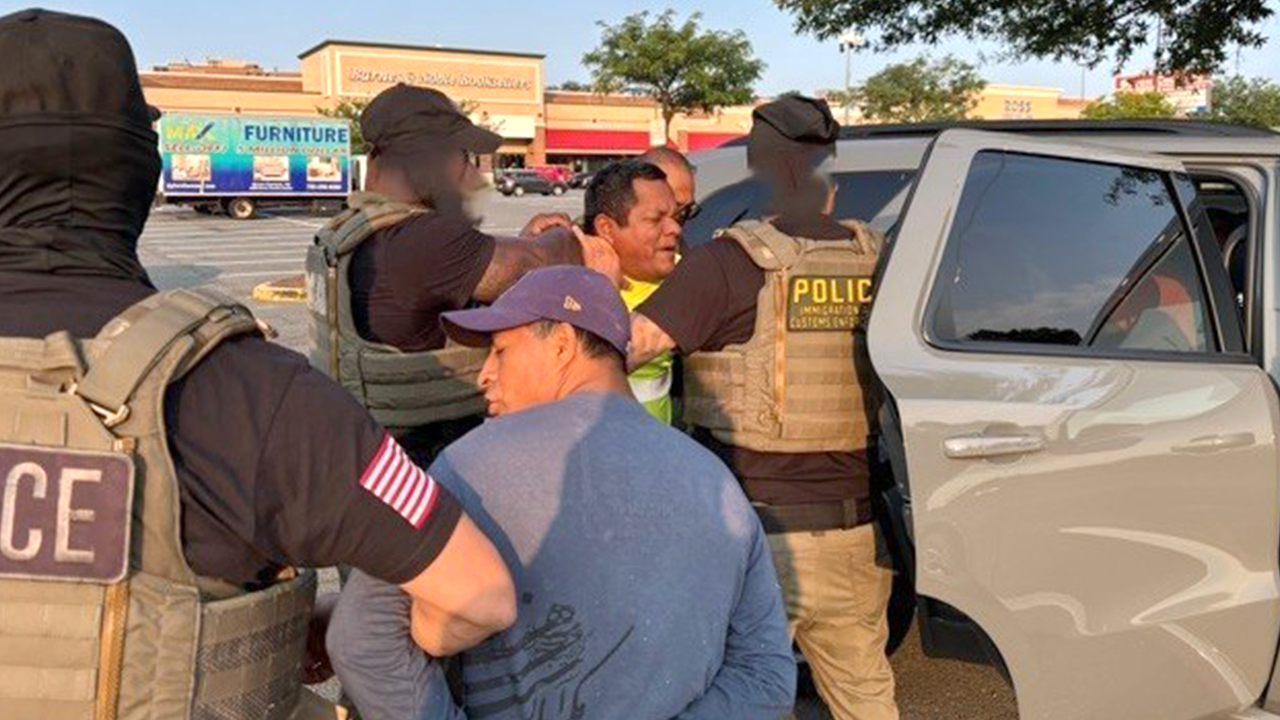
Arlington County is facing sharp criticism after approving a taxpayer-backed grant program that helps families of detained or deported illegal immigrants cover basic needs and utility bills. The move has revived a bigger fight over sanctuary-style policies, federal immigration enforcement, and whether local leaders are crossing a legal line by easing the pressure on people here illegally.
Under the plan, the county will start with $50,000 and route the money through a local ministry that can distribute up to $2,000 per family. Supporters frame it as a safety-net response for households suddenly hit by the loss of a wage earner, but critics see something much more loaded: public money being used to cushion the fallout of illegal immigration and blunt the effect of ICE arrests.
The backlash lands in a county that has already drawn heat for its posture toward immigration enforcement. Earlier this year, Arlington’s board chair stirred anger by suggesting residents should call police to report ICE activity, a move opponents blasted as more obstruction than public safety. That context matters, because it makes the new grant program look less like an isolated gesture and more like part of a broader pattern.
Former acting ICE Director Jonathan Fahey argued the policy raises serious questions under the federal alien harboring statute. The key issue, he said, is whether government action is encouraging people who are illegally present to remain in the country, especially when the county knows the money will go to families tied to unlawful status.
Fahey also pointed to county comments about many of the affected families being “unbanked,” saying that detail may reveal even more than officials intended. If a county is structuring aid around households that lack the documentation needed for normal financial access, critics argue, it suggests awareness that the beneficiaries are likely outside the legal system in the first place.
That is where the legal and political arguments start to collide. The county says it is helping families keep the lights on and groceries in the house, while opponents say the deeper effect is to make life easier for those who were removed from the country by federal authorities. In that view, the program does not just offer charity. It creates a soft landing that may reduce the consequences of breaking immigration law.
The county board approved the measure after a major ICE operation across Maryland and Virginia resulted in more than 1,300 arrests. That enforcement action sparked protests from several regional Democrats, who backed scrutiny of one high-profile encounter in Arlington involving Jose Mejia Hernandez, a man who reportedly ran from agents near the U.S. Air Force Memorial and was later tased during the confrontation.
Arlington County Chair Matt de Ferranti defended the approach by saying the county is “valuing the families of those that have been displaced and removed.” That language is revealing to critics, who say it treats the consequences of federal immigration enforcement as something local government should offset rather than respect.
Department of Homeland Security officials were just as blunt. One agency spokesperson dismissed the plan as proof that sanctuary politicians are putting the interests of illegal immigrants ahead of taxpayers who foot the bill, a line that has become familiar in fights over county and city immigration policies across the region.
The concern is not limited to Arlington alone. Fahey argued that when a locality builds what amounts to safe harbor, the effects do not stop at the county line. Neighboring jurisdictions like Washington, D.C., Alexandria, Falls Church, and Fairfax County can all feel the pressure when immigration enforcement is treated as optional in one place and unavoidable in another.
That spillover matters because immigration enforcement is supposed to function as a federal system, not a patchwork of local exceptions. When counties start improvising their own version of the rules, opponents say the result is confusion, weaker deterrence, and a message that unlawful entry can still come with public assistance if the circumstances get rough enough.
Critics have also pushed back on the family-separation argument often used in these debates. The former ICE director noted that arrest and detention separate families in many other contexts too, including when an American citizen is jailed, and that reality does not make the underlying offense disappear. In Arlington, the fight now sits right at the intersection of law, politics, and a county government that seems determined to keep testing how far local aid can go.
