
Spend a little time around skeptics and you’ll hear the same line: the Bible is a tangle of late myths and pious fables, a cultural relic more useful for sermons than for serious history. That assumption has seeped into popular thought so deeply that the ancient world of the Bible is often treated as a shadow stage where moral lessons play out but facts don’t matter. Archaeology keeps complicating that neat story by turning up physical traces that align with the text’s people, places, and events.
Archaeology is not in the business of settling beliefs about the supernatural, and it never claims to be. What it does do, again and again, is provide material anchors for descriptions that once sounded purely literary. Those anchors don’t prove theology, but they do tighten the link between text and history.
1. The Tel Dan Stele. For years skeptics treated King David as a legendary founder rather than a historical ruler, the sort of ancestor people invent to justify later power. That view shifted when a ninth-century B.C. inscription turned up at Tel Dan referring explicitly to the “House of David.” A non-Israelite inscription acknowledging a Davidic dynasty suggests contemporaries understood David as a real founder, not a retrofitted fable.
2. The Pontius Pilate Inscription. The Gospels place Jesus inside a clear Roman framework under a prefect named Pontius Pilate, but for a long time the archaeological record was silent on that detail. In 1961 a stone in Caesarea surfaced that names Pilate and identifies his office, supplying the missing material proof. Little discoveries like that change the tone: the Gospels are describing people who lived under a functioning Roman administration, not merely characters in a symbolic tale.
3. The Dead Sea Scrolls. Before the mid-1900s, the gap between the oldest Hebrew manuscripts and the periods they depicted left plenty of room for doubts about textual stability. The 1947 finds in caves near the Dead Sea pushed manuscript evidence back by over a thousand years and preserved large portions of the Old Testament. While variations exist, the basic continuity across such a long span is striking and matters for anyone interested in how Scripture was transmitted.
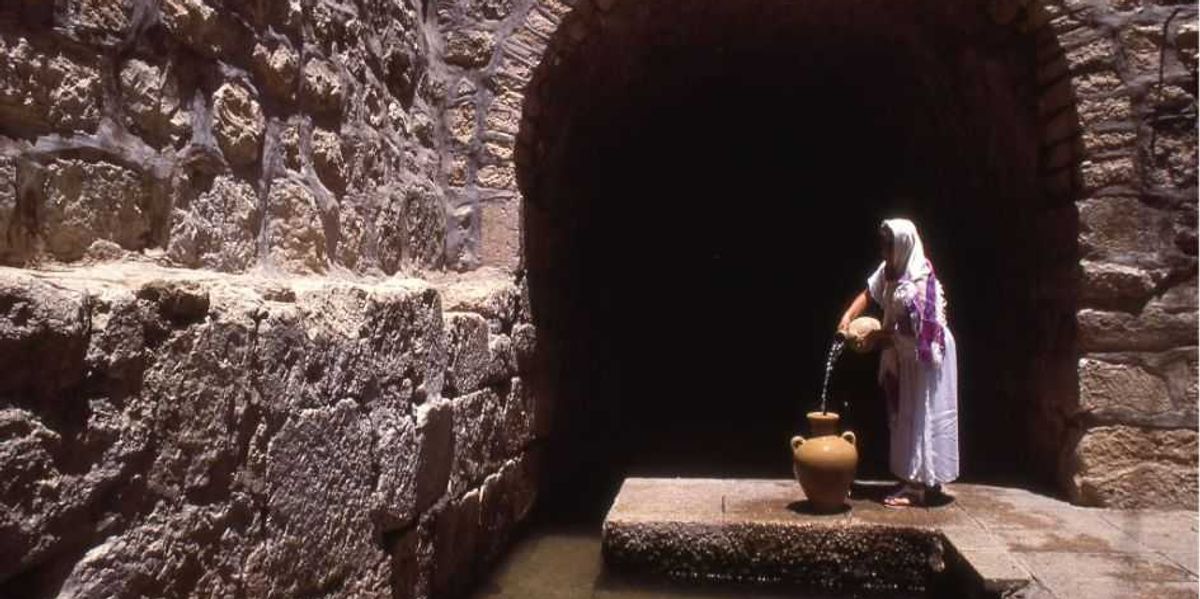
4. The Pool of Siloam. John’s Gospel has often been read as theological writing rather than a precise travelogue, so its geographical details invited skepticism. Then archaeologists uncovered a stepped pool in Jerusalem in 2004 that fits John’s description of the Pool of Siloam, the place where Jesus sends a blind man to wash. Continued excavation since has revealed the pool’s full scale and its role as a prominent landmark on the pilgrimage route to the Temple, matching the practical landscape the text presumes.
5. Hezekiah’s Tunnel. Large-scale engineering projects in the Bible have seemed exaggerated to some readers, especially those described under the pressure of imminent invasion. The redirected Gihon Spring carved through bedrock has long been traversable, but a critical piece of evidence arrived in 1880 when two boys found an inscription inside the tunnel. That carved record describes diggers meeting in the middle after tunneling from opposite ends, a practical note that reads like the aftermath of a real, difficult engineering achievement.
6. The Cyrus Cylinder. The Book of Ezra portrays Cyrus the Great as allowing exiled peoples to return and restore their temples, a policy some dismissed as theological spin. A clay cylinder discovered in Babylon in 1879 records Cyrus’s program of returning displaced peoples and supporting their worship across the empire. The cylinder does not single out Judah by name, but it does place the biblical account within a broader, plausible imperial practice rather than making it an isolated miracle.
7. The Ketef Hinnom Scrolls. Questions about when certain Old Testament texts existed often hinge on finding early, recognizable copies of phrases still in use today. Two tiny silver scrolls excavated near Jerusalem in 1979 contain the priestly blessing “The Lord bless you and keep you …” and date to the seventh century B.C., well before the Babylonian exile. Those fragile artifacts show that lines later canonized were already circulating in liturgical contexts centuries earlier than some critics predicted.
None of these finds answers the big theological questions, and archaeology never claims that role. What these discoveries do is tighten the factual backdrop against which biblical texts were written and read, narrowing the gap between the ancient world described on the page and the physical remains in the ground. That convergence doesn’t settle faith, but it does demand a different kind of respect for the historical contours the Bible sketches.
