
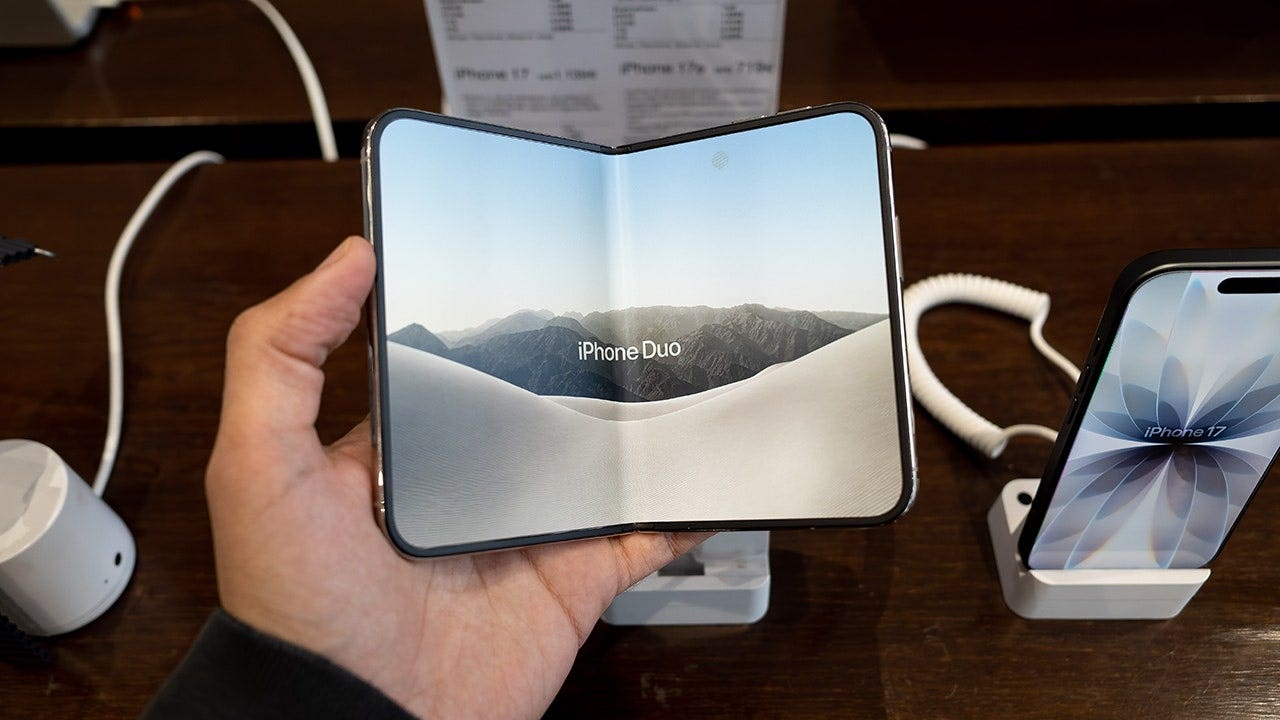
Apple’s first folding iPhone steps straight into Samsung’s turf with a price tag that makes people blink twice, then blink again. The iPhone Duo and Galaxy Z Fold 8 are built for the same basic dream: a pocketable phone that opens into a small tablet, but they take different paths on weight, software, battery life, and camera tradeoffs. The real question is not whether foldables are cool. It is whether a nearly $2,000 phone finally feels worth the money.
Apple arrives late, but not empty-handed. The iPhone Duo brings a titanium frame, a redesigned iOS experience, and an inner display that tries to cut glare instead of chasing pure shine. Samsung, meanwhile, keeps the edge in experience, with a lighter body, more mature multitasking, and years of refinement behind the Galaxy Z Fold line.
Price is where the room gets quiet. Apple starts the Duo at $1,999 for 256GB, then climbs quickly from there, with the top configuration landing at a jaw-dropping $3,199. Samsung starts lower at $1,899.99 for the same storage tier, and its higher-capacity versions also come in a little cheaper.
That gap is not huge, but it matters when the starting point is already extreme. A hundred bucks may sound small in the abstract, yet once a phone passes the $2,000 mark, buyers start looking hard at every little difference. Promotions can soften Samsung’s blow a bit, but carrier discounts often come with strings attached.
Weight may end up being the deal-breaker for a lot of people. The iPhone Duo weighs 8.96 ounces, while the Galaxy Z Fold 8 comes in at 7.09 ounces, which is a pretty noticeable spread when the phone lives in a pocket all day. Samsung also makes the thinner device, while Apple leans on a rounded titanium build that may feel nicer in the hand.
Both phones open to a 7.6-inch inner screen, and both use a book-style fold. The outside displays are more modest, though, and that matters because you are still going to spend plenty of time using the smaller panel. Anyone paying this much will want to know whether the bigger screen is genuinely useful or just a flashy bonus that gets opened once in a while.
Apple’s display has one clever advantage. The Duo uses a nano-texture finish that reduces reflections and softens the look of the crease, which could be a real win for anyone who hates glossy screens in bright light. Samsung’s screen stays more traditional and glossy, which can make colors pop a bit more, but it also catches glare more easily.
Software is another place where Samsung’s experience shows. The Galaxy Z Fold 8 can juggle multiple apps, floating windows, and desktop-style features through Samsung DeX, which makes the big display feel earned. Apple’s Split View is a welcome first step for iPhone, but it still feels more controlled and less flexible than what Samsung has been doing for years.
App support also matters more than people expect. Apple has rebuilt parts of iOS for the Duo, but some third-party apps still look awkward on the larger screen, leaving black bars or strange layouts behind. That is the kind of annoyance that can drain the fun out of a premium device fast, especially when the whole point is to enjoy more screen space, not fight with it.
Battery life, surprisingly, may be one area where Apple pulls ahead. Early tests suggest the Duo can outlast Samsung’s foldable by several hours in some real-world scenarios, and that is a big deal for a device carrying such a large display. Apple also claims fast charging performance that should help when the battery runs low before the day is over.
The camera story is a little more complicated. Both phones take strong photos, but neither one includes a dedicated telephoto lens, which means serious zoom fans may feel shortchanged. Apple adds some playful features like Smart Take and Duo Preview, while Samsung counters with its own hands-free camera tricks and more camera-focused options on the Ultra variant.
Durability and repairs may be the least glamorous part of the discussion, but they might matter the most. Folding phones have more moving parts, more fragile surfaces, and much more expensive repair bills than standard smartphones. Apple’s acknowledged screen issue only makes that conversation louder, because nobody wants a first-generation foldable to become a first-generation headache.
For buyers stuck between these two, the decision may come down to habits more than hype. If battery life, a cleaner display, and Apple’s ecosystem matter most, the Duo has a real opening. If lighter weight, better multitasking, and a more proven folding experience sound smarter, Samsung still looks awfully hard to beat.
