
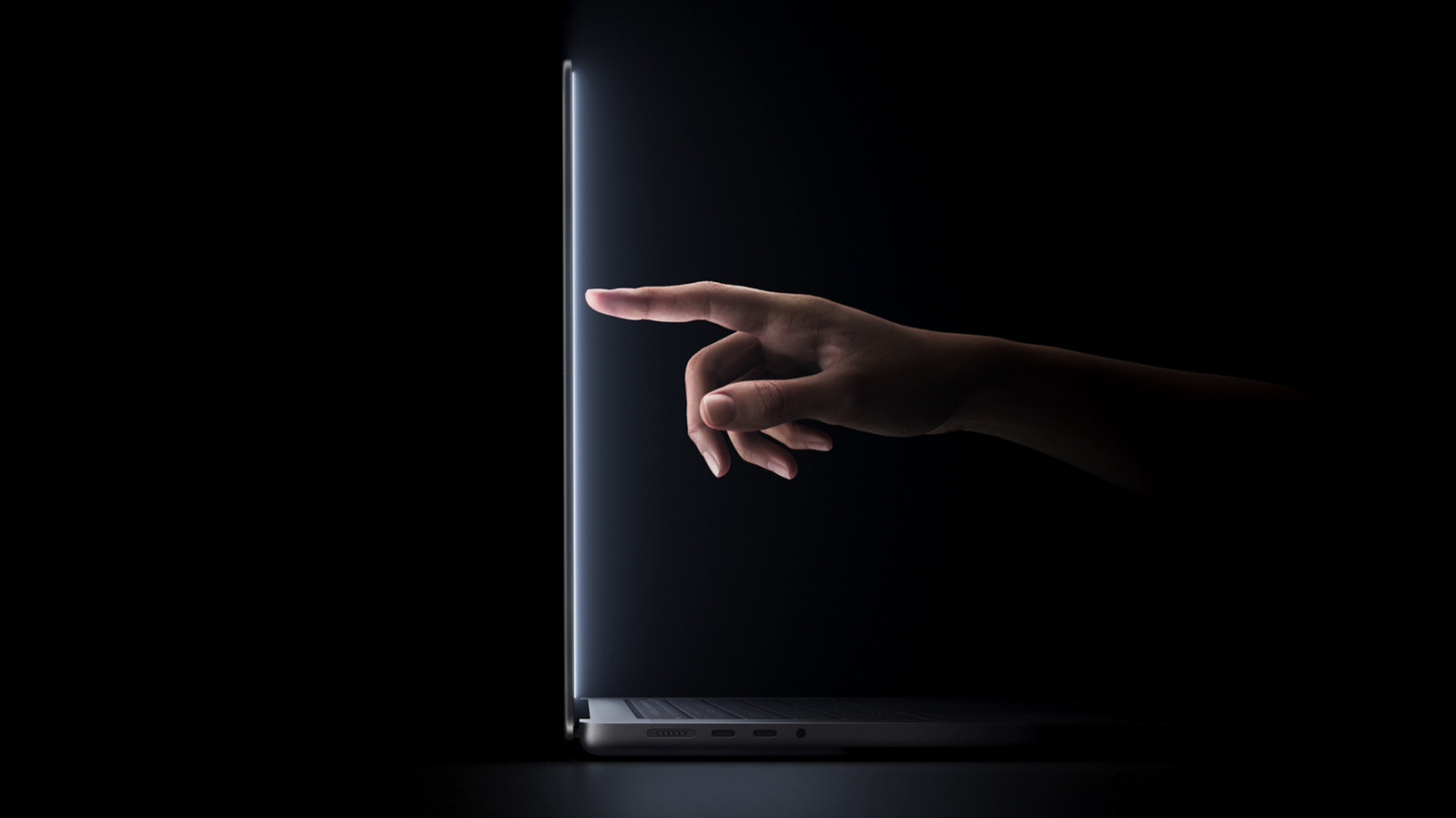
Apple has pushed the MacBook Pro into new territory with a touchscreen, a brighter OLED panel, and a thinner body that still packs serious power. The latest model leans hard into pro-level performance while adding a few long-requested touches that make the machine feel fresher than anything Apple has shipped in years. It is also expensive enough to make even loyal buyers pause for a second look.
The headline change is the display. Apple has swapped in Tandem OLED tech, giving the MacBook Pro deeper blacks, sharper contrast, and peak brightness levels that can hit 2,000 nits for HDR and SDR content. The panel still runs at 120Hz, so everything from scrolling to dragging apps around should feel smooth, but now the experience is even more direct because fingers can finally do the work.
That touch support is not just a gimmick bolted on top. Apple says the sensor sits inside the display panel itself, which should help keep latency low and make the whole thing feel more responsive. The company is pitching the new setup as a better fit for musicians, app developers, and anyone who wants a quicker way to poke around inside creative tools without reaching for a trackpad every few seconds.
The new design also trims some bulk. With OLED in place, the MacBook Pro is slimmer and lighter, and both the 14.2-inch and 16.3-inch versions now carry narrower bezels. Apple may have softened the chassis, but the pricing certainly did not get the memo, with the base 14-inch model starting at $2,899 and the 16-inch version opening at $3,399.
Performance is where Apple expects the real heavy lifting to happen. The M5 Pro and M5 Max chips power the lineup, and Apple is clearly aiming at users handling 3D modeling, 8K video work, and larger AI models locally. The M5 Pro is said to be nearly 11 times faster than the old M1 Pro, which is a pretty brutal reminder of how far the platform has moved in a few short years.
On the spec sheet, the M5 Pro comes with a 15- or 16-core CPU and a 16- or 20-core GPU, while the M5 Max steps up to an 18-core CPU and a 32- or 40-core GPU. Both include a 16-core Neural Engine, and memory bandwidth climbs to 307GB/s on the M5 Pro and 460GB/s on the M5 Max. At the top end, a fully loaded MacBook Pro with 128GB of RAM, 16TB of SSD storage, and nano-texture glass lands at a jaw-dropping $14,549.
Connectivity and battery life get the usual pro-grade treatment too. Apple includes three Thunderbolt 5 ports, support for up to four external displays on the M5 Max model, and a 72.4Wh battery that Apple says can last up to 24 hours. Fast charging is still in the picture, with a claimed 50 percent top-up in about 30 minutes when used with the right charger.
There are a few smaller changes that make the laptop feel a little more futuristic. The new Dynamic Island cutout replaces the old notch, though Touch ID still handles authentication and a 12-megapixel Center Stage camera sits inside the new opening. That space can also surface Live Activities, Spotlight, and Siri AI, turning a plain hardware cutout into something that actually does a bit of work.
Apple also put attention into the speakers, which should matter more than people think on a machine built for creative pros. A redesigned woofer system is supposed to deliver 50 percent deeper bass, while updated tweeters widen the soundstage, and a special tuning profile kicks in when the lid is closed and the laptop is hooked to an external display. Even the glowing Apple logo is back, which is a small detail, but one that will absolutely make longtime Mac fans smile.
