
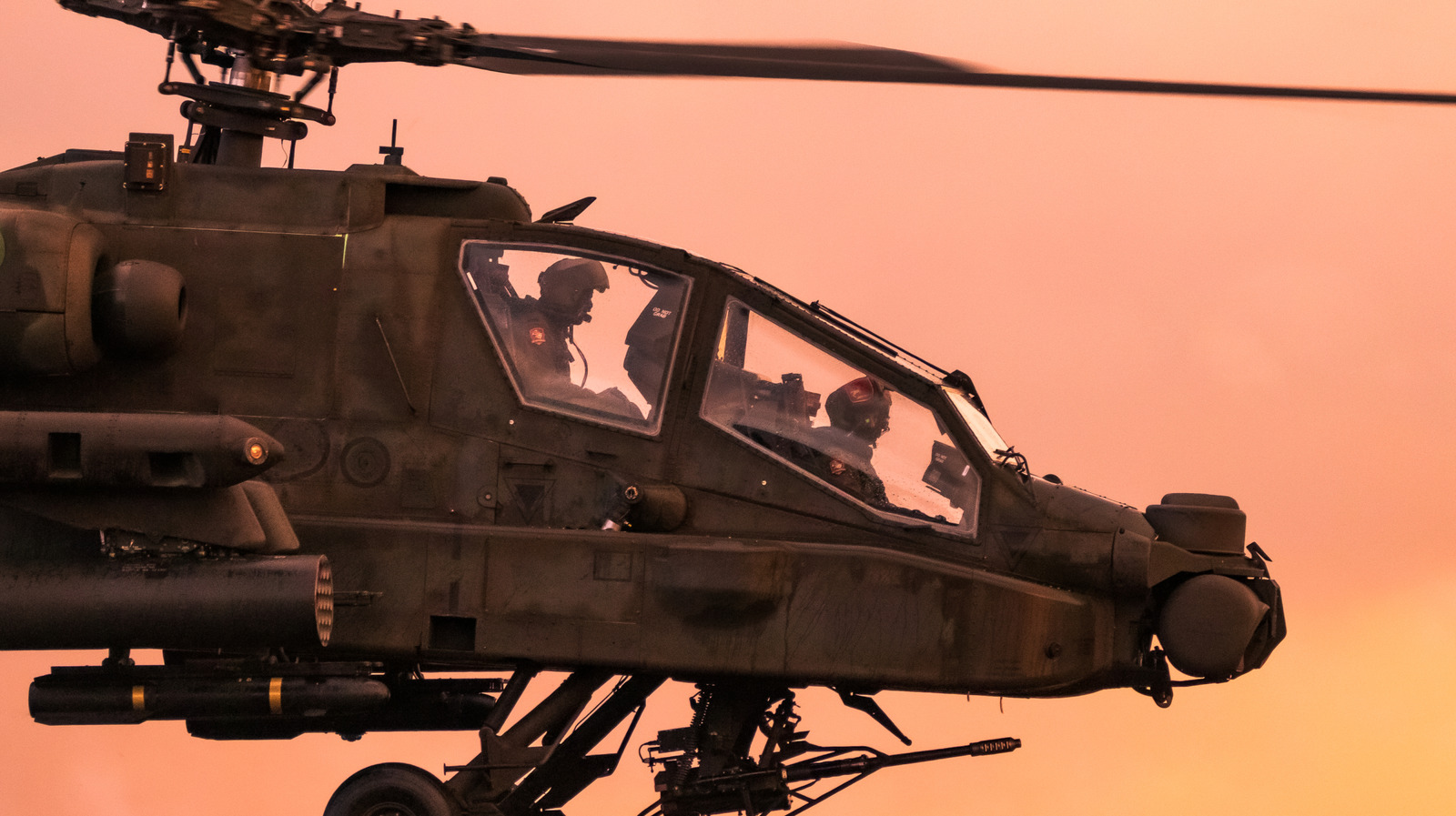
The Apache’s nose has a purpose that goes far beyond its look, and that bulky sensor housing is a big reason the helicopter has such a fearsome reputation. Inside it sits the MTADS/PNVS system, which helps crews spot, identify, and track targets while keeping the aircraft effective in combat. The setup has evolved over time, but its core job has stayed the same: give the Apache the eyes it needs to fight in tough conditions.
The AH-64 Apache has long been built around a mix of speed, survivability, and smart targeting. That big front-end sensor package is the heart of that system, combining day and night vision tools so the crew can work with a clear picture of what is happening on the ground. Without that kind of sensor support, even a heavily armed helicopter would lose a huge chunk of its battlefield value.
The MTADS/PNVS system first entered Army service in 2005 and was quickly pushed into combat in Iraq the next year. By 2013, it had logged a million flight hours, with a large share of that time spent on real missions instead of test runs. That kind of use says a lot about how central the sensor suite became to Apache operations in Iraq and Afghanistan.
One of the biggest reasons the system matters is simple: Apache crews need to see before they can shoot. The aircraft’s weapons are powerful, but they are only as useful as the information feeding them, and the sensor suite gives pilots the detail they need to make fast decisions. It also helped crews adapt tactics over time, since better visibility usually means better target acquisition and less wasted movement in dangerous airspace.
The lower nose turret contains the Day Sensor Assembly, or DSA, which has roots in technology dating back decades. Some of the original design ideas go back to the 1970s, which makes modernization a constant part of the Apache’s story. Lockheed Martin’s Gen 3 upgrade brought in a newer laser rangefinder/designator, updated electronics, a color TV sensor, and a more modern laser spot tracker.
That refresh also added a laser pointer marker for coordinating with air and ground forces. The result is a system that does more than just help the helicopter aim, since it also supports teamwork in fast-moving combat situations. The Gen 3 TADS/PNVS setup is built to handle targeting and pilotage in daylight, darkness, and bad weather, which is exactly where helicopters often get pushed hardest.
Even with all that capability, the Apache’s current pilotage setup still has a drawback. It relies on a single thermal camera mounted on a gimbal that follows the pilot’s line of sight, which means the crew can look where they want but not see everything around them at once. That limits the field of view, and in combat, limited visibility can be a real problem.
Researchers at the University of Arizona are working on a possible fix with two prototype sensor systems built around 21 sensors inside a fixed nose-mounted ball. One version uses uncooled long-wave infrared sensors for night flying, while the other uses visible-spectrum cameras for testing and research. The images are stitched into a wide view that can be sent straight to the pilot’s headset.
The goal is a much broader picture, with a 210-degree horizontal field of view that is roughly five to seven times wider than the Apache’s current system. That kind of jump could make a major difference when pilots need to keep track of threats, obstacles, and movement all at once. The work is backed by the U.S. Army, which is also studying issues like motion blur and fixed-pattern noise as the technology moves through flight testing.
