
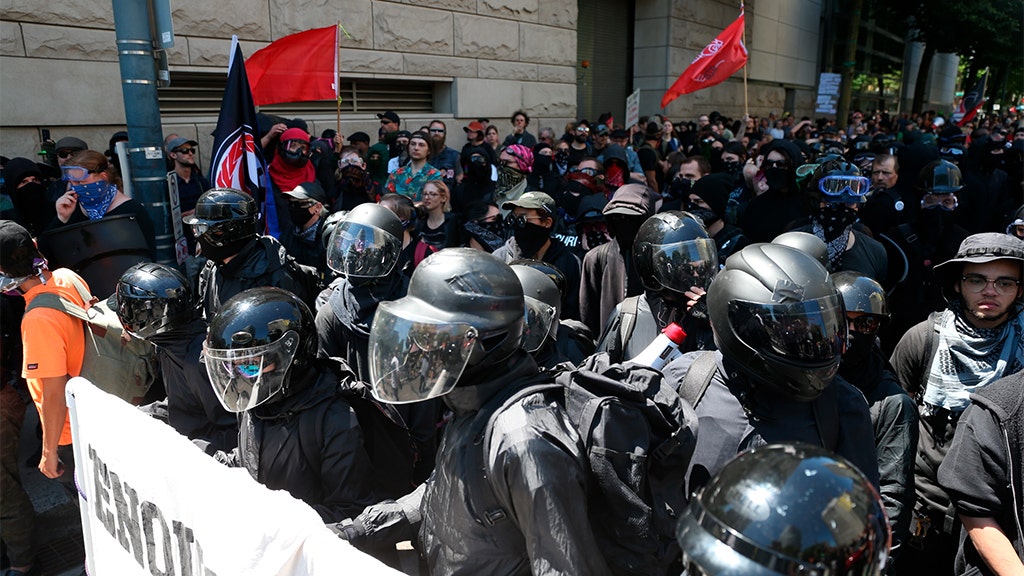
Websites tied to far-left activist networks started disappearing after the State Department hit an Italy-based tech collective with a terrorism designation. The move landed fast, cutting into the digital plumbing that had helped groups hide, host, and spread their message online.
Pages linked to Rose City Antifa and Jane’s Revenge began going offline in the days after the action against Autistici/Inventati, also known as the A/I Collective. The shutdowns came as pressure mounted on the kind of encrypted hosting and anonymous communication tools that can keep extremist groups a step ahead of investigators.
According to the State Department, the collective was more than a quiet tech shop. Officials described it as a key support system for violent far-left networks, pointing to services that ranged from secure email and chat to web hosting and video tools.
One official put it bluntly: “Today’s news demonstrates the extent to which the A/I Collective was the digital infrastructure of the global Antifa terror network,” a State Department official told Fox News Digital.
The impact showed up quickly in Portland, where Rose City Counter-Info had been used to post personal information about Immigration and Customs Enforcement personnel and help organize hostile activity. The State Department said the same site also pushed a flyer encouraging supporters to shine laser pointers at Customs and Border Protection helicopters.
That detail carries a real punch because it is not some abstract online spat. Federal records show a man later pleaded guilty to aiming a laser at a CBP helicopter, forcing the aircraft to abort a planned landing, which is exactly the kind of reckless chain reaction these platforms can fuel.
Jane’s Revenge was also tied to the system, using A/I services to publish messages claiming responsibility for attacks on pregnancy centers and to stir up more violence. The group said it was behind the May 2022 firebombing of a crisis pregnancy center in Madison, Wisconsin, a case that fit neatly into the broader pattern officials have been tracking.
On Friday, the NoBlogs platform hosted by A/I was spotty and unreliable, with some pages loading while others timed out or threw errors. The State Department has not said whether a U.S. agency directly disabled the infrastructure or whether the outages came from the collective, its vendors, or users scrambling after the designation.
The sanctions do real damage either way. Americans and U.S. financial institutions are now blocked from doing business with A/I, and any assets under U.S. jurisdiction are frozen, which makes the collective far harder to operate inside the American financial system.
The State Department says the group’s reach was broader than just far-left activism in the United States. Officials said A/I also provided services that were used by a media outfit spreading material from Hamas, Iran’s Islamic Revolutionary Guard Corps, Hezbollah, and other designated terrorist groups.
A/I, for its part, pushed back and denied the accusations in a statement posted on a NoBlogs page. The collective described itself as “a small, volunteer-run, technology collective from Italy” that provides tools for “digital self-defense.”
It also insisted, “We will not back down,” and added, “Antifascism and anticapitalism are not terrorism. Protesting is not terrorism.”
That defiant tone only sharpened the fight over what counts as activism and what counts as support infrastructure for violent movements. The State Department said the designation dealt a “devastating blow” to transnational far-left networks that have been leaning on anonymity, encryption, and offshore hosting to stay alive online.
For law enforcement and policymakers, the bigger question is how many other digital hideouts are still propping up these groups behind the scenes. The moment one hub goes dark, the pressure shifts, and everybody watching knows the next move may be just as messy.

1 Comment
Without getting more specific, it’s a good thing to ban what Republicans, MAGA and Trump designate Antifa, because there is no such left wing thing in America. It’s a dodge to allow right wing extremists to disrupt peaceful political and Democratic activities by pretending to be an organized group when it isn’t. You’ll notice this is even billed as an Italian based group, not American. Democratic oriented Americans like in Portland have been seen on tv kidnapping people off the streets as Antifa when it’s far right wing goons. Those who disrupt peaceful marches or sit-ins come out only after dark typically so you cannot identify anyone, and they wear heavy tactical gear and mask-up for the same reason the ICE and CBP a-judicial groups avoid identification, because they are right wing, not leftists. So it’s a good thing for Antifa ‘quietness’ as they are against the constitutional right to peacefully protest the government. These right wing Antifas are anything but peaceful, so anti-constitutional and should be silent.