Celebrity news collided with politics this week as an actress from an old sitcom passed, a rising star stirred controversy with woke labels, Whoopi Goldberg sparred over race and history, Austin Powers rumors bubbled up, and Stephen Colbert showed up to honor a former president with a tan suit. The pieces touch on how entertainment, identity politics, and media theatrics keep tripping over one another in predictable ways.
Anne Schedeen’s death prompted warm memories from fans who grew up with her on a familiar 1980s sitcom, but the family’s statement also took an oddly modern turn by airing political opinions alongside recollections of thrift-store habits and a love for small dogs. The announcement mixed tenderness with partisan venom, and that juxtaposition felt jarring more than poignant. Public grief is private, yet the choice to inject politics into an obituary says something about how polarized our culture has become.
She leaves behind an extraordinary legacy of creative energy, whip-smart humor, delight in her family, adoration for little dogs, burning hatred for Trump, passion for secondhand thrifting, and love for a good story.
On the topic of younger stars, Milly Alcock has the kind of momentum that could lead to big roles, but her public comments about identity keep steering conversation away from craft and toward culture wars. “I’ve played a few characters that might have a potential queer through-line. I have many queer friends. So honestly, I’m kind of honored,” she said, and then tied the role’s appeal to gender nonconformity. That line — ‘[Supergirl] doesn’t live inside the binary of what we think a woman should be, that is what makes it so special and so exciting and so new.’ — reads like a press-kit sound bite chasing relevance more than it explains acting choices.
There’s nothing wrong with actors exploring complex identities on screen, but when interviews turn into manifestos, audiences tend to check out. Spectacle and earnestness can work together, yet too much earnestness feels performative and turns off viewers who came for a story, not a lecture. If the goal is to build an audience, alienating large swaths of potential viewers by centering niche cultural angles is a risky marketing plan.
Whoopi Goldberg’s recent remarks about history and race were classic cable-TV theater: bold pronouncements, then retract and recalibrate when pressed. She pushed hard on symbolism and the emotional stakes of historical memory, saying, “I want all those black men to stand in our house and remind all of those people, as we tried to remind the vice president, that when you try to destroy one part of history, you are destroying all of our histories.” The line lands big in a TV moment, but it’s also the sort of simplification that fuels surrounding blowback.
When a serious commentator steps in, the theatrics fade fast and the rhetoric looks less tenable. That dynamic plays out again and again: a provocative line gets headlines, nuance gets lost, and then everyone moves to the next segment. The net effect is less honest debate and more performative outrage, which diminishes the chance of honest conversation about how to honor history without weaponizing it.
In lighter news, Mike Myers teased the return of a spy who once defined parody for a generation. The idea of Austin Powers coming back provokes nostalgia and skepticism in equal measure — sequels often struggle to recapture the lightning of an original. Still, if comedy can punch back at the absurdities of modern culture without sinking into cheap nostalgia, a clever revival could be useful and entertaining.
Comedy sequels have a mixed track record, and the right one needs sharp writing and a clear reason to exist beyond cashing in on past fame. Bringing back a character only for the sake of a cameo won’t satisfy fans or critics. But a smart, satirical take that aims squarely at cultural trends rather than recycling old gags might land in a way that feels timely and worthwhile.
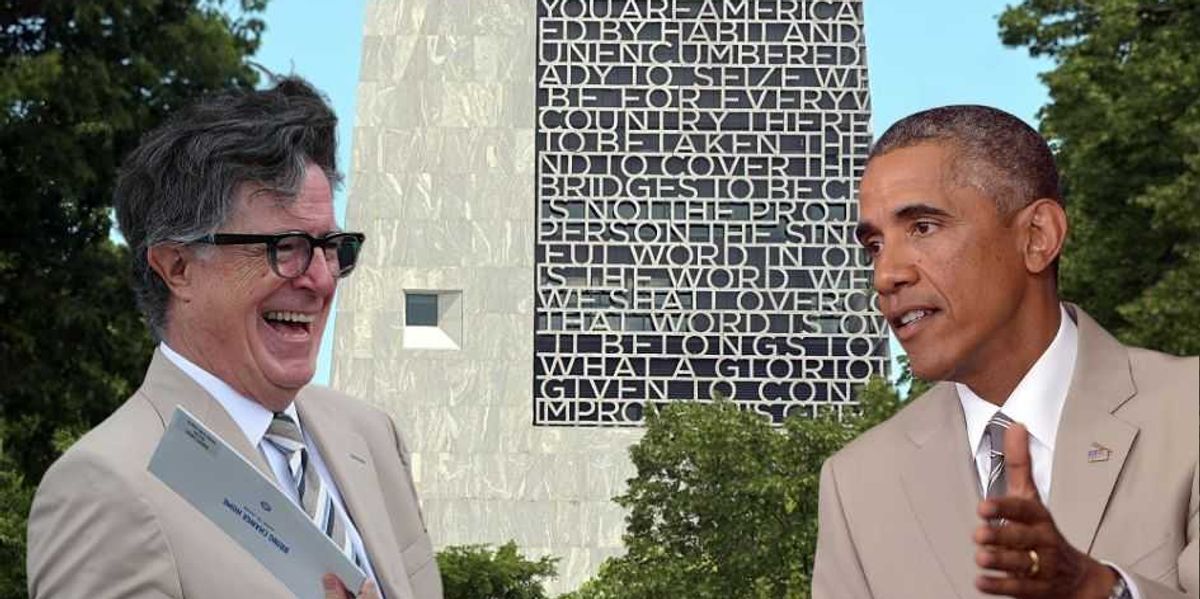
Finally, Stephen Colbert’s choice to wear a tan suit at a presidential center opening felt knowingly theatrical, like a throwback wink to a bygone media scandal and a reminder that late-night satire often avoids heavier controversies. The tan suit joke works until you remember bigger policy debates and scandals that shaped a presidency. That selective focus is comfortable for TV satire, but it’s not the whole story.
Pop culture will keep mixing with politics, celebrity will keep courting controversy, and audiences will keep sorting what they want from what performers try to hand them. These cycles are noisy and predictable, and whether you laugh, groan, or tune out, the pattern remains the same.