
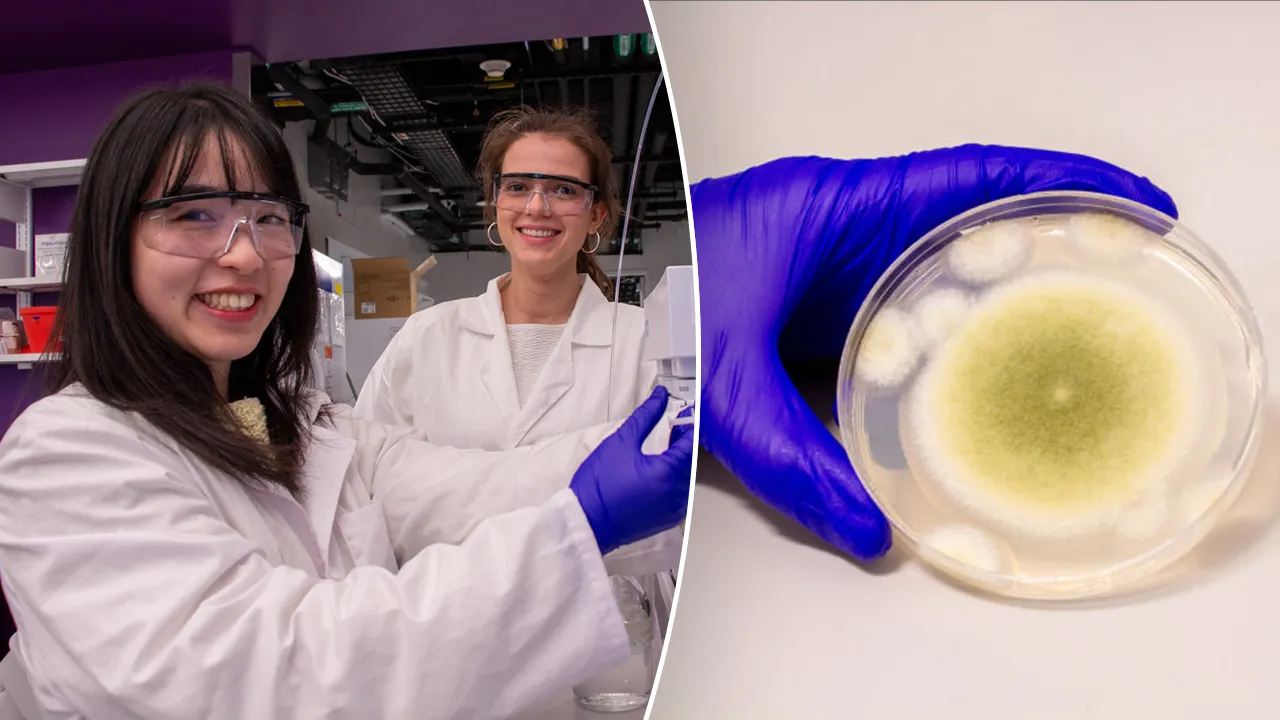
A fungus known as “pharaoh’s curse fungus,” or Aspergillus flavus, might just hold the key to fighting cancer, according to recent research from the University of Pennsylvania. Scientists have been tweaking molecules from this fungus to develop a compound with increased cancer-fighting abilities. “Fungi gave us penicillin,” Dr. Xue (Sherry) Gao, who led the study, mentioned, highlighting the potential of natural products in medicine.
Aspergillus flavus is commonly found in decaying leaves, compost, and even on some crops, as noted by the Mayo Clinic. While this fungus usually doesn’t pose a threat to healthy individuals, those with weakened immune systems might experience serious issues. The fungus can cause severe complications like lung bleeding and life-threatening infections in vital organs.
The name “pharaoh’s curse fungus” stems from a series of mysterious deaths following the opening of King Tut’s tomb in the 1920s. Team members who disturbed the tomb reportedly died suddenly, sparking rumors of a curse. Experts later suggested these deaths might have been caused by dormant fungal spores infecting the team.
The story didn’t end there. In the 1970s, something similar happened when scientists entered another tomb in Poland. This time, Aspergillus flavus was discovered, raising further questions about its effects. Now, researchers are exploring its potential in cancer therapy, particularly against leukemia.
Dr. Gao explained to Fox News Digital that the fungus produces various compounds, some of which can be toxic to cells. The research team focused on a special type of compound known as RiPPs, which they believed could inhibit cancer cell growth. “Cancer cells divide uncontrollably,” Gao noted, and these compounds might stop that process.
The study showed that two variants of these molecules had strong effects on leukemia cells. One variant even matched the performance of existing FDA-approved leukemia drugs. However, this research is still in its infancy, as pointed out by cancer care consultant Dr. Tiffany Troso-Sandoval, who emphasized the early stage of this study.
RiPPs, as described in the study, are bioactive molecules isolated from the fungus. Dr. Troso-Sandoval highlighted the complexity of leukemia, with its numerous subtypes. “One treatment might not work on [another] type of leukemia,” she said, suggesting that further research is needed to pinpoint which subtypes the compound could target.
The researchers noted that while the compound showed little impact on breast, liver, or lung cancer cells, its effects on leukemia cells were promising. This specificity is crucial when considering future medication development. Testing in animal models and, eventually, human trials are on the horizon.
Dr. Gao expressed her excitement about the potential benefits of natural discoveries. The study received backing from several institutions, including the National Institutes of Health and the Cancer Prevention and Research Institute of Texas. Although it’s early days, this research opens up intriguing possibilities in cancer treatment.
