
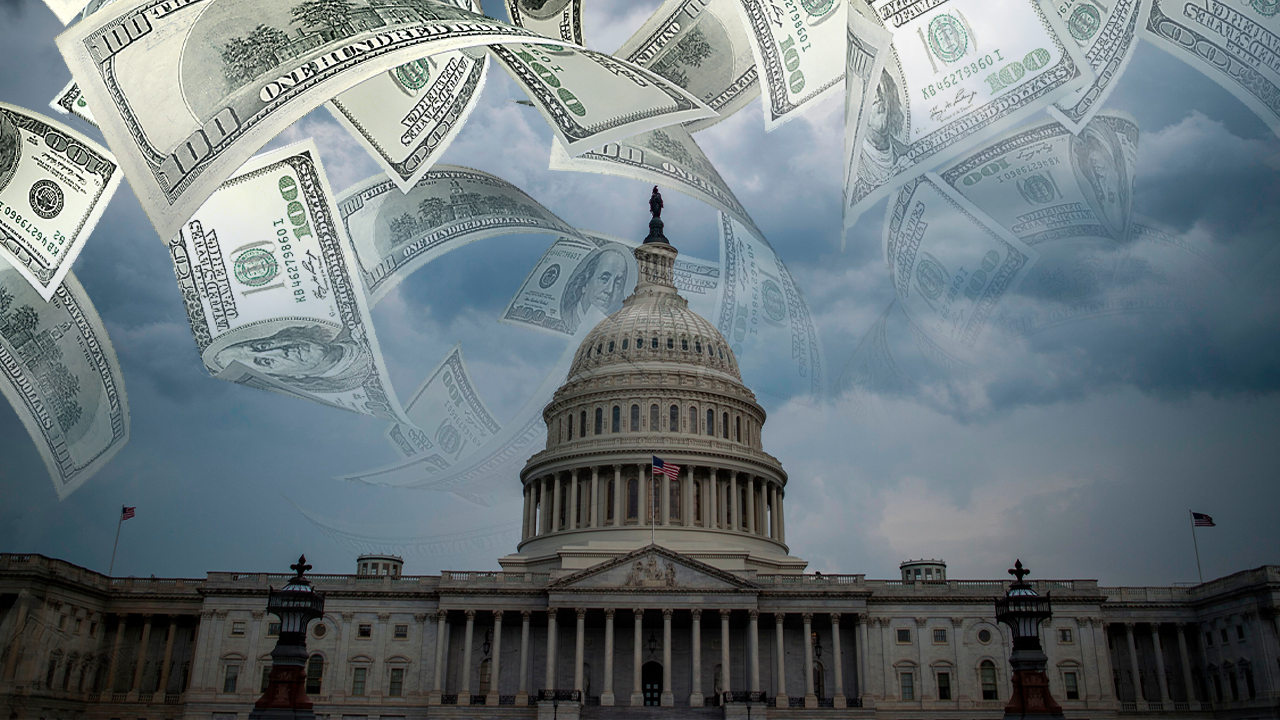
The debt spiral is no longer some far-off warning sign. With Washington still adding to the bill and little appetite for real restraint, the path toward $50 trillion in national debt looks less like a theory and more like a fast-moving deadline. The real danger is not just the size of the number, but the political system that keeps pretending there is an easy way around it.
America crossed the $40 trillion mark, and that milestone did not arrive as a surprise to anyone paying attention. Deficits remain enormous, and the projections for the years ahead are ugly enough to make even casual budget watchers wince. If the current pace holds, the country is not drifting toward a debt problem, it is charging straight into one.
The math is blunt. The Congressional Budget Office sees deficits piling up to more than $23 trillion over the next decade, with annual gaps around $1.9 trillion in 2026 alone. When those numbers stack on top of each other, $50 trillion does not feel abstract anymore. It starts to look like the next stop on a very expensive ride.
Interest costs are a huge part of the mess, and they rarely get the attention they deserve. Every borrowed dollar comes with a price tag, and that price keeps rising as the debt grows. The government ends up spending more just to service what it already owes, which leaves less room for anything else.
That is the trap. Borrow, pay interest, borrow again, then pay even more interest because the bill got bigger. It is the fiscal version of rolling a snowball downhill and acting shocked when it turns into an avalanche. At some point, the interest itself can crowd out major parts of the budget.
Social Security and Medicare sit right in the middle of this story. Both programs are heading toward financial strain, and the trust funds are not built to last forever under the current setup. Social Security is projected to run short in 2032, while Medicare’s hospital fund is expected to run dry in 2033.
When that happens, benefits do not simply vanish, but the squeeze becomes real fast. Incoming revenue would cover only part of what is promised, which means Congress would face choices it has spent years dodging. Those choices are politically brutal, and that is exactly why nothing gets fixed soon enough.
That is the part that really hangs over Washington. There is no painless answer, only a menu of hard ones, and every option angers somebody powerful. Cutting spending enrages one side, raising taxes enrages the other, and reforming entitlements can trigger a full-blown political firestorm.
So the usual move is the easiest one. Kick the can, add more borrowing, and hope the next Congress gets stuck with the headache. That may buy time, but it also makes the final bill larger and the choices nastier.
The ripple effects do not stop inside the Beltway. Big borrowing can push up interest rates, crowd out private investment, and make life tougher for businesses trying to grow. It also forces more federal money toward debt service instead of roads, defense, health care, or tax relief.
There is another risk lurking in the background too. If the world starts to lose confidence in U.S. debt, the damage would not be limited to Washington accountants. Treasury markets matter to everyone, and a serious selloff would hit households, retirees, and investors in ways that could spread fast.
What makes all this worse is how normal the behavior has become. A family spending far more than it earns while piling up debt would be seen as headed for a financial wreck. Yet the federal government does something very similar year after year, and somehow it gets dressed up as routine budgeting.
That is why the problem is bigger than one president or one party. Both sides have helped build this mountain, and both sides have benefited from avoiding the hard truth. Arithmetic does not care about campaign slogans, and eventually the bill lands on the table whether Washington likes it or not.
Eventually, the country will have to choose between tougher taxes, smaller benefits, slower growth, or some blend of all three. None of it is pleasant, and that is exactly why the debate keeps getting postponed. But the train is already moving, and it is not slowing down just because lawmakers would rather talk about something else.
