
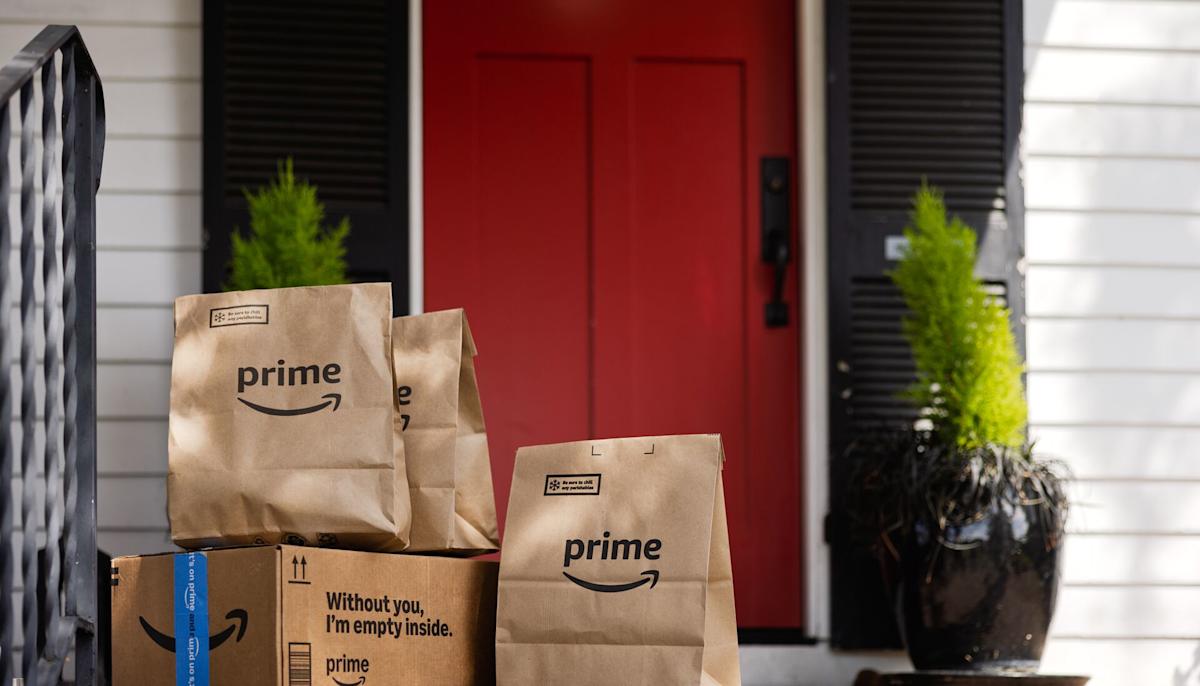
Amazon expands same-day grocery delivery to businesses, letting Business Prime members order perishable and nonperishable supplies and get them the same day in most places. The move folds grocery into a broader logistics push that makes it easier for offices, schools and gyms to buy fresh food and essentials together. It’s a clear signal that Amazon is treating grocery for businesses the same way it treated consumers last year.
Businesses that join Amazon Business and carry a Business Prime membership can now get free same-day delivery on grocery orders over $25 in most service areas. That makes last-mile perishables work like any other office supply order, and removes a lot of friction for managers who previously had to juggle multiple vendors. For orders that fall under the minimum, a modest fee applies, and non-Prime customers pay a higher flat fee to access the same-day window.
Grocery delivery is more than a food business; it’s a logistics engine that feeds Amazon’s parcel network and helps justify investments in temperature-controlled routing and storage. By scaling cold-chain last-mile delivery, Amazon can move both frozen goods and regular packages through the same distribution footprint, squeezing more value from each run. Competitors like DoorDash and Uber Eats have blurred the lines between restaurant deliveries and parcel logistics, but Amazon’s integrated approach gives it an efficiency edge.
The announcement followed another company move to streamline logistics offerings under a single banner, packaging separate services into a unified supply chain approach. That initiative aims to present a managed, end-to-end capability for buyers who want fewer vendors and simpler procurement. For business customers, the attraction is obvious: one account, one checkout, and one predictable delivery flow for mixed orders of perishables and staples.
Amazon says it hit a goal in December to offer same-day grocery in 2,300 cities and towns, more than doubling its earlier footprint. That reach means offices, schools, gyms and other organizations can place a single-cart order for milk, frozen entrees and paper towels and expect everything to arrive the same day. Having perishable and nonperishable items ship together reduces ordering complexity and lowers the time staff spend on restocking.
“We’re continuously innovating to make business buying simpler, faster, and more cost-effective for our customers,” said Shelley Salomon, vice president Amazon Business, in a news release.” The comment underlines a larger strategy: make procurement painless so customers stick with the platform for routine purchases. Smooth, reliable delivery turns a one-off shopper into a repeat buyer for both food and non-food items.
Delivery windows are built to match business operating hours, so recipients can choose times that work for receiving and properly storing perishables. Amazon leverages its temperature-controlled fulfillment network to keep items fresh during transit and offers a freshness guarantee for grocery orders. Those operational details matter to institutions that have strict food-safety practices and limited storage windows.
On pricing, Business Prime members get same-day grocery free for orders over $25 in most areas; orders under that threshold qualify for a $2.99 fee. Customers without a Prime membership can still use same-day delivery for a $12.99 fee, regardless of order size. The pricing structure reinforces the value proposition of membership for organizations that plan to order regularly and want predictable, low-cost last-mile service.
