
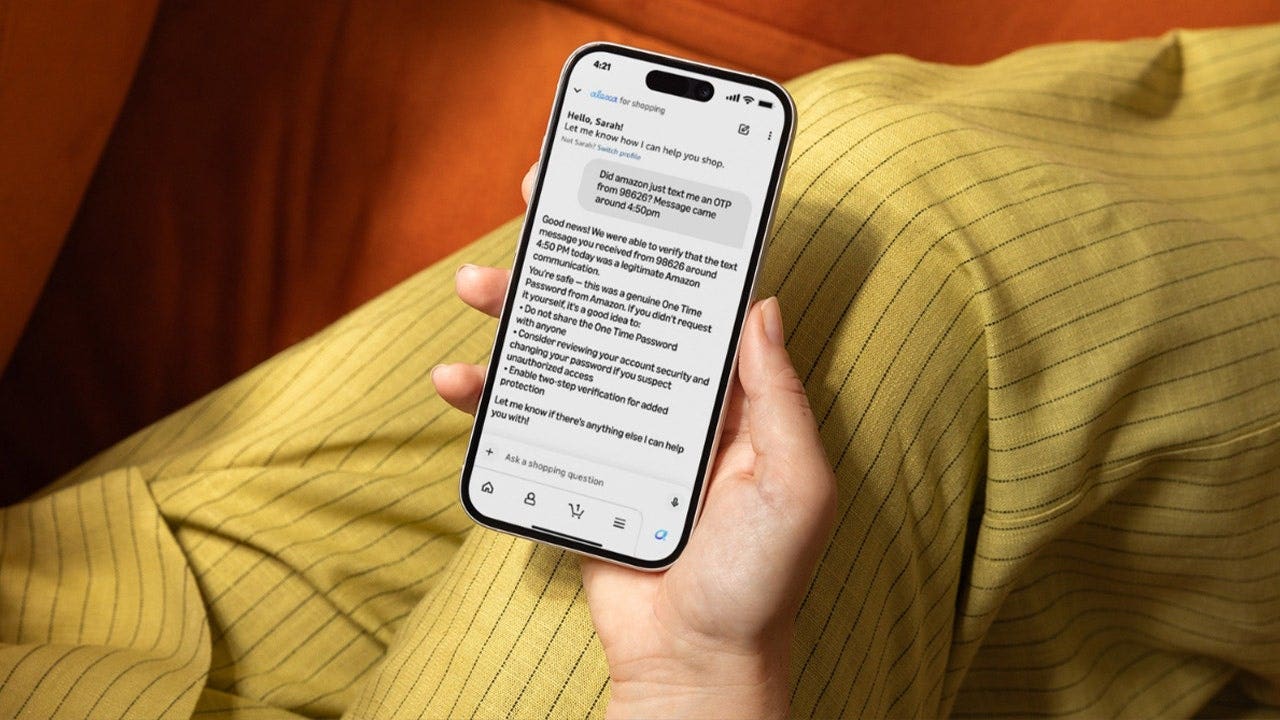
Amazon is giving shoppers a fresh way to fight back against fake delivery notices, bogus account warnings, and scammy phone calls. Its Alexa for Shopping feature can now check whether a suspicious message really came from Amazon, which matters because scammers keep leaning on a brand people already trust.
Scams that use Amazon’s name work so well because they often feel familiar at first glance. A message about a delayed package or a locked account can look harmless until it pushes for fast action, and that is exactly where people get tripped up. Amazon says customers have been asking customer service about suspicious messages in huge numbers, so the company built a verification tool that meets the problem head-on.
The new option is part of Alexa for Shopping, Amazon’s AI shopping assistant. U.S. customers can ask it whether an email, text, phone call, or other message actually came from Amazon, then describe the details they received. That includes the timing, the wording, and even what the sender claimed was happening.
Alexa for Shopping then compares the information with Amazon’s own communication records. If the details line up, it can confirm that the message came from Amazon and offer extra account security guidance. If the message does not match, the assistant can tell you it does not appear to be an official Amazon communication.
There is also a middle ground, and that is important. Sometimes Alexa cannot verify the message with enough confidence, and in those cases Amazon may ask for more details or direct users to another verification method. That cautious approach matters because scammers are constantly changing the look and tone of their messages.
Amazon says the tool is designed to do more than scan for sketchy links or suspicious wording. By comparing the message against records tied to Amazon’s own systems, it has a better shot at catching fake outreach that tries to sound polished and believable. The company says it only gives a full yes when it is completely sure.
Alexa for Shopping is not the only way to check a suspicious message. Amazon also offers [email protected], an email address where anyone can forward a questionable message and get a response about whether Amazon sent it. That works for people anywhere in the world, even if they do not use the app or have an Amazon account.
There is also a customer service verification form for people who want another route. Amazon’s broader anti-scam setup gives customers a few ways to slow things down before clicking, replying, or handing over personal information. That pause can make all the difference when a scam is trying to create panic.
One notable part of the Alexa feature is that it can feed back into Amazon’s anti-fraud team. When users submit a suspicious communication for verification, Amazon says it automatically reports that submission to its customer protection and enforcement team. In plain terms, one person checking a scam could help expose a larger campaign targeting other customers.
That is useful because fake Amazon messages keep working for the same reason over and over again. They start with something that could be true, like a package delay, a billing issue, or an account problem, then turn up the pressure. Once a message says your account is locked or a refund is waiting, people may react before they think.
The safest move is still the least glamorous one: do not trust the message itself. Open Amazon directly through the app or website, check your orders or account status there, and ignore links inside the suspicious note. If a caller asks for a password, a one-time code, or payment in gift cards, that is a giant red flag.
Phone scams deserve extra caution because caller ID can be faked, and that makes a call look more legitimate than it really is. A number or name on the screen does not prove the call is real, especially if someone suddenly claims there is a refund, a payment problem, or a security issue. The same goes for emails that try to rush you into clicking without thinking.
Amazon also points people toward outside scam reporting tools, including the Better Business Bureau’s Scam Tracker. That can help spot patterns, though a lack of reports does not mean a message is safe. The scam may simply be too new to have shown up anywhere yet, which is why direct verification still matters most.
For shoppers, the bigger shift is simple: a suspicious message no longer has to stay a mystery. Alexa for Shopping adds another checkpoint between a scam and a response, and that extra pause can be enough to stop a bad day from turning into a costly one.
