
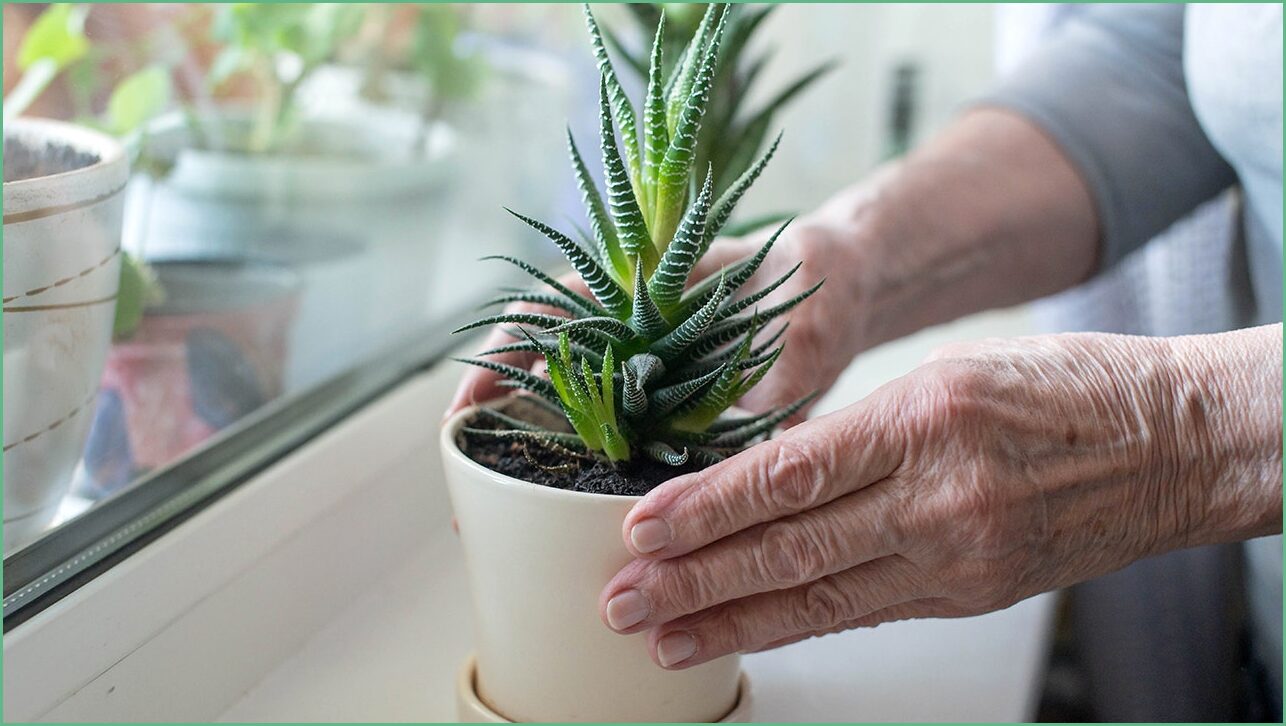
This article examines fresh laboratory modeling that points to compounds in aloe vera, especially Beta sitosterol, as possible inhibitors of enzymes tied to Alzheimer’s, outlines what the simulations show about safety and absorption, records cautious expert reaction, and explains why more lab and clinical work is essential before anyone treats supplements as medicine.
Researchers have turned to aloe vera, a plant long used for skin care, to see if its chemistry can affect brain enzymes linked to Alzheimer’s. Computer simulations suggest certain molecules in the plant may latch onto the enzymes that break down acetylcholine, a brain messenger that dwindles in people with this disease. That theoretical interaction could, in principle, slow the loss of that chemical and ease some symptoms tied to memory and thinking. The idea is intriguing, but it starts on a screen, not in a clinic.
The study homed in on two enzymes, cholinesterase and butyrylcholinesterase, which chop up acetylcholine and help regulate nerve signaling. Drugs that slow these enzymes are already used to treat symptoms in some patients, so the logic was to test whether aloe compounds might do something similar. Using molecular docking and other in silico tools, scientists ranked how tightly various plant molecules could bind to those enzyme sites. Beta sitosterol emerged at the top of that list for binding strength and predicted stability.
“Our findings suggest that Beta sitosterol, one of the Aloe vera compounds, exhibits significant binding affinities and stability, making it a promising candidate for further drug development,” said lead study author Meriem Khedraoui, a researcher at University of Casablanca in Morocco, in the press release. The team also highlighted that Beta sitosterol behaved like a dual inhibitor in the models, meaning it could target both enzymes at once. “These results highlight the potential of Beta sitosterol as a dual inhibitor, which could be crucial in managing Alzheimer’s disease,” added Khedraoui.
Beyond binding predictions, the researchers ran safety and absorption forecasts to see if the compound might be usable as a medicine. Those ADME and toxicity-style checks suggested the molecule would be reasonably absorbed and unlikely to be toxic at therapeutic doses. That kind of early profiling is practical and common before spending resources on lab tests or animal studies. Still, computer-friendly properties do not guarantee real-world drugs.
“The comprehensive analysis supports the potential of these compounds as safe and effective therapeutic agents,” said Samir Chtita, another author of the study from the University of Casablanca, in the same press release. Even when computational profiles look clean, the gap between simulation and human biology can be wide. Metabolism, blood-brain barrier penetration, long-term safety and unexpected interactions are all questions simulations cannot fully answer.
Outside experts urged caution and reminded readers about the limits of these findings. “Because aloe vera supplements are commonly sold over the counter, and because they have not been studied to validate their use in people with Alzheimer’s or other diseases that cause dementia or memory loss/cognitive decline, consumers need to be alert for any therapeutic claims made based on these results,” Christopher Weber, Ph.D., senior director of global science initiatives at the Alzheimer’s Association, said. He also noted that inhibiting cholinesterase activity does not stop the underlying brain cell loss that defines Alzheimer’s.
“So even if these findings are later shown to be successful in human studies, this would not be a ‘disease-modifying’ treatment,” he added. That distinction matters because many current symptomatic therapies ease cognition without changing the disease course. The next steps the authors recommend are clear: lab bench experiments, animal studies, and then carefully controlled clinical trials to test efficacy, dosing, safety and real-world impact.
People worried about memory decline should consult a medical professional rather than self-medicating with over-the-counter supplements. The science headline here is appetizing: a common plant contains molecules that might, in theory, interact with targets relevant to Alzheimer’s treatment. But appetizing hypotheses need rigorous follow-up, and the road from computer model to approved therapy is long and exacting.
