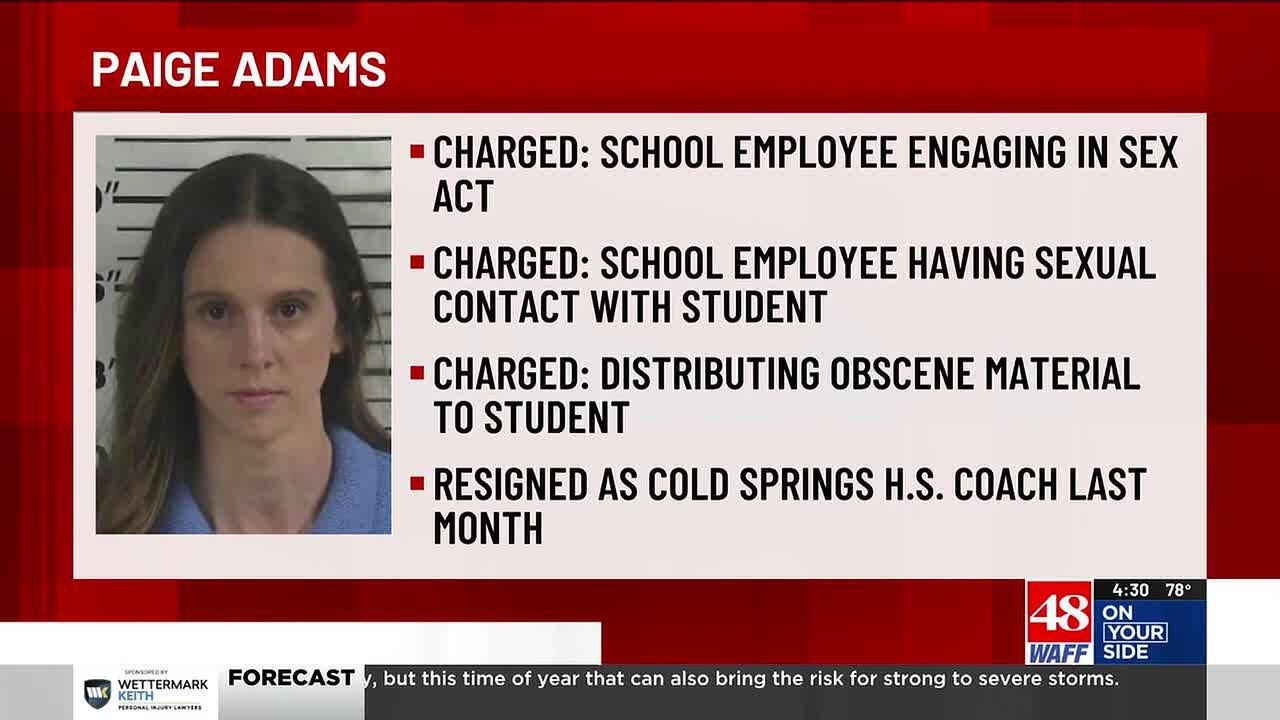
A former Alabama high school girls’ basketball coach has been indicted on multiple sex crime charges tied to allegations of sexual contact with a student, arrested and released on bond while the case moves through the courts.
The indictment names Paige Adams, a 35-year-old who formerly coached at Cold Springs High School, and alleges a pattern of criminal behavior involving a student. Local authorities arrested Adams and booked her into the county jail before she secured release on a substantial bond and an electronic monitoring requirement. The charges range across felonies and numerous misdemeanors, reflecting the complexity prosecutors say this case involves.
According to court documents and law enforcement actions, Adams faces two felony counts related to sexual activity with a student and thirty misdemeanor counts tied to distributing obscene material. Those felony counts are described as a school employee engaging in a sex act or deviant sexual intercourse with a student and a school employee having sexual contact with a student under the age of 19. The collection of misdemeanor counts suggests investigators believe there was repeated behavior, not an isolated incident.
After the arrest, Adams was released on a $225,000 bond and required to wear an electronic monitor as a condition of that release. Electronic monitoring will limit her movements while the case proceeds and is a common measure in cases where courts want to balance release with public safety. The bond amount and monitoring requirement signal how seriously prosecutors and judges are treating the allegations at this stage.
Community reaction has been sharp because Adams had been publicly praised in the past, described by local voices as “a great role model for the young people of Cullman County.” That contrast between reputation and the charges now alleged has heightened local concern and prompted calls for clarity from school officials and the district attorney’s office. Parents and neighbors are seeking details while authorities weigh what evidence to present at trial.
Cullman County District Attorney Champ Crocker summed up the legal position in blunt terms, saying, “This 32-count grand jury indictment speaks for itself,” as the case moves forward. That quote reflects a prosecutorial stance emphasizing the indictment’s scope rather than commenting on guilt or innocence, which will be determined through adjudication. The grand jury’s decision to return so many counts typically follows an extended review of evidence presented by investigators.
Legally, the charges carry serious consequences if convictions occur, including prison time for the felonies and additional penalties for misdemeanors that could affect future employment, professional licenses, and personal freedoms. School employee sexual misconduct cases also trigger separate administrative and employment actions by school districts and state education authorities. Those consequences often unfold alongside the criminal process and can include termination, revocation of certifications, and civil claims.
Investigations of alleged sexual misconduct in schools increasingly involve careful forensic work, witness interviews, and digital evidence review, especially when electronic communications or media are part of the allegations. Prosecutors routinely use phone records, messages, social media content, and other digital artifacts to establish timelines and contacts. Defense teams, meanwhile, typically scrutinize that same material for context, consent questions, and alternate explanations.
For the broader community, the case raises practical concerns about student safety, transparency from school leaders, and the procedures used to spot and report suspected abuse. Parents often demand clearer reporting lines and stronger preventive training after high-profile allegations surface. School districts may respond with audits of policies, refreshed training for staff, and communications aimed at restoring trust while the criminal case continues.
As the legal process unfolds, key milestones to watch include arraignment, pretrial motions, any plea negotiations, and potential trial dates, each of which will bring new filings and courtroom hearings. Witness lists, evidence disclosures, and grand jury materials, where permitted, will shape how both sides present their narratives. For now, the community and courts remain focused on establishing facts and ensuring the legal process runs its course.