
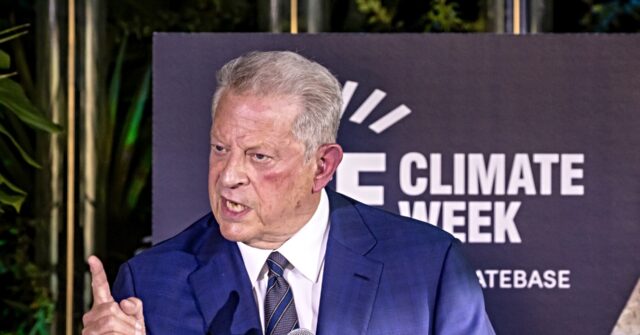
Al Gore’s AI Surveillance of Neighborhoods: Privacy, Power, and Problems
Consider yourself warned: a coalition associated with former Vice President Al Gore is using advanced artificial intelligence and satellite systems to track pollution at street level and, according to reports, identify the very houses and backyards where pollution seems to originate. That description alone should trigger basic questions about privacy, data accuracy, and who gets to wield this kind of power. From a conservative perspective, this is less about saving the planet and more about expanding surveillance without clear guardrails.
First, the technology sounds impressive: satellites scanning for pollutants, machine learning models flagging hotspots, and maps that point to individual properties. But impressive does not mean infallible, and complex AI systems have a history of producing false positives that can ruin reputations. When you combine imperfect algorithms with high-stakes public shaming, you have a recipe for injustice.
Second, there’s the issue of intent and control. Who decides which properties are highlighted, and for what purpose? If the coalition or allied NGOs publish maps that single out neighborhoods or specific homes, that opens the door to private-enforced penalties and social pressure without any legal due process.
Third, this kind of project blurs the line between public interest and intrusive monitoring. There is a legitimate public interest in tracking and reducing pollution, but Americans have a right to expect that efforts to clean the environment will not come at the cost of unchecked surveillance. Property rights and the presumption of innocence should not be the first casualties of tech-driven activism.
Fourth, the Fourth Amendment and basic civil liberties are at stake here. The government is already supposed to follow strict rules before it can search private property or seize evidence. When private coalitions or public-private partnerships start using orbital sensors and AI to point fingers at specific homes, we are dangerously close to bypassing those longstanding protections.
Fifth, consider the marketplace of ideas and incentives. If vocal climate groups and influential figures can publish pinpointed pollution claims, local governments may feel pressure to act quickly, often relying on the same imperfect data. That creates a feedback loop where questionable AI outputs become the basis for regulation, fines, or forced remediation without robust verification.
Sixth, the accuracy of satellite-based pollution detection at backyard scale is scientifically challenging. Satellite sensors are great for broad trends and regional plumes, but translating that data into reliable accusations aimed at a single house requires many layers of modeling and assumptions. Each layer multiplies uncertainty, and uncertainty should not be the foundation for punitive actions.
Seventh, AI models are trained on data that reflect human choices and biases, which means those biases can be amplified. If training sets are skewed toward certain neighborhoods or industries, the system could unfairly target working-class areas while ignoring corporate polluters that know how to hide emissions. That outcome would be both unjust and politically toxic.
Eighth, transparency must be non-negotiable. Any coalition using these technologies must disclose algorithms, training data, error rates, and methods for ground-truth verification. Without that transparency, citizens cannot challenge the results or demand corrections, and local officials cannot responsibly use the data to enforce laws.
Ninth, independent audits should be mandatory before any actionable claims are published. Neutral third parties need to verify hotspot claims on the ground, using qualified environmental scientists and forensic methods. That safeguards against alarmism and gives homeowners a fighting chance to clear their names.
Tenth, there must be clear limits on public disclosure. Publishing neighborhood heat maps is one thing; publishing property-level accusations is another. The default position should favor anonymized data and aggregated trends, not pinpointed allegations that invite vigilante justice or reputational ruin.
Eleventh, legal accountability needs to follow technological power. If a private group publishes false or misleading claims that harm homeowners, there must be a path for those homeowners to seek redress. That means civil liability and regulatory oversight should be on the table to discourage reckless or political use of surveillance tech.
Twelfth, consider the chilling effect on everyday Americans. When people fear their backyard or driveway could be framed as a pollution source by some distant algorithm, they may curtail lawful activities, avoid investments, or simply feel unsafe in their own homes. Freedom to live without looming digital accusation is a conservative value and a human right.
Thirteenth, practical alternatives exist that respect privacy while addressing pollution. Targeted inspections based on credible tips, improved community reporting systems, and investments in conventional monitoring methods at industrial sites deliver results without spawning mass surveillance. Conservatives should champion smart, accountable, and rights-respecting enforcement.
Fourteenth, policy solutions should include clear standards for the admissibility of satellite and AI-derived evidence in enforcement actions. Courts and legislatures must set high bars for demonstrating causation and accuracy before fines or mandates can follow. That protects both the environment and civil liberties.
Finally, voters and local leaders must demand clarity and limits. Technology will only keep getting better, and the temptation to use it for noble causes can mask real dangers to liberty. If a coalition linked to a high-profile political figure wants to track pollution down to the backyard, they should expect pushback until they can prove their methods are accurate, transparent, and respectful of law and liberty.
