
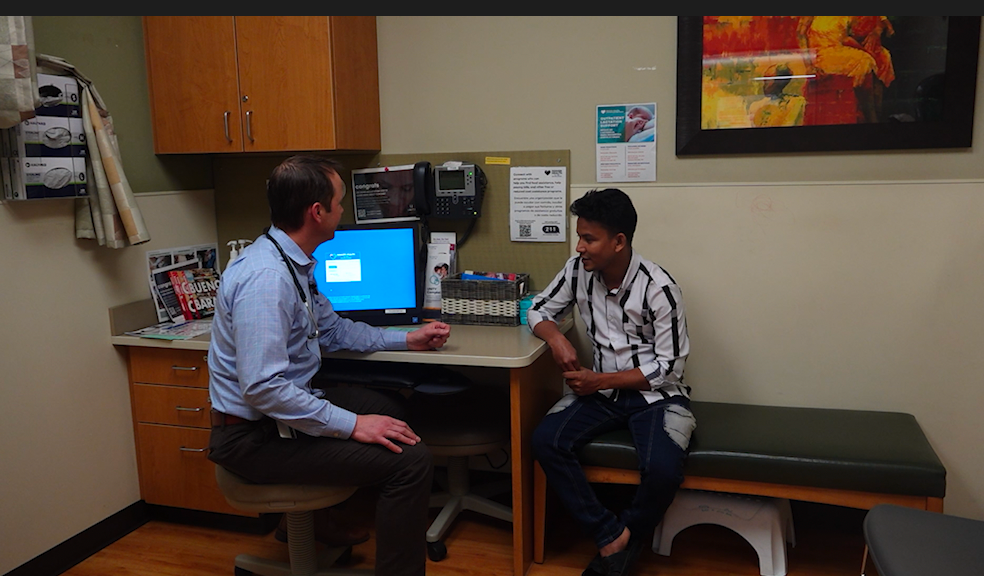
Artificial intelligence is making significant waves in the world of healthcare, particularly in the way doctors and patients communicate. Many doctors across the nation have embraced a type of AI known as ambient listening. This technology is designed to listen to conversations between doctors and patients, transcribe them in real-time, and then produce detailed clinical notes without interrupting the natural flow of the appointment.
Dr. Daniel Kortsch at Denver Health has observed a noticeable impact since implementing ambient listening technology in his practice. According to him, this AI innovation allows doctors and patients to engage more naturally, focusing on human interaction rather than documentation. At Denver Health, they use an AI tool called Nabla, which begins transcribing a conversation with just one click and can even handle multiple languages.
This comes as the U.S. is grappling with a looming shortage of doctors, with estimates suggesting a deficit of 57,000 to 72,000 physicians this year, as reported by the Association of American Medical Colleges. This shortage contributes to increased workloads and burnout among healthcare providers. Dr. Kortsch pointed out that using Nabla has reduced the time doctors spend doing paperwork at home, allowing them more personal time.
Some patients might be wary of AI, but tech companies are keen to assure that doctors are still in full control. There is a system of checks and balances in place to ensure that the physicians oversee the AI-generated summaries. Kenneth Harper from Microsoft emphasized that doctors are the final decision-makers, ensuring the best outcomes for patients.
Microsoft’s Dragon Copilot, another ambient listening tool, is being used by 600 healthcare organizations across several states, including Colorado and Massachusetts. This tool aims to enhance clinician well-being and efficiency, improving outcomes for both healthcare providers and patients. The technology allows for more genuine interactions between doctors and patients, as noted by Dr. Kortsch.
Patients are experiencing more direct engagement during their visits, thanks to the reduced administrative burden on doctors. Denver Health plans to extend the use of this technology to other healthcare professionals like nurses, psychiatrists, and psychologists, spreading the benefits throughout the healthcare system. This expansion is ongoing, promising a broader reach for ambient AI.
Dr. Kortsch remarked that people become doctors to interact with patients, not to fill out paperwork. Ambient AI is helping to return the focus to patient interaction, which is the core of healthcare. The projected doctor shortage in the U.S. could reach 86,000 by 2036, highlighting the need for such innovations to alleviate the strain on healthcare providers.
Kennedy Hayes, a multimedia reporter based in Denver, joined Fox News in 2023, bringing attention to these developments in healthcare. As AI continues to integrate into medical practices, it is reshaping the landscape, offering new solutions to age-old challenges in the field.
