
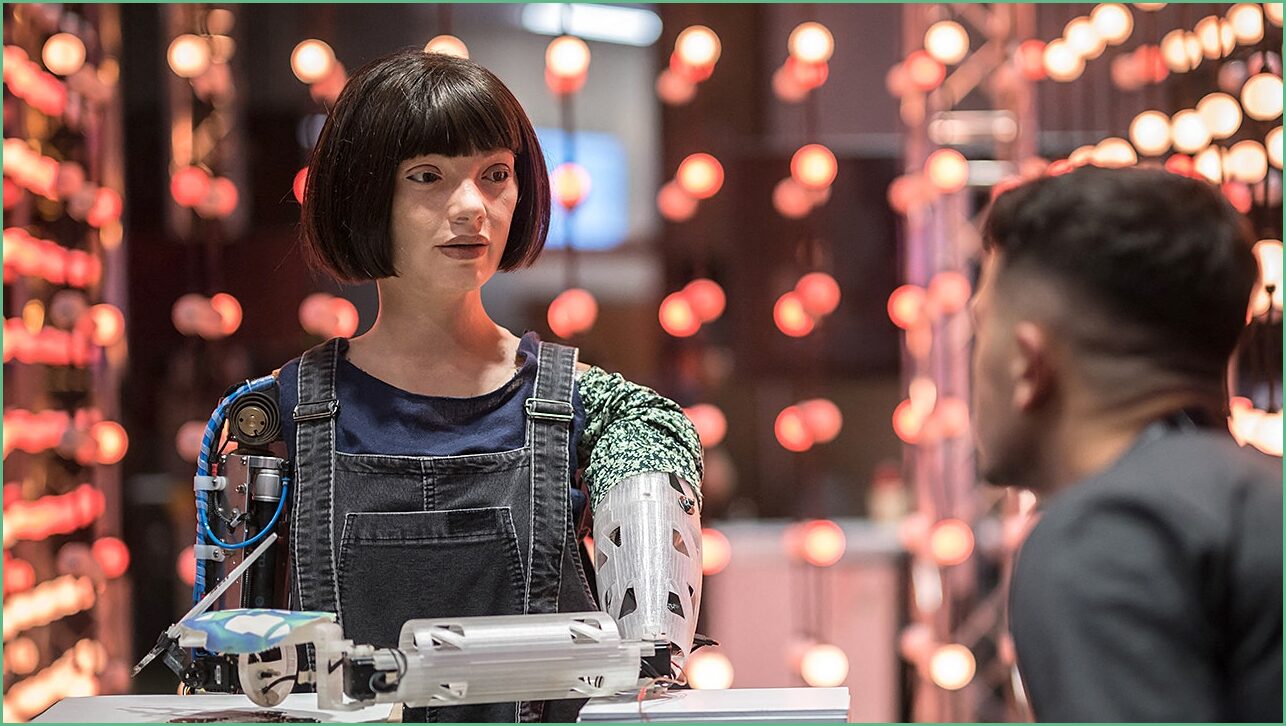
Ai-Da, the humanoid robot artist, has stepped out of the studio and into architecture with a modular project called Ai-Da: Space Pod, shown now at the Utzon Center. The exhibit blurs art, engineering and long-term space planning while asking sharp questions about how AI might shape the places we live. It showcases drawings, paintings and architectural sketches that imagine habitats for the Moon, Mars and prototypes here on Earth. The work forces a closer look at the shifting boundary between human creativity and machine decision-making.
The Utzon Center display, titled “I’m not a robot,” puts Ai-Da’s visual work next to architectural concepts, making the leap from canvas to living space feel deliberate and immediate. Visitors can watch sketches unfold and see how an artificial system translates sensory input into spatial ideas. The show situates those designs in the context of renewed lunar exploration and the technical demands of off-world bases. That context turns an art installation into a prompt about real-world engineering needs.
Ai-Da is built with camera eyes, advanced algorithms and a robotic arm that draws and paints in real time, and the project pushes that toolkit into architecture. The Space Pod idea is modular by design, with individual units able to link together through corridors to form a shared habitat. The team behind Ai-Da suggests these pods could be rendered in 3D and developed into physical prototypes on Earth or adapted for Moon and Mars missions. The practical possibilities are nested inside an artistic provocation.
“Ai-Da presents a concept for a shared residential area called Ai-Da: Space Pod, a foreshadowing of a future where AI becomes an integrated part of architecture,” explains Aidan Meller, creator of Ai-Da and Director of Ai-Da Robot. That statement captures the project’s intent: not to replace architects overnight but to imagine architectures that react and adapt. Intelligent systems embedded in buildings could sense occupants and adjust lighting, temperature and digital interfaces to suit moods and needs. The scenario moves design from static form to ongoing dialogue between user and structure.
The exhibit also makes a point about audience discomfort and ethical trade-offs tied to rapid tech shifts. According to the show’s curators, confronting the visitor with a humanoid that designs space is meant to unsettle as much as it fascinates. “Technology is developing at an extraordinary pace in these years,“ he said, pointing to emotional recognition through biometric data, CRISPR gene editing and brain computer interfaces. Each carries promise and ethical risk. He references Brave New World and warnings from Yuval Harari about how powerful technologies may be used.
Ai-Da’s renderings imagine homes that double as studios, places meant for humans and machines to cohabit or collaborate. The team says those paintings and sketches could evolve into structural models using modern fabrication techniques, including 3D printing. That makes the project less speculative and more a testbed for how automated design tools might integrate with construction workflows. Building prototypes on Earth would let engineers trial concepts before any off-world deployment.
Modularity is the linchpin of the Space Pod concept, which favors repeatable units that connect to form larger compounds. In a lunar or Martian setting, modular design simplifies logistics, assembly and redundancy, while on Earth it supports scalable, flexible housing experiments. The aesthetic and functional language of the pods comes straight from Ai-Da’s mixed-media work, a rare case where an artist-robot’s imagination drives architectural form. The result is part science, part choreography of systems and people.
“With our first crewed Moon landing in 50 years coming in 2027, Ai-Da: Space Pod is a simple unit connected to other Pods via corridors,” Meller said. That timeline ties the artwork to concrete planning milestones and invites engineers to consider alternate routes to habitability. If missions require living quarters that flex to crew size and task, modular pods offer a clear benefit. The piece reframes design questions around adaptability and human experience rather than only structural metrics.
Responses to the project vary from excitement about new design tools to sharper concerns about ceding decision-making to algorithms. Critics worry about accountability: who answers if a machine-designed space fails, or if built environments begin to prioritize efficiency over well-being? Supporters counter that AI can handle complexity and personalize environments in ways humans alone cannot. The debate spotlights governance gaps as much as technological capability.
“Ai-Da is confrontational. The very fact that she exists is confrontational,” said Line Nørskov Davenport, Director of Exhibitions at Utzon Center. That confrontation is the point: to prod conversations about agency, control and the role of creative judgment in the built environment. By placing a humanoid robot inside a cultural institution, the exhibit forces us to confront our assumptions about authorship, expertise and taste. It’s a cultural test as much as a design experiment.
Beyond the Moon and Mars headlines, the larger consequence is domestic. If AI starts to shape housing and public spaces, it will influence daily routines and social norms here on Earth. Designers, planners and policymakers will need new frameworks for oversight and integration to ensure technology serves human priorities. The Space Pod serves as a practical metaphor for those conversations, making abstract risks tangible in drawings and mock-ups.
Ai-Da’s shift from painter to architectural provocateur is a clear signal that tools once confined to the studio are moving into areas that govern how we live. The work refuses easy answers, instead asking who gets to decide how our future homes are imagined and built. As these systems gain sophistication, the choices made now about collaboration, transparency and responsibility will shape both off-world colonies and everyday neighborhoods.
