
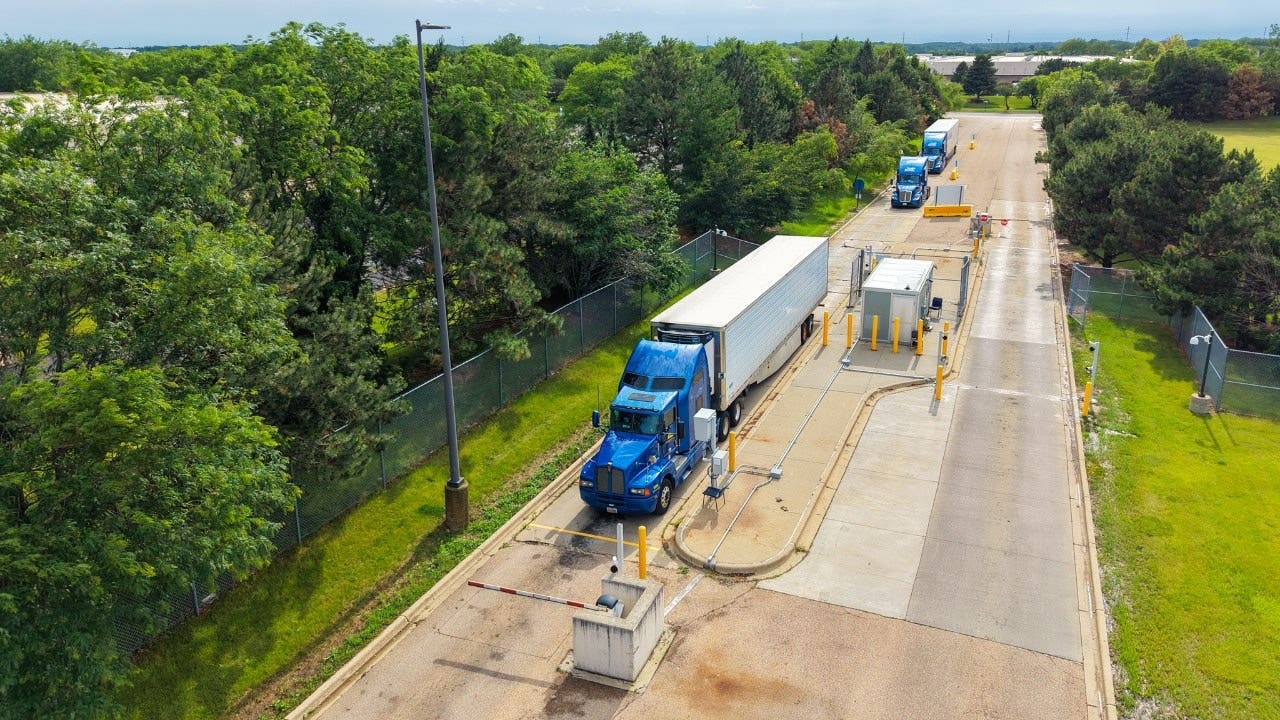
AI is creeping into the supply chain in a very practical way, and the payoff could reach far beyond warehouse gates. By speeding up truck check-ins, cutting idle time, and tightening security, these systems aim to trim costs that often get buried inside grocery prices and delivery fees. The big question is whether that efficiency can finally make a difference for shoppers feeling squeezed every time they buy food or place an order.
You can see why the idea has traction. Diesel is expensive, trucks burn fuel while sitting in line, and every extra minute at a distribution center adds friction to a system that already runs on thin margins. When those delays pile up across hundreds of daily arrivals, the expense does not stay at the dock for long.
That is where companies like EAIGLE are making their pitch. Their AI-powered camera system is built to recognize arriving vehicles, match them with shipping records, and clear them through automated gates in seconds instead of minutes. In a business where time really is money, shaving a check-in from about 10 minutes to under 30 seconds can create a meaningful ripple effect.
The logic is simple enough. Less waiting means less idling, and less idling means less wasted fuel. For transportation companies, that can translate into lower operating costs, fewer headaches at busy facilities, and a smoother handoff between the road and the warehouse floor.
Grocery prices are tied to a lot of moving parts, but transportation is a stubborn one. Produce often travels long distances before it ever reaches a store shelf, and many products pass through multiple checkpoints before a customer sees them. When diesel prices rise, carriers usually look for ways to recover the expense, often through fuel surcharges or higher shipping rates.
That pressure can land right on consumers. A USDA-supported study found that higher transportation costs generally pushed food prices higher in the scenarios it examined, with potatoes standing out as especially sensitive to shipping expenses. It is a reminder that inflation is not just about the item itself, but about the cost of moving it from one place to another.
AI does not erase all of that, but it can chip away at waste. If a facility processes trucks faster and cuts down on unnecessary delays, the savings can stack up over time. The catch is that those savings may not automatically show up as cheaper groceries, since retailers can use the extra margin in a few different ways.
They might hold prices steadier, absorb other rising costs, or keep the benefit inside the company. There is also no clear proof that this kind of gate automation directly lowers grocery bills or delivery charges for shoppers. Still, in a supply chain where every dollar gets counted, even small efficiencies can matter if they happen often enough and at enough locations.
There is another angle worth watching, and it has to do with keeping products moving. Shoppers know the frustration of walking into a store and finding empty shelves, or watching an online package stall somewhere between a warehouse and the front door. Faster truck processing will not fix everything, but it can help reduce one bottleneck in a system where bottlenecks tend to breed more bottlenecks.
Security matters too. Cargo theft remains a costly problem, and criminals sometimes try to fake their way into shipments by posing as legitimate carriers. Systems that cross-check vehicle details against shipping records can flag suspicious pickups before a load disappears, which may save retailers from losses that are both expensive and disruptive.
EAIGLE says its technology is already being used in major distribution facilities, and companies like Loblaw are expanding it across more sites. The appeal is easy to understand: if a warehouse can move trucks through faster, improve accuracy, and keep operations from backing up, the whole network gets a little cleaner. That does not solve inflation on its own, but it gives retailers one more tool in a fight where small gains can add up fast.
For shoppers, that is the real hook. The cost of a carton of milk, a bag of potatoes, or a delivery order often starts long before the product reaches a shelf or a doorstep. If AI can knock down some of the waste along the way, the savings may not be flashy, but they could still matter in the places people notice most, like the checkout line and the delivery screen.

1 Comment
Needed update JIT Delievery plans
Nationwide
Reroute trucks
All businesses