
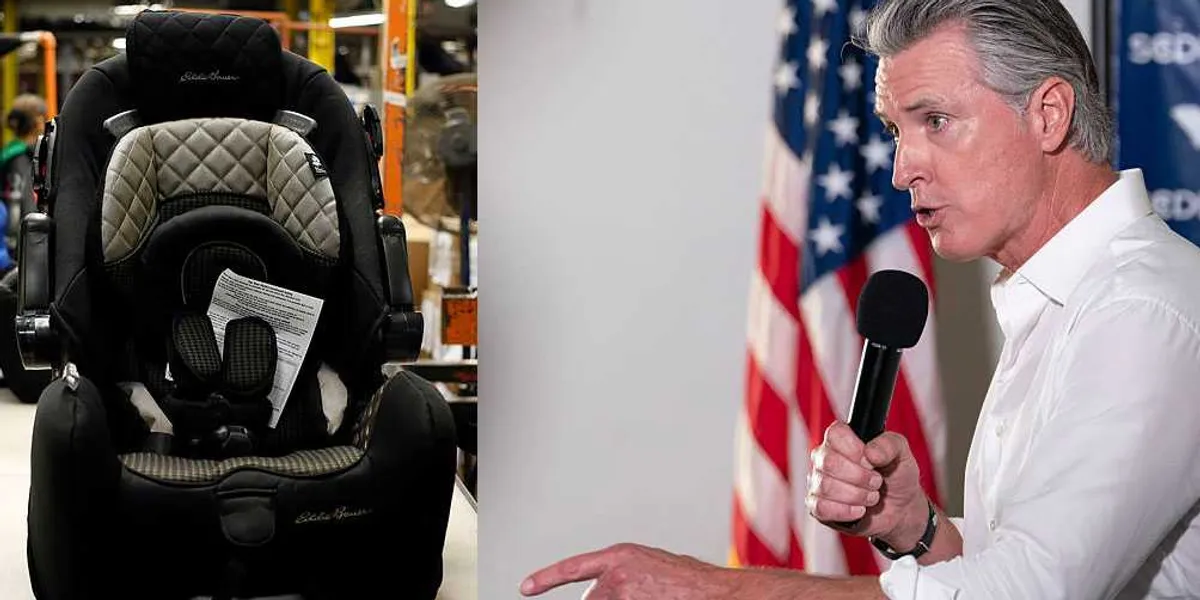
California is moving toward a tougher booster-seat rule that could reach teenagers up to age 15 in some cases, and the reaction has been swift. Supporters frame it as a safety measure built around crash protection, while critics see another example of Sacramento reaching too far into ordinary family life.
The proposal lands in the middle of a familiar fight over how much government should dictate everyday decisions. For many parents, the idea that a healthy-looking middle schooler or high school freshman might still need a booster seat feels excessive, especially when the child is tall enough to look like a young adult. That tension is exactly why the rule has set off such a loud debate.
California already has a reputation for strict driving regulations, and this change would add another layer to that image. The argument in favor is straightforward: seat position matters, and child-sized bodies are not always protected properly by standard seat belts. From that angle, the policy is about reducing injury risk, not making a point about family choices.
Still, the age range is what grabs attention. In plenty of households, 15 is the point where teens are behind the wheel soon or already learning how to drive, not sitting in a booster like a little kid. That mismatch is why critics are calling the plan overbearing and mocking it as a classic nanny-state move.
The broader issue is not just one rule, but the pattern behind it. California lawmakers and regulators have a habit of treating public safety as a blank check for more restrictions, fees, and mandates, even when the practical payoff is debatable. Once that habit takes hold, ordinary parents are left wondering where common sense fits in.
Supporters of tighter child passenger rules would say there is no harm in erring on the side of caution. A car crash is not the place to gamble, and safety standards have long evolved as research improves. That argument carries weight, especially for younger children and smaller teens who may not fit a seat belt correctly.
But the pushback is just as easy to understand. Families do not like being talked to as if they cannot judge the size, maturity, and needs of their own kids. When a rule stretches all the way to age 15, it invites the question of whether officials are setting a safety standard or simply flexing power.
There is also a cultural piece to this fight. California often presents itself as the model for progressive governance, but many people outside the state see a place where officials confuse control with competence. That perception matters because policies like this do not land in a vacuum; they become symbols of a larger approach to governing.
Transportation rules tend to expose that split fast. On one side are advocates who trust experts and want tighter standards on the road. On the other are parents and taxpayers who think the state should stay in its lane and avoid turning common travel into another compliance exercise.
None of that means seat safety should be dismissed. The problem is the leap from sensible guidance to blanket rules that can feel disconnected from real life. When government keeps stretching age thresholds and testing the limits of parental discretion, people start tuning out the message entirely.
The debate over booster seats is really a debate over trust. Do families get the benefit of the doubt, or does the state assume it knows best in every back seat, every driveway, and every school pickup line? In California, that question is getting harder to avoid.
