
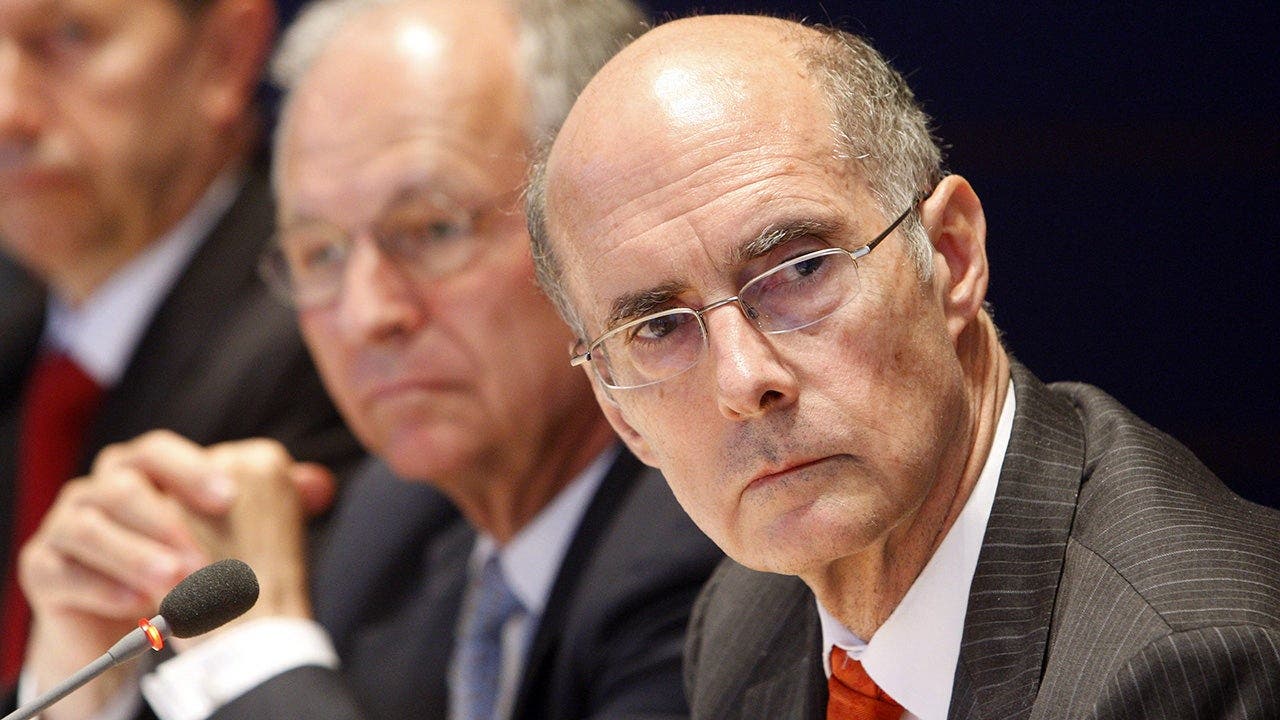
Strobe Talbott, a longtime foreign policy hand with deep ties to the Clinton era, has died at 80 after a long illness. His career moved from journalism to high-level diplomacy, with major stops at Time, the State Department, and the Brookings Institution, all while he stayed closely linked to the hardest questions in U.S.-Russia relations.
Talbott died peacefully at his home in East Hampton, New York, according to his son, Devin Talbott. Born in Ohio, he first made his mark as an intern at Time while studying at Yale and Oxford, where he shared a room with Bill Clinton and picked up a lifelong place in the political orbit that later shaped his public life.
At Time, Talbott was pulled into a major assignment translating the leaked memoirs of Nikita Khrushchev, a project that helped turn a young journalist into a serious authority on the Soviet Union. He went on to spend 21 years at the magazine, covering U.S.-Soviet relations, running the Washington bureau, and writing as a foreign affairs columnist with a sharp eye for the Cold War world.
That background made him a natural fit for the Clinton administration, where he became deputy secretary of state in 1994. In that role, he worked on relations with Russia and other states that emerged after the collapse of the Soviet Union, a period when the United States was trying to keep old rivalries from turning into new dangers.
Clinton remembered Talbott as someone uniquely equipped for that moment. The former president said Talbott was the person he trusted most on Russian matters, and that Hillary Clinton also leaned on his advice when the stakes were high and the diplomacy got complicated.
“He was analytical, completely devoted to diplomacy, and on the level,” Bill Clinton said. “With his expertise, we made real progress building trust between two former adversaries — moving beyond decades of confrontation to reduce the nuclear dangers future generations would inherit and build a Europe where more people could live in freedom and peace, including through the expansion of NATO and resolving ethnic conflicts in the Balkans. Together we laid the groundwork for greater cooperation while putting Russia on a path to democracy.”
Clinton also pointed to the darker turn Russia later took under Vladimir Putin, saying, “Sadly, its current leader has taken the country in a different direction,” a line that fits the arc of Talbott’s career, which often centered on the hope that post-Soviet Russia might move toward something more open and stable.
After government service, Talbott took over as president of the Brookings Institution and held the post from 2002 to 2017. He also chaired the State Department’s Foreign Affairs Policy Board, staying plugged into the policy world even after stepping away from day-to-day government work.
Those who knew him often saw a man who blended discipline, intellect, and an unusually calm temperament in rooms where tempers could flare fast. At a time when foreign policy debates often split into slogans and chest-thumping, Talbott remained the sort of figure who preferred precision, patience, and a long view of history.
His life also carried a personal thread that never quite separated from the public one. Clinton later joked that his role in their Oxford apartment was to make Talbott breakfast every morning, a small detail that captured how long their connection had lasted and how far both men would go in very different directions from those student days.
Talbott is survived by his sons Devin and Adrian, along with six grandchildren. His first wife, Brooke Shearer, died in 2009, and he later married author Barbara Lazear Ascher.
