
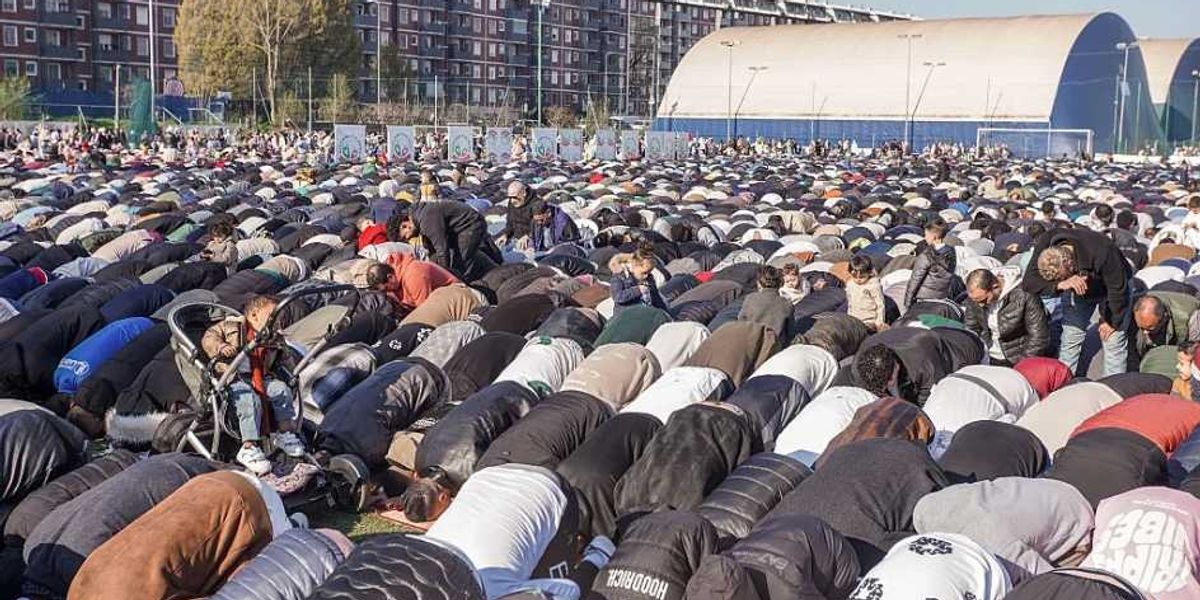
A growing gap in religious identity is putting old assumptions on shaky ground. The numbers point to a world where Christian affiliation keeps weakening in the West while Islam continues to expand, and that shift is already reshaping culture, public debate, and the way people think about faith itself.
One of the biggest takeaways is simple: belief is not standing still. In some places, church participation is thinning out fast, while Muslim communities are growing through higher birth rates, younger populations, and steady migration patterns. That combination is changing the balance in ways many people are only now beginning to notice.
The trend matters because religion is never just private. It affects schools, politics, family life, holidays, language, and the moral habits that shape a society over time. When one faith fades and another rises, the pressure does not stay inside houses of worship. It spills into daily life, and that is where the real tension starts to show.
For Christians, the decline is not just about statistics. It reflects a deeper cultural drift, where tradition has less pull and public life is increasingly detached from faith. Many Western countries have spent years treating religion like a relic, only to find that people still hunger for meaning, order, and belonging even when they no longer call it church.
Islam’s rise is often discussed only in demographic terms, but that misses part of the story. A growing community brings institutions, identity, and confidence, and those things matter in a society that has become unsure of its own foundations. When faith is strong, it tends to organize people. When faith is weak, it tends to scatter them.
That contrast helps explain why the conversation around these projections can get so heated. Some see the change as evidence of a broader civilizational swap, while others say it is simply the result of different population patterns playing out over time. Either way, the underlying message is hard to ignore: the West is no longer guaranteed to remain religiously dominant in the way it once was.
There is also a generational angle that cannot be brushed aside. Younger adults in many countries are less likely to identify with Christianity, less likely to attend services, and less likely to pass those habits on to their children. Once that chain starts to break, rebuilding it becomes far harder than preserving it ever was.
At the same time, many Muslim families still place strong emphasis on faith as part of everyday life. That consistency gives their communities a stability that secular culture often lacks. In a world where people are told to invent their own values from scratch, a clear religious identity can feel less like a burden and more like a lifeline.
The bigger issue is what kind of society emerges when belief becomes fragmented. Shared moral language gets harder to maintain, and public arguments become louder because fewer people agree on first principles. If one group grows more rooted while another grows more detached, the imbalance can shape everything from local communities to national politics.
None of this means history is fixed, and it certainly does not mean every country will move in the same direction. Different nations will respond in different ways, depending on their laws, their birth rates, and how seriously they treat questions of identity and culture. But the broad pattern is already there, and it is forcing a lot of people to confront a reality they would rather postpone.
Faith has never been just about numbers, and numbers have never been just about faith. When the religious map changes, the social map changes with it, and those changes tend to arrive faster than people expect. Across the West, the debate is no longer about whether that shift is happening, but about how much more it will reshape the world before anyone is ready for it.
