
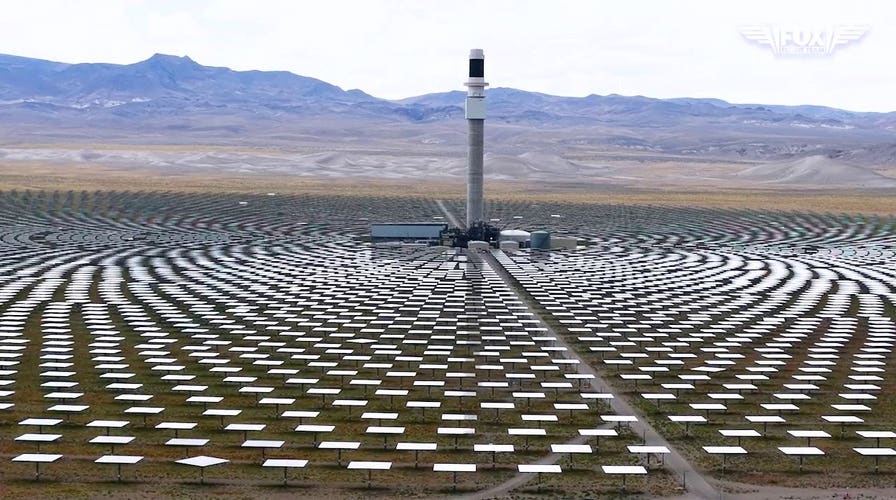
The Crescent Dunes solar plant was supposed to be a showcase for the future, a flashy answer to America’s energy needs. Instead, it became a cautionary tale of big government bets, engineering headaches, and a taxpayer bill that kept getting worse. After two bankruptcies and a fire-sale price, the project stands as one of the clearest examples of how expensive “green” promises can go off the rails.
Built in the Nevada desert near Tonopah, the facility looked impressive on paper and even more dramatic in person. More than 10,000 mirrors were arranged around a towering central receiver, all designed to concentrate sunlight and store heat in molten salt so the plant could generate power after dark. That concept made it sound like a breakthrough, especially to policymakers eager to chase renewable energy and claim a win for the climate agenda.
The Obama administration helped bankroll the project with a $737 million federal loan guarantee and roughly $275.6 million in Treasury grant money. Supporters treated it like a smart public-private partnership, the kind of project that would push an unproven technology into the mainstream. But that gamble came with real risk, and once the problems started, the scale of the investment only made the fallout more painful.
Operations began in late 2015, and the trouble came fast. Leaks and mechanical failures repeatedly knocked the plant offline, while actual output fell far short of what federal projections had promised. By 2018, the project’s best year through 2025 still produced only 41% of the annual electricity DOE had said it could deliver.
Then the damage piled up. A major molten-salt tank leak hit in 2016, another tank failure followed in 2019, and the plant lost its long-term power customer later that year. Once NV Energy walked away from its contract, the economics got uglier by the month, and the first bankruptcy arrived in 2020.
The restructuring did not save it. Ownership shifted, repairs were supposed to get production back on track, and the plant did restart in 2021, but more tank leaks in 2022 and 2023 forced fresh shutdowns. By early 2026, the project was back in bankruptcy court, and the once-$1 billion asset sold for just $7 million.
That kind of collapse naturally revived the debate over what actually failed. Some pointed to construction mistakes, while others argued the whole setup was simply too ambitious and too fragile for the real world. Either way, the molten-salt storage system proved far more difficult to manage than the original pitch suggested.
Oliver Hemmers, a physicist and energy researcher, said the tank design itself created serious material-science problems. Heat swings of hundreds of degrees can make metal expand and contract over and over, which can eventually crack welds and cause leaks. In other words, the bigger the system, the more punishing the stress on the equipment.
Cheaper solar technology also changed the game. Conventional photovoltaic panels kept falling in price, especially as global manufacturing expanded, and that made Crescent Dunes look even less competitive. The plant’s big advantage was storage, but the market was moving toward simpler systems that cost less and came with fewer moving parts.
That is where the politics get sharp. Critics say the project was a textbook case of government officials taking credit on the way up and leaving taxpayers stuck on the way down. Rep. Lance Gooden called it a symbol of “the Green New Scam,” arguing that public money was wasted while private players walked away from the wreckage.
Not everyone sees it that way. Some defenders of the loan program argue that government financing can help new technologies survive the ugly middle stage before they become commercially viable. They point to other energy projects that performed better and note that innovation often comes with failures mixed in.
Still, Crescent Dunes is hard to spin as a success story. The project was sold, relaunched, broken again, and eventually dumped at a tiny fraction of its original cost. For taxpayers, it left behind a familiar Washington pattern: big promises, shiny ribbon cuttings, and a bill that landed long after the applause faded.
