
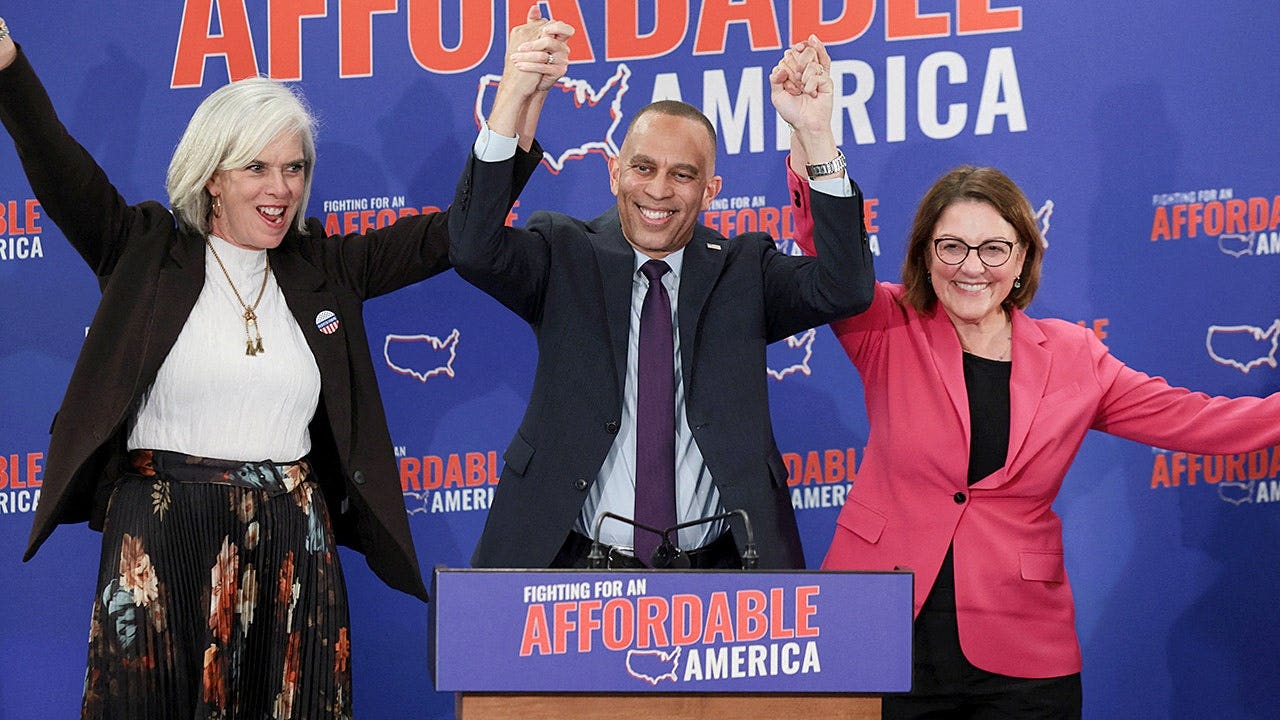
Hakeem Jeffries cruised through a closed-door Democratic vote and locked down the speaker-designate role with a lopsided margin, even as a small group of progressives tried to make noise on the way out. The result showed a caucus that may argue loudly, but still knows how to count, with Jeffries positioned to make history in January as the first Black speaker of the House.
Democrats had plenty of chatter about a restless left flank pulling the party further in that direction. Yet when the ballots were finally tallied, the drama shrank fast. Jeffries collected 251 of 262 secret votes, and only 11 Democrats held back their support.
No challenger stepped forward inside the caucus, which made the vote less about a fight for the gavel and more about whether the hard-left bloc could flex any real muscle. The answer came back pretty clearly. For all the noise, the numbers showed the broader caucus still had the upper hand.
That matters because politics is rarely about speeches alone. It is about who can assemble votes, keep people together, and project enough discipline to avoid looking ragged in public. On Wednesday, Jeffries and his allies looked unified, while the holdouts looked more isolated than powerful.
Even some Democrats who have watched the party lurch left were quick to frame the result as a sign of control, not chaos. Rep. Tom Suozzi said the size of the majority would make it difficult for any faction to hold the group hostage. Jeffries, for his part, leaned into the idea of cooperation and said the goal was to find common ground that improves life for the American people.
The symbolism of the moment was hard to miss. Jeffries is on track to become the 57th speaker and the first Black lawmaker to hold the post, a milestone that drew celebration from members of the Congressional Black Caucus. Jim Clyburn said he had been thinking about John Lewis a lot this week, while Rep. Nikema Williams called the prospect deeply meaningful.
Rep. Jonathan Jackson also connected the moment to a bigger American story, saying Jeffries’ rise reflects progress in real time. Those comments gave the day a historic glow, even if the underlying politics were anything but soft. The caucus was celebrating unity, but it was also quietly sorting out where the edges of that unity begin and end.
The dissenters were not all cut from the same cloth. One of the holdouts, Don Leonard of Ohio, represents a district won by President Trump, and his demands focused on a 28th Amendment, Citizens United, and a vote on military aid to Israel. That is a very different lane from the deeper-blue districts represented by some of the other rebels.
Seven of the progressive holdouts issued a joint statement pressing Jeffries to stop ICE and end what they called “genocide in Gaza.” They said talks had produced “meaningful progress,” but their vote still came down as “no” for now. Even so, the group remained small enough that it never threatened the larger result.
The most interesting wrinkle was that two of the holdouts came from Jeffries’ own hometown, New York City. Claire Valdez and Darializa Avila Chevalier declined to back him, which clearly irritated some of their colleagues. Nydia Velázquez, Joe Morelle, and Marilyn Strickland all pushed back hard, making the case that Jeffries had earned the role and that the dissenters were out of step.
Some Democrats saw the defections as a mistake, while others shrugged them off as a routine bit of leverage from freshmen looking to amplify their priorities. That tension is classic Washington. A few lawmakers want attention, the leadership wants discipline, and the whole thing gets wrapped in the language of principle.
Jeffries did not take the bait when pressed about the hometown defections, answering only that “The numbers speak for themselves.” That line fit the moment perfectly. The caucus vote was not the floor vote in January, but it sent a blunt message anyway, and the message was that Jeffries entered the next phase with momentum, history, and the bigger side of the Democratic Party behind him.
