
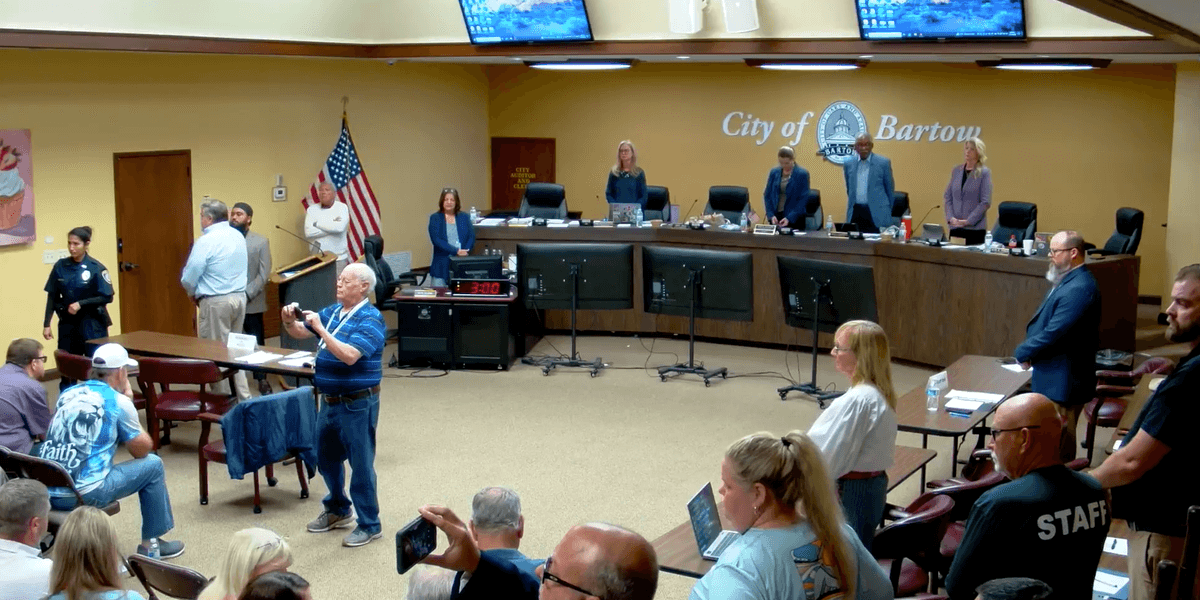
Florida city meetings are supposed to be the kind of thing people can watch without drama. Instead, a prayer moment turned into a flashpoint, with residents pushing back loudly and turning a solemn scene into a tense public clash.
The incident quickly lit up the conversation around civic events, religion, and how far a crowd will go when it feels something has crossed a line. What happened next was less about quiet reflection and more about raw local anger, with chants and interruptions cutting through the room.
During a Bartow city meeting, an imam began a prayer, and several residents did not sit still for it. The moment was interrupted by the Lord’s Prayer and a loud “USA” chant, turning the meeting into a noisy standoff that left little room for calm.
That reaction was not subtle, and it was not accidental. People in the room appeared to be making a point about the setting itself, signaling that they saw the prayer as out of place in a government meeting where many expect a neutral civic atmosphere.
The clash captured a broader tension that has been building in communities across the country. Public meetings often bring together people with very different beliefs, but when religion enters the room in a formal government setting, tempers can flare fast and the reaction can get bigger than the original moment.
For many residents, the issue was not just the prayer. It was the feeling that local government spaces should remain focused on public business rather than becoming a stage for religious displays that some see as divisive or unnecessary.
That kind of pushback tends to land hard in places where people are already sensitive about identity and tradition. A city meeting can go from routine to explosive in seconds when citizens decide they want to challenge what they believe is being imposed on the room.
The Bartow scene also showed how quickly symbolic gestures can dominate a public event. The Lord’s Prayer is deeply familiar to many Americans, while the “USA” chant brought a sharp patriotic edge, making the confrontation feel like a direct statement about culture and belonging.
That mix gave the moment a strange, almost electric quality. It was not a quiet disagreement and not a polite protest. It was a loud public rejection that made the whole room feel smaller, tighter, and far more charged than a normal city meeting.
Incidents like this do not stay local for long because they tap into bigger arguments people are already having. Questions about religious expression, civic space, and who gets to define the tone of public gatherings tend to spread quickly once a clip or description starts circulating.
Supporters of the residents’ reaction are likely to see it as a forceful defense of community norms. Others will see it as a disruptive response that only deepened the divide, but either way the message was unmistakable: plenty of people in that room were not willing to let the moment pass quietly.
What happened in Bartow also fits a wider pattern of public meetings becoming battlegrounds for cultural disputes. When people believe a boundary has been crossed, they often respond in the language of the crowd, and that can turn a simple procedural meeting into a scene nobody forgets.
By the time the noise settled, the prayer was no longer just a prayer. It had become a symbol, a protest, and a flare-up all at once, with the room full of people left to deal with the aftermath of a moment that clearly touched a nerve.
