
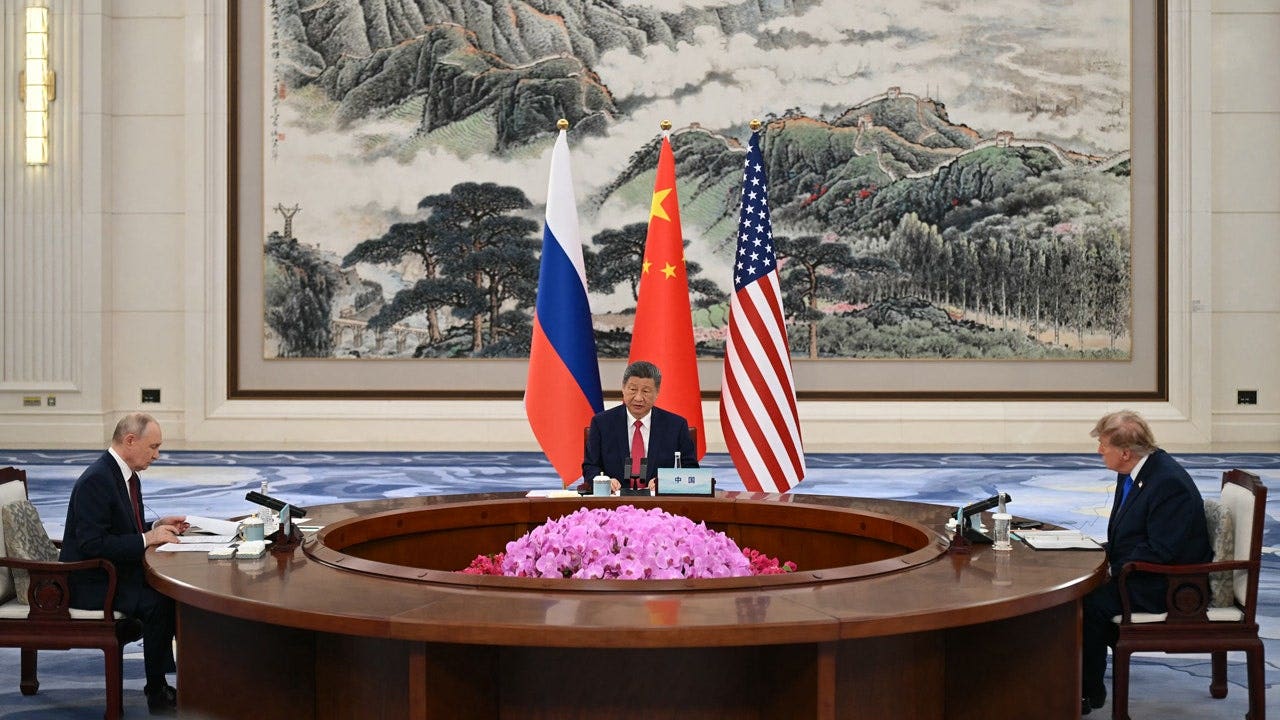
The summit in Shenzhen put the United States, China, and Russia in the same room for a rare three-way diplomatic moment, and the sheer fact of it carried real weight. Donald Trump, Xi Jinping, and Vladimir Putin talked arms control, Ukraine, nuclear danger, and global security, but the talks ended without a headline-grabbing deal.
Trump called the gathering historic, framing the moment as proof that direct conversation still matters even when the leaders involved distrust one another. The meeting came on the sidelines of the APEC gathering in China, where the atmosphere was serious, tense, and loaded with bigger questions than any single announcement could answer.
The talks began later than planned, with the three leaders sitting down around 3 a.m. ET after earlier bilateral meetings. Trump left the trilateral session after a little more than an hour and headed to the airport, skipping public remarks before his return to Washington.
At the table, Trump pushed the idea that talking is better than stonewalling, especially when nuclear powers are involved. “Too often, past leaders avoided talking to nations with whom they had disagreements,” Trump said. “But no problems were ever solved under the old school refusing to talk about them.”
Xi, who hosted the meeting, described the encounter as a major step and argued that the world’s biggest powers carry a special burden when it comes to stability. He said the relationship among the three countries should not be left to drift, even if their differences remain sharp and stubborn.
Putin, for his part, leaned into the security angle and pointed to the three nations’ role on the United Nations Security Council. He then moved to the war in Ukraine, which hung over the whole summit like a storm cloud that no one could really ignore.
The Ukraine conflict came up repeatedly, both in the trilateral setting and in Trump’s earlier one-on-one meeting with Putin. Trump said he believed both sides wanted an end to the fighting, while Putin said the issue had already been discussed at Trump’s initiative.
The message from all sides was that dialogue itself mattered, even if no immediate breakthrough was in sight. That’s often how these high-stakes summits go, with the real value coming from keeping channels open long enough to prevent the situation from getting worse.
Nuclear arms reduction also stayed near the center of the conversation, and Trump made clear that he sees it as one of the toughest challenges in international politics. “It’s a very hard thing to do, because once you have the nuclear weapons, it’s very hard to not have them,” Trump said.
Before the meeting, Trump said he wanted to bring Xi and Putin together because the two leaders already had a relationship and often work in parallel. He also argued that earlier U.S. policy helped push Moscow and Beijing closer, pointing back to energy ties that deepened over time despite a long history of mistrust between the two countries.
Iran added another layer to the discussion, with Trump saying the leaders would address nuclear proliferation and the need to keep energy flowing through the Strait of Hormuz. He said both the United States and China had a stake in preventing Tehran from getting a nuclear weapon.
That larger strategic backdrop gave the summit a broader edge than a typical handshake photo-op. It was about more than one war or one weapons category, because the three governments are staring at the same set of global pressures, from energy routes to regional conflicts to the balance of power in Asia and Europe.
Trump also used the setting to boast about America’s lead in advanced technology, especially artificial intelligence and what he called superintelligence. He praised U.S. innovation while brushing aside the idea of heavy international control, saying the technology could drive huge growth even as it carries risks that need careful handling.
That tech rivalry even spilled into a press row, where a Bloomberg reporter was blocked from the trilateral meeting after asking Trump about Nvidia CEO Jensen Huang during an earlier session. Chinese officials kept her out despite efforts from White House staff to get her back in, turning a diplomacy-heavy day into one with a sharp media edge too.
By the end, the image that lingered was simple: three powerful rivals at one table, talking through some of the world’s most dangerous problems without pretending the tensions had disappeared. The summit showed how fragile the conversation still is, and how much hangs on every next exchange between men who know the world is watching closely.
