
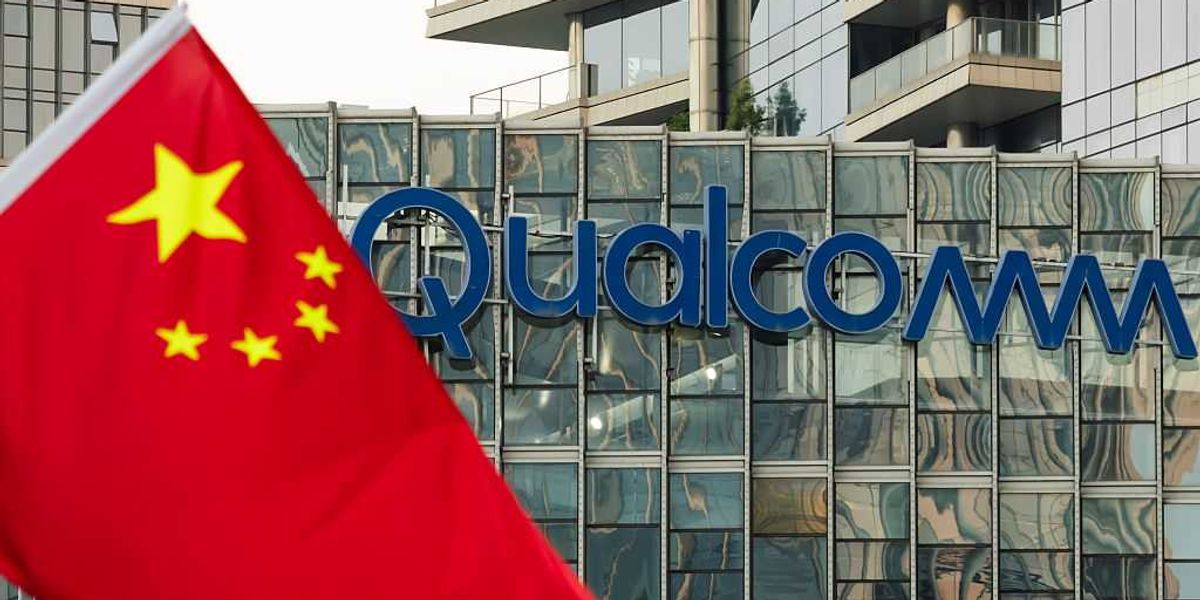
Qualcomm sits at the center of a much bigger fight than one company’s balance sheet. China wants access to American chip power, Washington wants to protect it, and the AI race is making every weak spot look bigger and more dangerous.
Qualcomm has long been a giant in mobile chips, but the stakes around semiconductors now reach far beyond smartphones. The company’s exposure to China has become a flashing warning sign, because the same market that can pad profits can also turn into a lever for pressure, theft, and dependence.
China’s strategy is not subtle. It wants the technology, the talent, and the supply chains that keep modern devices running, and it has shown again and again that it will use every opening available to get them. That is why Qualcomm is not just a corporate story, but part of a broader national security picture that Washington can no longer afford to treat like routine business.
The problem is bigger than one firm because the chip world is now the backbone of everything from phones to cloud systems to artificial intelligence. If American companies get too cozy with a market that has a habit of copying, coercing, and absorbing foreign know-how, the long-term cost can dwarf the short-term revenue. The danger is especially sharp when the technology involved helps power the next generation of AI systems.
That is where the pressure around Nvidia, Huawei, and the wider semiconductor race starts to make sense. The contest is no longer about who sells the most hardware this quarter. It is about who controls the tools that will shape communications, surveillance, defense, and economic power for years to come.
Qualcomm’s position also highlights a hard truth about Big Tech and Washington. Too many leaders talk tough about competition with China while still benefiting from Chinese money, Chinese manufacturing, or Chinese market access. That mismatch keeps the country stuck in a cycle where national security concerns get acknowledged and then quietly shoved aside when profits come calling.
The Federal Trade Commission and other regulators are part of this picture too, because the debate is not only about foreign threats. It is also about whether U.S. institutions have the spine to confront market concentration, tech dependence, and the kind of strategic vulnerability that can spread through an entire industry. Once a company becomes too entangled in the wrong places, the fallout reaches far beyond shareholders.
China has an obvious interest in keeping American chip firms under pressure, because every delay, restriction, or distraction helps narrow the gap. The more U.S. companies depend on Chinese demand or Chinese-linked supply chains, the easier it becomes for Beijing to shape outcomes without ever firing a shot. That is why espionage concerns never feel far away in this space.
Jensen Huang and others at the top of the AI and semiconductor world understand the scale of what is at stake. The race is not just about building faster systems, but about protecting the intellectual property and manufacturing strength that make those systems possible in the first place. America cannot lead in AI if its chip base keeps leaking value, insight, and leverage to a rival power.
Qualcomm’s situation also serves as a reminder that national security is not an abstract slogan. It is tied to real factories, real code, real chips, and real decisions about who gets access to what. When those decisions are made lightly, the consequences can echo through the economy and into the defense posture of the country.
The smartest approach is not panic, but clarity. American tech firms need a sharper line between healthy commerce and dangerous dependence, and policymakers need to stop pretending those two things are always the same. In the chip world, every business choice now carries strategic weight, and the market is not the only thing keeping score.
