
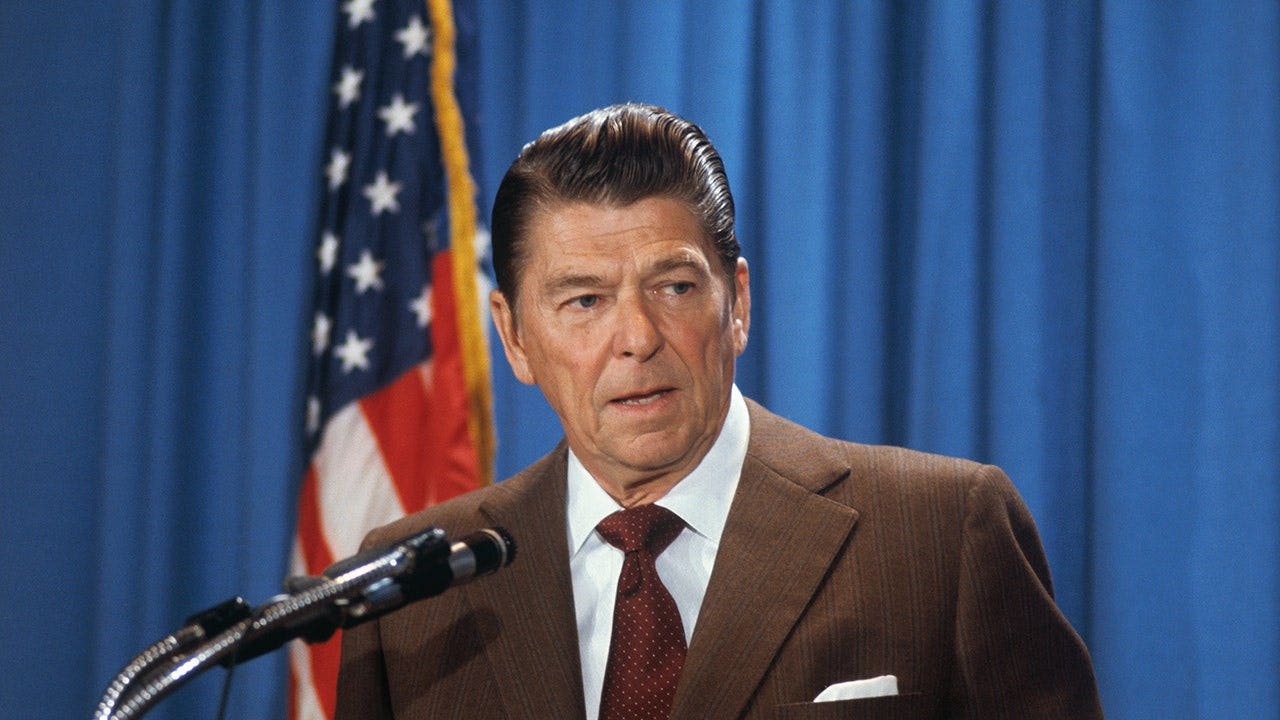
Ronald Reagan’s old formula of peace through strength is back in the spotlight because the same hard question still hangs over Washington: how does America stay safe when rivals are arming fast and patience is running thin? The answer in the piece leans on Reagan’s record, the rebuilding of U.S. power, and the uneasy reality that one administration can start the job, but keeping it going takes political grit, money, and time.
From the Cuban Missile Crisis onward, the Soviet Union kept pushing for nuclear advantage, and that pressure only grew as the Vietnam era dragged on. By the time Reagan entered the scene, the United States had spent years watching its military edge erode, and he made rebuilding American strength a central mission. That shift did not happen by accident, and it was not sold as a slogan alone.
A new book by Roger Zakheim, Peace Through Strength: How Reagan’s Military Buildup Won the Cold War, revisits how Reagan and his team handled the politics behind the buildup. It shows a campaign that was not just about weapons and budgets, but about convincing voters and lawmakers that strength was the best path to preserving peace. The message was blunt then, and it still lands now: weakness invites trouble.
Zakheim’s background gives that story some real texture. He has spent time in the legal world and on Capitol Hill, and that experience helps explain why the details matter so much in a fight like this. Reagan’s rise was tied to years of organizing, persuading, and building a national security case that could survive outside the echo chamber of Washington.
The cast around Reagan was wide, and the effort stretched over a long stretch of political combat. Names like Richard Allen, William Van Cleave, Fred Iklé, and John Lehman helped shape the argument for rearmament, each playing a part in the larger push to restore American confidence. The point was not simply to spend more, but to make sure the United States had enough credible force that no enemy would gamble on a fight.
That required tough alliances inside the Reagan administration and on Capitol Hill. Caspar Weinberger and Frank Carlucci were critical on the defense side, while lawmakers such as John Tower and Sam Nunn helped move the effort through Congress. There were wins, setbacks, and plenty of arguments along the way, including fights over the MX missile, but the broader strategy kept moving forward.
The payoff showed up in major milestones like the deployment of Pershing II missiles in Europe and the early commitment to the Strategic Defense Initiative. Those decisions signaled that the United States was no longer content to drift while adversaries tested limits. Reagan and later George H.W. Bush kept pressing the advantage, and that pressure helped create the conditions for the Cold War to end on America’s terms.
Still, the arsenal built in that era was never meant to last forever without constant upkeep. Aircraft carriers, nuclear systems, and every other part of the defense structure age, wear down, and eventually need replacement. The bigger problem is that the national debt has exploded since Reagan’s day, which makes the next round of rebuilding harder to fund and easier to delay.
That is where the current debate turns sharp. President Trump has secured money to start restoring parts of the national security infrastructure, but whether that rebuild continues is uncertain as Democrats gain more power. The article points out that there is no easy bipartisan partner waiting to support defense spending the way Sam Nunn once did, and many on the other side would rather pour cash into domestic programs than into military readiness.
The concern is not abstract, either. Russia still poses a threat, but China is seen as the bigger long-term challenge, with its own military buildup and strategic ambition. As the Republican Congress counts down its final days, preserving the start of rearmament becomes the urgent task, especially with another Pentagon funding fight unfolding in Washington.
That is why the Reagan example still hits so hard. It was never about nostalgia, and it was never about pretending threats would disappear on their own. It was about leadership willing to pay the price up front so America would not have to pay a far uglier one later.
