
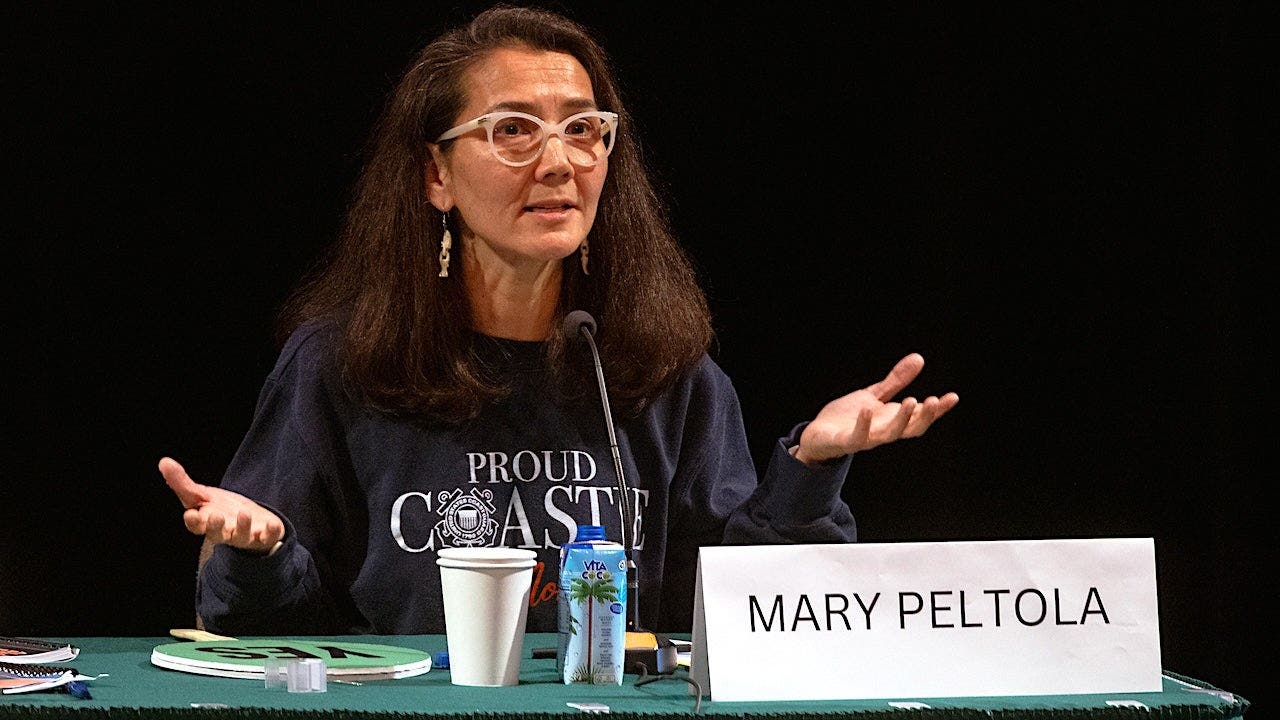
The Justice Department is sitting on a sprawling Alaska election probe that has already sent out more than 200 subpoenas, and the case is still moving even after Mary Peltola was declared the winner of the state’s Senate race. At the center of the storm is the so-called “Decoy Dan” controversy, a mess of accusations, denials, and political hardball that has stretched across state lines and pulled in multiple targets.
The situation became even more combustible when the final tally confirmed Peltola’s victory in the four-way race. She finished with 144,302 votes, while Republican Sen. Dan Sullivan received 131,844, GOP candidate Gerald Heikes got 6,105, and “Decoy Dan” picked up 4,760 as a non-party affiliated candidate. The numbers settled the election, but they did not settle the questions hanging over the campaign.
A law enforcement source said the criminal investigation is continuing and that the election result does not change the DOJ’s approach. The probe reportedly stretches beyond Alaska, and investigators are looking at more than one possible criminal target. Another source familiar with the matter confirmed the subpoena count, underscoring just how wide the inquiry has become.
What has fueled outrage is the claim that Democrats and allied political operatives searched for a second Dan Sullivan to jump into the race and muddy the waters for voters. The theory is blunt and ugly: confuse people, split attention, and maybe chip away at the Republican incumbent’s support. In a close race, even a little chaos can turn into a huge advantage.
That suspicion gained traction after reports described a so-called “ballot composition project” involving Peltola campaign aides, the Democratic Senatorial Campaign Committee, and operatives outside Alaska. The alleged goal was to recruit a second Dan Sullivan to enter the race. Peltola’s campaign and the DSCC have denied wrongdoing, but the denials have done little to quiet the controversy.
Marc Elias, the high-profile Democratic attorney whose firm represents the Peltola campaign, has also landed in the crosshairs. The DOJ reportedly sent him a criminal target letter earlier this month, putting one of the biggest names connected to the race under direct scrutiny. That move sent a clear signal that investigators are not treating this like a routine campaign complaint.
“Decoy Dan” himself was not some polished, well-funded contender with a real statewide machine behind him. He is a retired teacher from Petersburg, a tiny southeastern Alaskan island town, and even neighbors reportedly said they never saw campaign materials from him. His campaign raised just $35,556, which only makes the suspicion around his entry feel more bizarre and more calculated.
The ballot fight was intense enough that Alaska election officials initially tried to block the second Sullivan from appearing on the ballot. They argued the candidacy could mislead voters or siphon support from the senator, but the candidate denied any wrongdoing, and the Alaska Supreme Court later ruled he could stay on. That decision kept the race alive in a way that now looks even more consequential.
The federal response followed with a lawsuit aimed at limiting any misleading effect from the new Sullivan’s presence on the ballot. That case added another layer to an already tense election season and made it obvious that the dispute was bigger than just one quirky candidate with a familiar name. In Alaska, where name recognition matters and voter attention can be stretched thin, the stakes were real from the start.
Peltola’s political rise has been unusual in its own right. She made history in 2022 as the first Alaska Native elected to Congress, then lost her House seat in 2024 to Rep. Nick Begich. Her Senate bid brought her back into the spotlight, but now it is wrapped in a scandal that keeps widening instead of fading away.
President Donald Trump blasted the alleged scheme and said Peltola should drop out, while also taking direct aim at the Democratic Party and Elias. Trump called Elias “a bad guy, very bad guy” on “Fox & Friends” and said Democrats were searching all over Alaska for somebody named Sullivan. The White House pointed Fox News Digital back to Trump’s earlier comments, while the campaigns involved did not respond.
For Republicans, the case looks like a textbook example of dirty politics getting caught in the open. The headlines may have moved on from Election Day, but the subpoenas, target letters, and courtroom battles are still stacking up, and Alaska’s election fallout is nowhere near finished.
